
My interest in Labyrinths started when I set out on a pilgrimage from Wells to Glastonbury. I set the intention for the journey as Hope. The setting of an intention is the essence to both walking pilgrimage and labyrinths. Hope was in response to the fact that I was walking the pilgrimage in the summer of 2020. The coronavirus was very much a focal point of society. My first works around Labyrinth was when I used the labyrinth and Glastonbury Terr as an image for printing. Although this image worked as a print, it lacked a real connection to the labyrinth’s purpose. It did not offer any tangible connection. Val Lupton quotes that ‘the point of a maze is find its centre. The point of a labyrinth is to find your centre’
I began researching the idea of creating a labyrinth. I chose Lundy Island as the specific site location. David Beech discusses site specificity. He refers to the work of Mona Hatoum. She creates work on the site and not in the studio. Beech in his Youtube clip on ‘Art and Isolation’ (2020) discusses Hatoum’s work. He mentions that Hatoum often finds “the location is usually the starting point.” For me, the idea of the site was definitely the starting point. I came across an anecdote I had read in Gogerty, C., (2019) that shipwrecked soldiers used to create labyrinths to while away their time when wrecked. Shipwrecks often occurred on Lundy Island. I connected the route from the Montague steps on the rugged west coast to the Old Light lighthouse. A path akin to Richard Long’s Line made whilst walking.
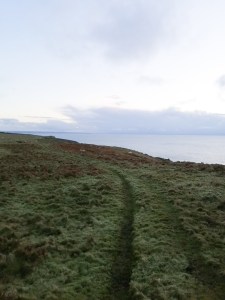
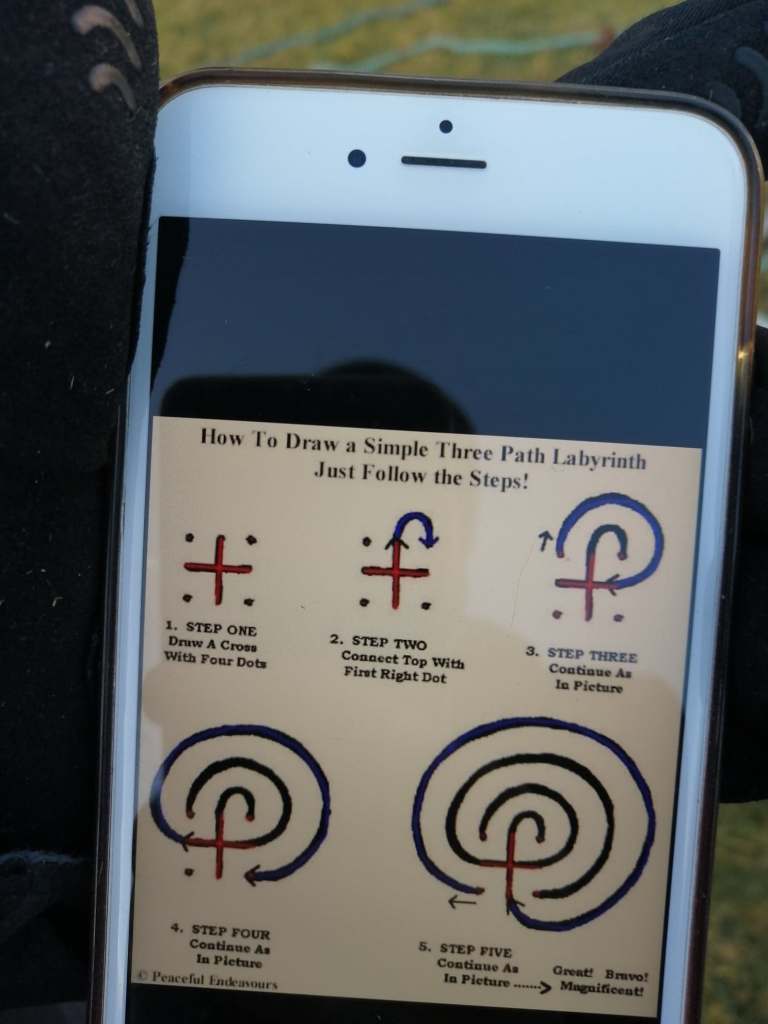
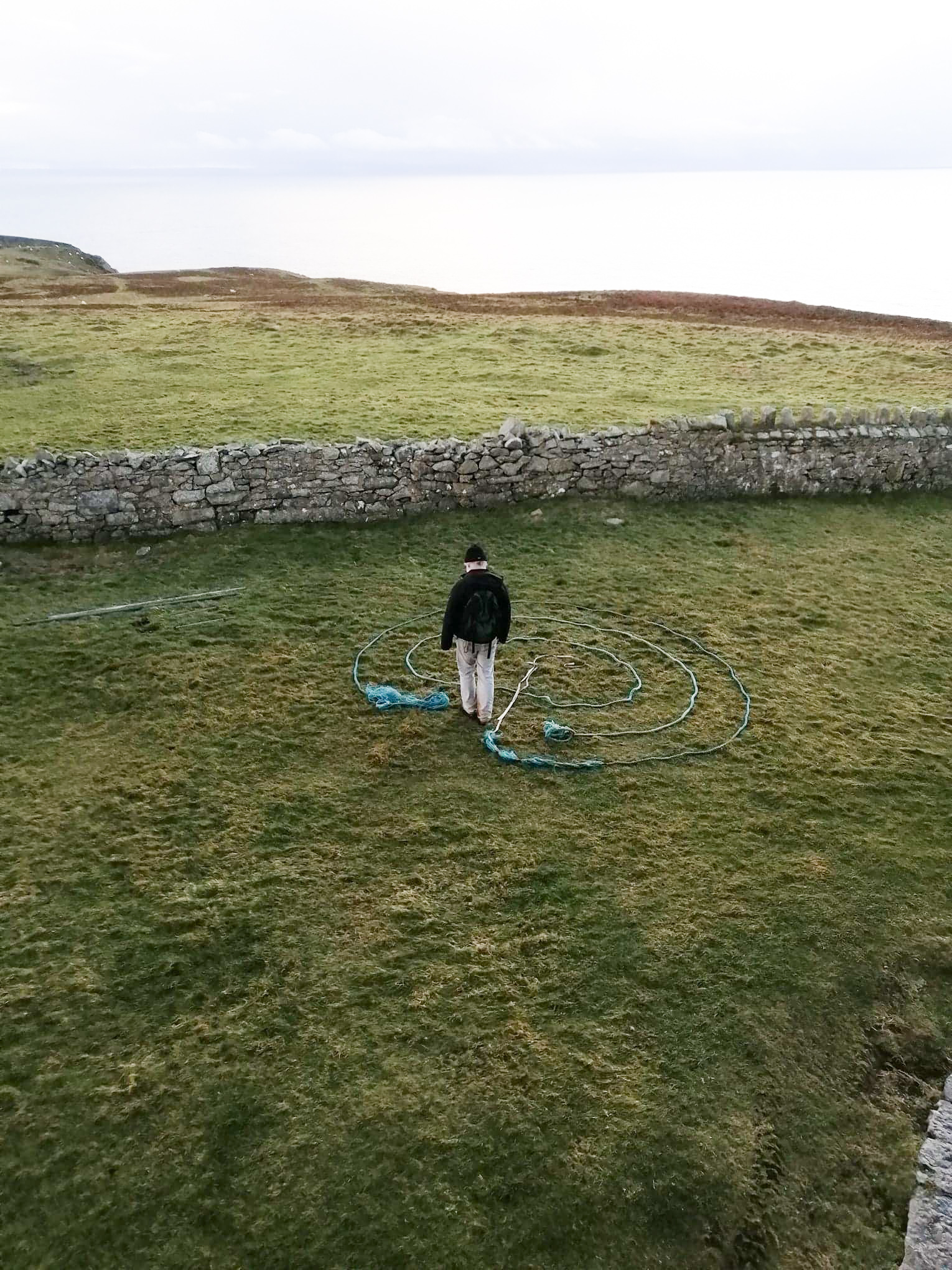
At the lighthouse, I found some old builders rope. We collaborated and used an image on my phone that showed how to create a rope labyrinth. The three of us set to work to create the labyrinth. We found that we needed more rope than we had. So, we downsized the labyrinth. It was still an appropriate size to walk.
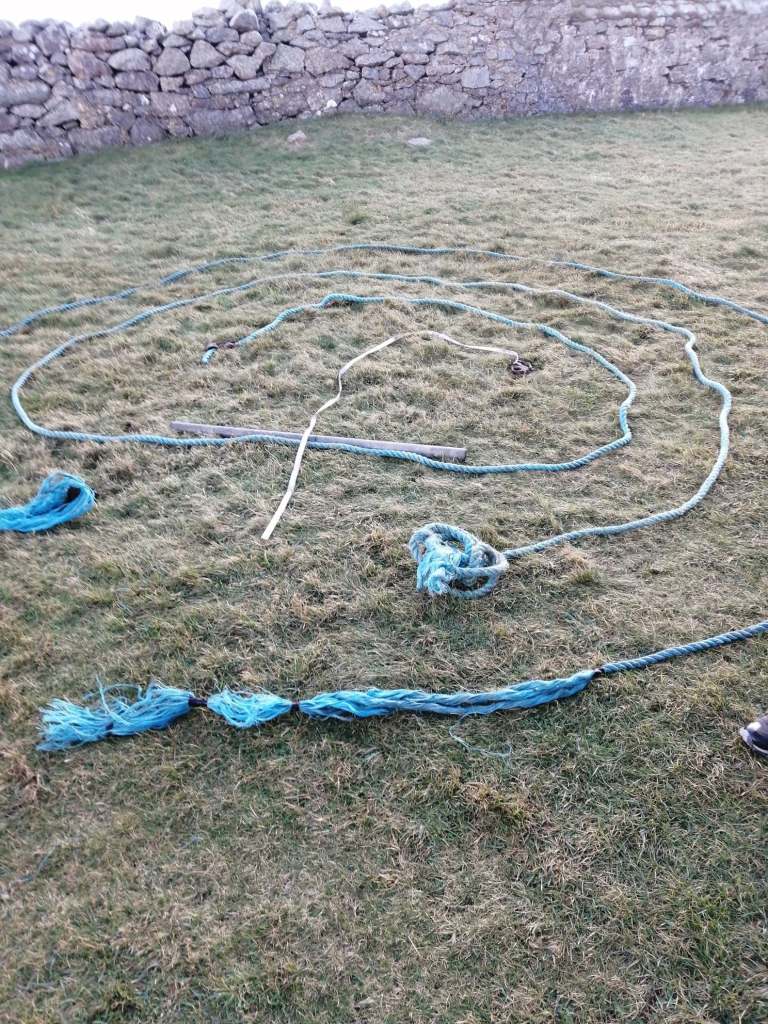

On finishing the labyrinth I and my fellow collaborators walked the labyrinth. When walking the labyrinth, I found it easy to travel without much thought. This ease is ideal for mindfulness. You don’t need to focus on where you walk. You just simply put one foot in front of the other slowly. The site was indeed a special place with 360 degrees of views. The prominence of the 19th Century lighthouse was striking. The cemetery, with all its island history, added depth to the experience. The views extend out to the Atlantic and to the mainland of North Devon and Cornwall. As I walked the labyrinth, I truly engaged my senses. I felt the fresh winter cold and heard the birds. I sensed the ground beneath my feet. I smelled the crisp air washing in from the Atlantic ocean.
I later discovered something interesting as an aside. Beacon Hill, the site of the lighthouse, is the place pagans held sacred. It was considered a high hill nearer to the gods. Another reason for this site being perfect.

References
Art and Isolation (2020). Youtube. [Online]. Available at https://www.Youtube.com/watch?v=GjBb1psf3eA. [Accessed on 13/03/2021]
Gogerty, C., (2019). Beyond the Footpath: Mindful Adventures for Modern Pilgrims. Hachette UK.
http://www.tate.org.uk/art/artists/mona-hatoum-2365/who-is-mona-hatoum
 Jane Sharkey
One response to “Exploring Labyrinths: A Journey of Intention and Mindfulness”
[…] connections. To find out more about my experience with the labyrinth head to my journal post on Lundy Labyrinth. There is a video for this but time would not allow for the playing of this in the presentation. […]
LikeLike