I spend all year bathing in the sea. But on this day, I decided to stay on the land and do some forest bathing. Forest bathing is known in Japan as Shinrin-Yoku. It originated in Japan in the 1980’s. It involves immersing oneself in the forest atmosphere using sensory experiences like sight, smell, hearing, and touch. This practice is linked to various health benefits, including reduced stress, lower blood pressure, and improved mood.
Here on Lundy it is hard to find a Forest but there is a fabulous wooded copse at Quarter Wall. The copse is on the Lower East path and can be reached either via the South or the North.
If you are arriving by boat, take the path that leads from the bottom of the Millcombe valley. A gate perched on the cliff side signifies the start of the East path. If you are coming from the village, take the gate at the top of Millcombe. Then take the second left (it’s about 9 steps down). This route will take you through a wooded ridge above Millcombe house. As you near to the flagpole at the Ugly, take the gate that takes you down the steps of Doom! The lower east path has quite a few rocks to navigate, its not an easy path to walk. So be sure you are equipped for walking this path.
If you chose to walk from North to South, first go down past Felix Gade Hut. Then walk South with the Heligoland Trap on your right.

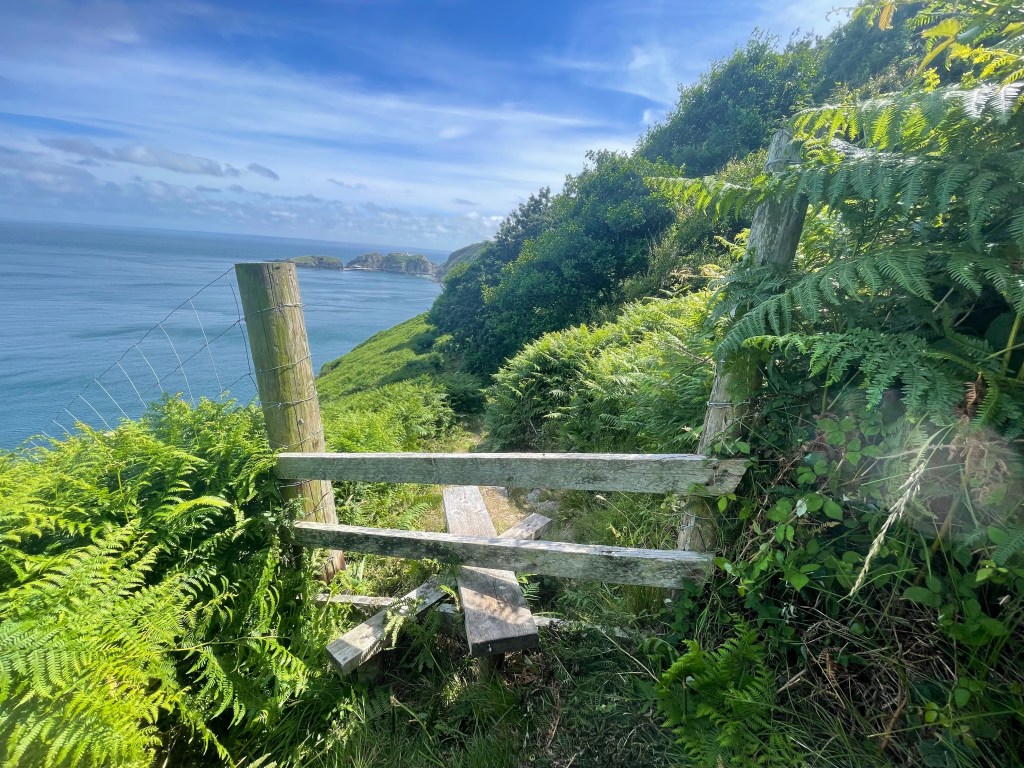
Enter the copse at the South side, there maybe a little stream running if you are lucky. I found a perfect natural bench to sit on, its moss created a natural rug.
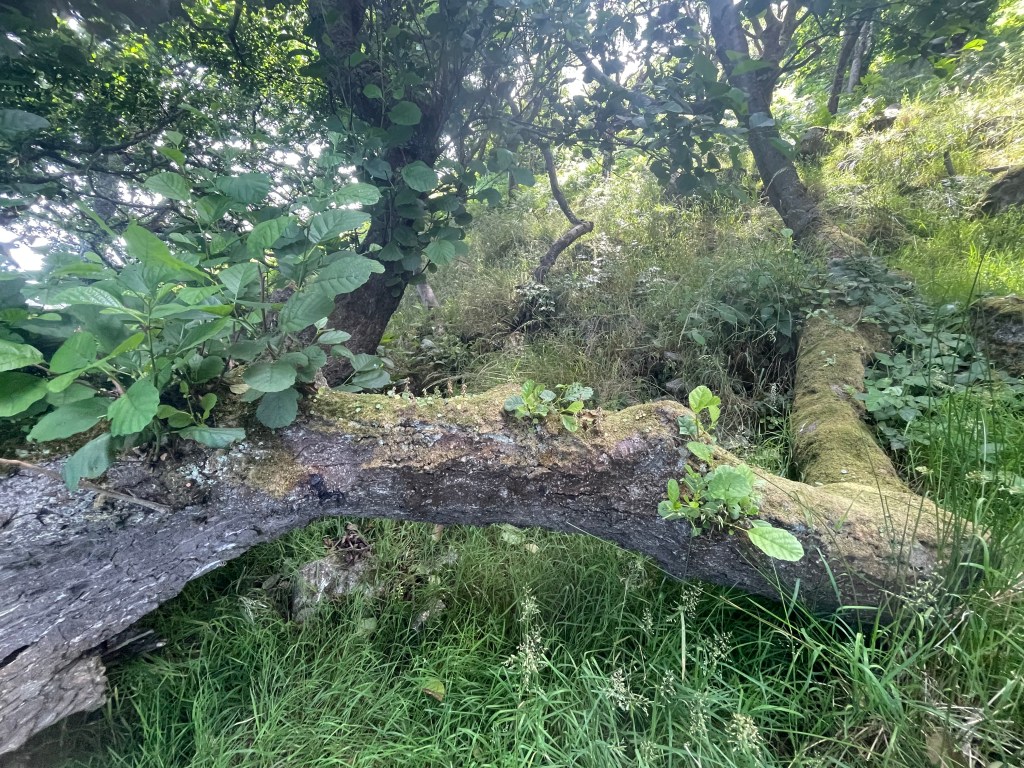
From here switching off my phone allowed me to be in the moment. In a way it felt different from being in any other place on the island. Its natural seclusion by way of the trees, set it apart as much of the island is barren and open. I was surrounded by greenery (July 2025) with just small peaks out to sea. It felt i was in hiding, even the wrens and the wood pigeons were startled when they saw me.
The woodland in Quarter Wall copse is mainly alders with a few oaks. Depending on the time of year, the flora to be found are foxgloves or primroses. The mosses extend over the rocks and trees; some rocks are draped with Pennywort, also known as Navelwort. A plant that has a history of use as a poultice or plaster for minor wounds and skin irritations.
There are stones scattered among the trees. I wondered whether these were the remains of quarter wall? Or they are fallen rocks that have found a new place among the trees.
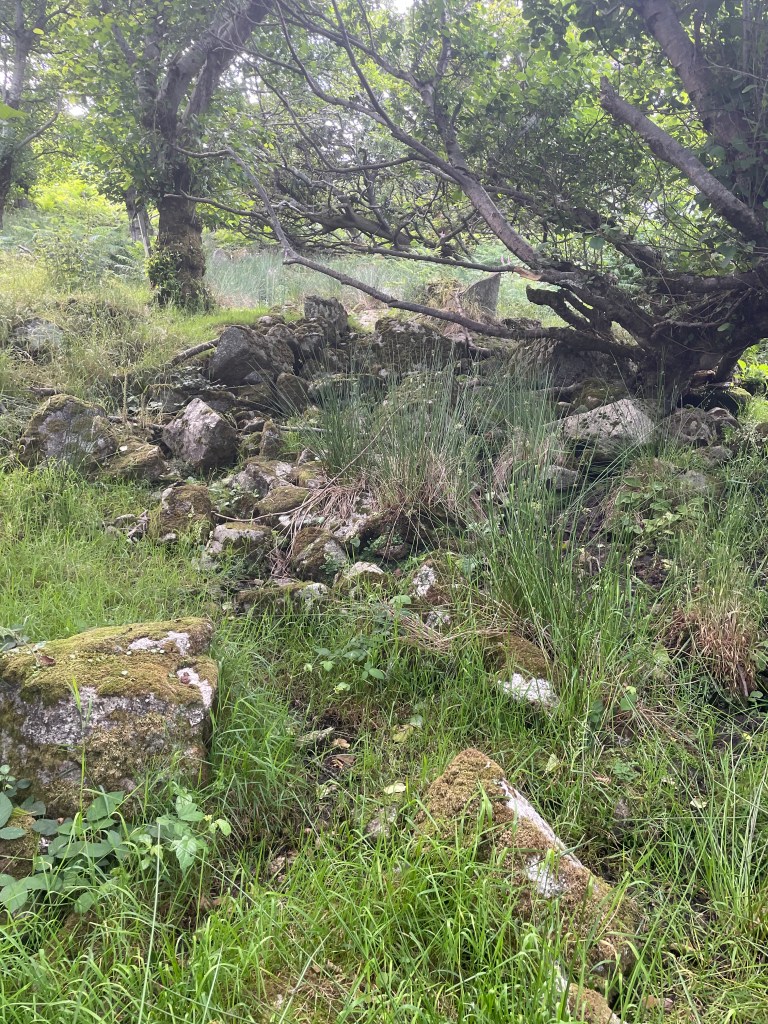
Depending on the season, you see foxgloves or primroses. Moss covers the rocks and trees, and there are also Pennywort, known as Navelwort. A plant that can be used as a plaster or poultice for skin conditions.
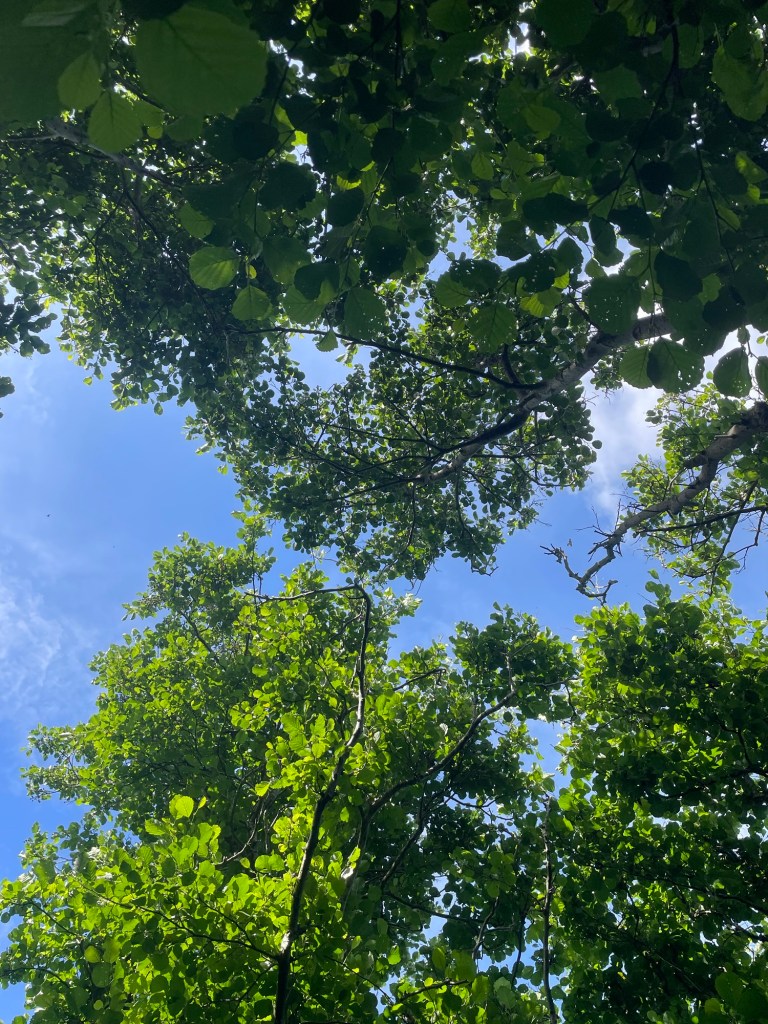
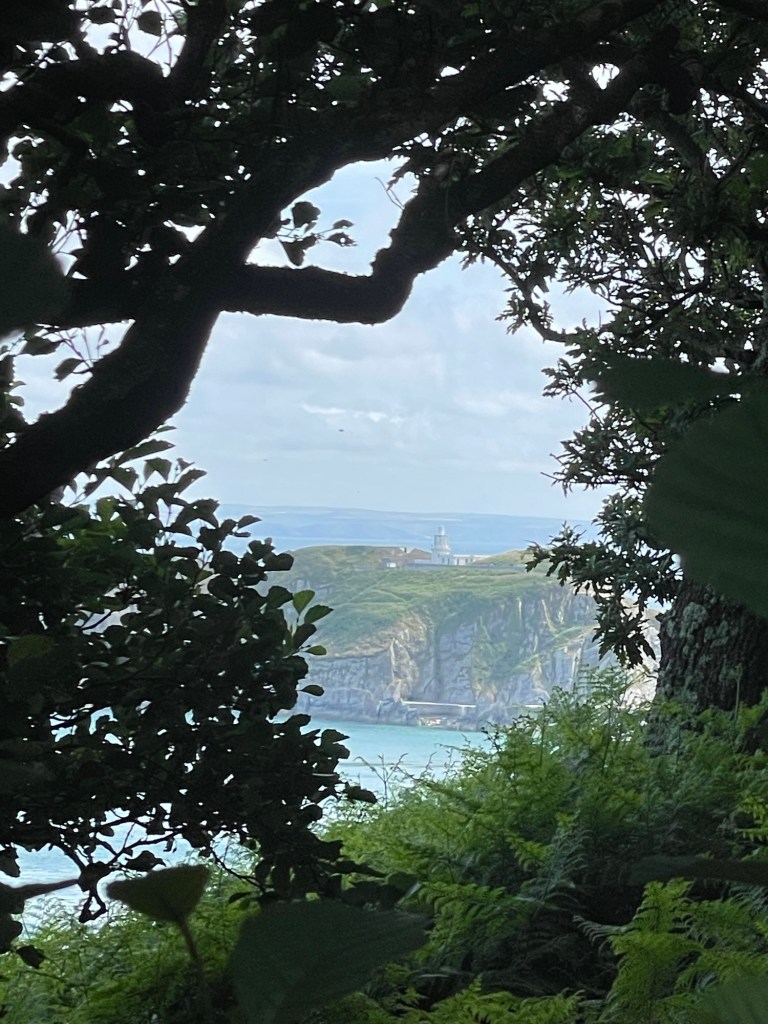
Sitting in the forest, the first thing I did was to breathe. I then started to take in the five senses; sight, smell, sound, taste, and touch. Sitting and watching the sunlight come through the trees changed the colors in the woodland. It transitioned to forest green and sap green. The day was quite warm. There had been no rain for a while. The stream had dried, so the forest carried a damp smell. Placing my hand on the Moss gave a soft touch to my hand. I lay back on the large tree branch. I looked up at the sky. I looked at the negative spaces between the trees. Returning to standing I looked out through the trees, as they frame a natural window to the sea beyond,
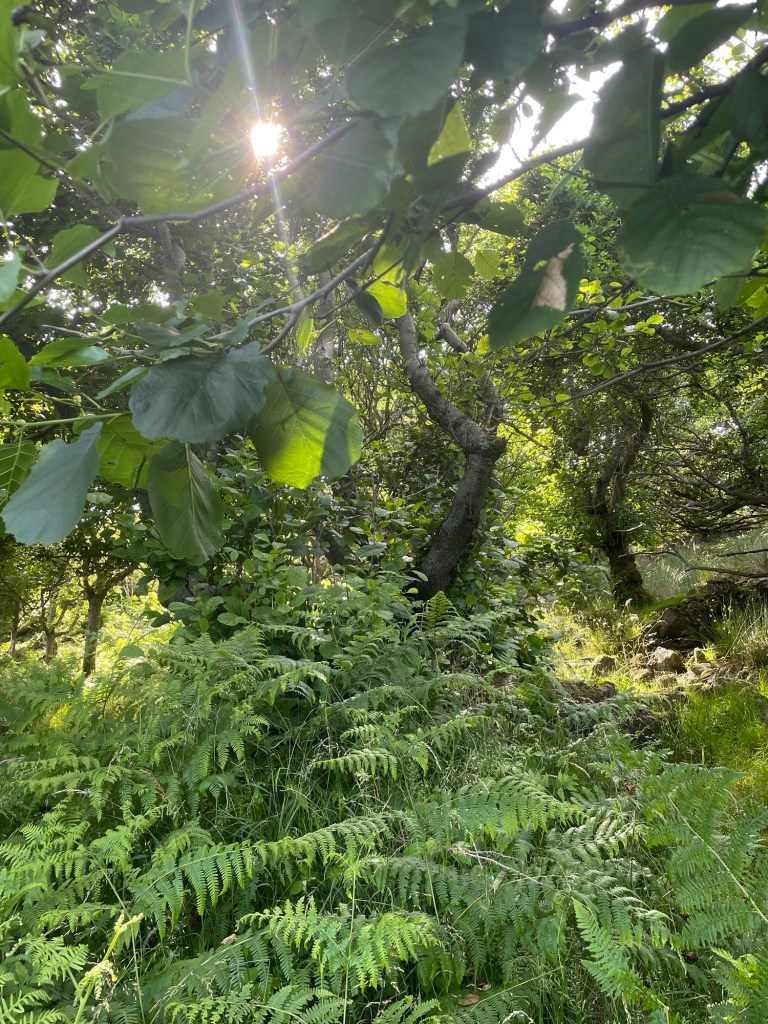


Although on this trip I did not see any deer, I have seen them before in this copse. It is not surprising they like to come here. Its hidden away, cool and calm.
Next time you visit Lundy or go to a local woodland, try to do some forest bathing,
Acknowledgments:
Thanks to Andrew Cleave for information on the flora and fauna.
Reference:
Dr Qing Li, Shinrin-Yoku :the Art and Science of Forest Bathing (2018) Penguin

You must be logged in to post a comment.