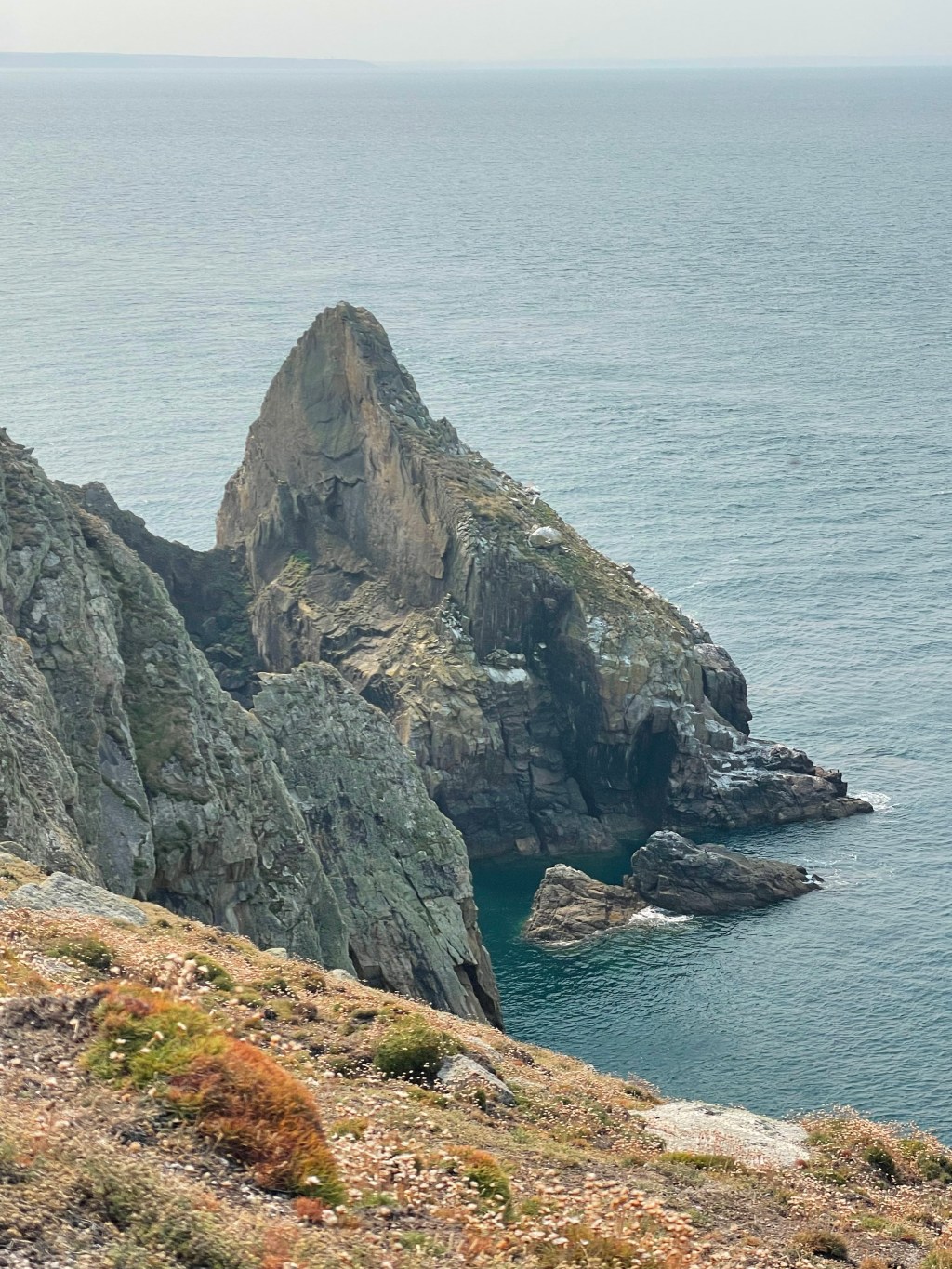
Sitting on the West Coast of Lundy, I often feel I am at the edge of the world. The horizon is wide, the Atlantic rolls out before me in shifting shades of blue, depending on the light.
Here on the cliffs’ edgelands, I try to find an escape from an easterly wind. With the sound of the last seabirds of the year, I read a book by Phoebe Smith titled Wayfarer. Coincidentally, my place holder for the next chapter is Finisterre. As I sit in the landscape, I feel I too have reached my own Finisterre. Looking out to the Atlantic, it seems there is nothing beyond the horizon but the end of the earth.
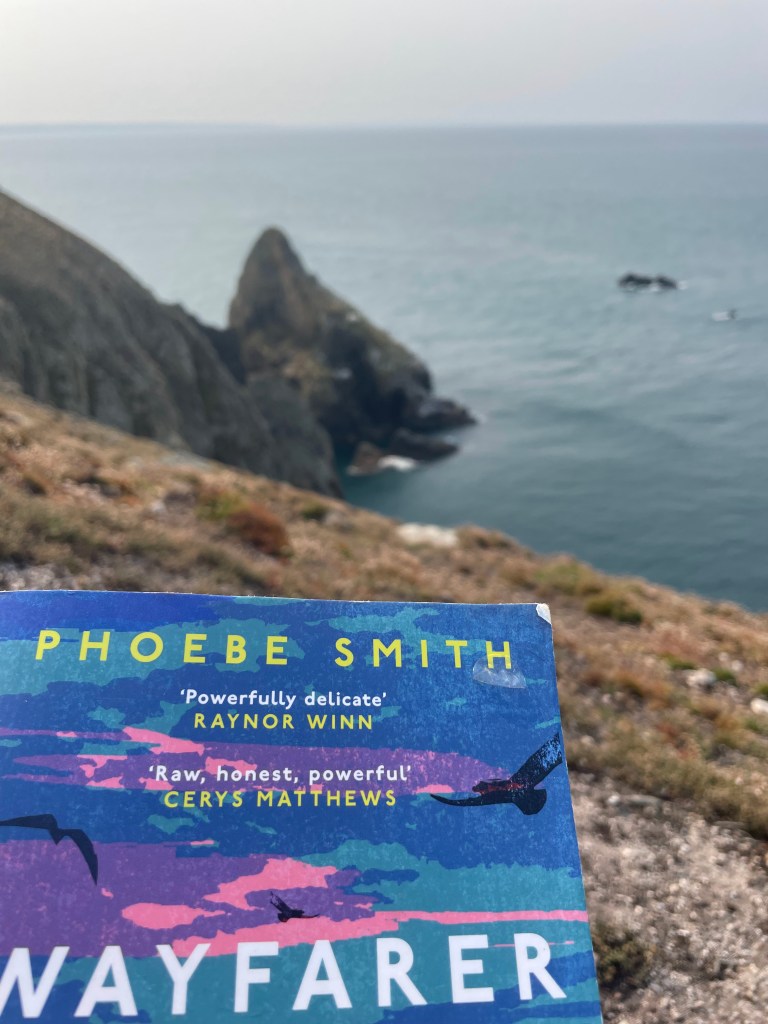
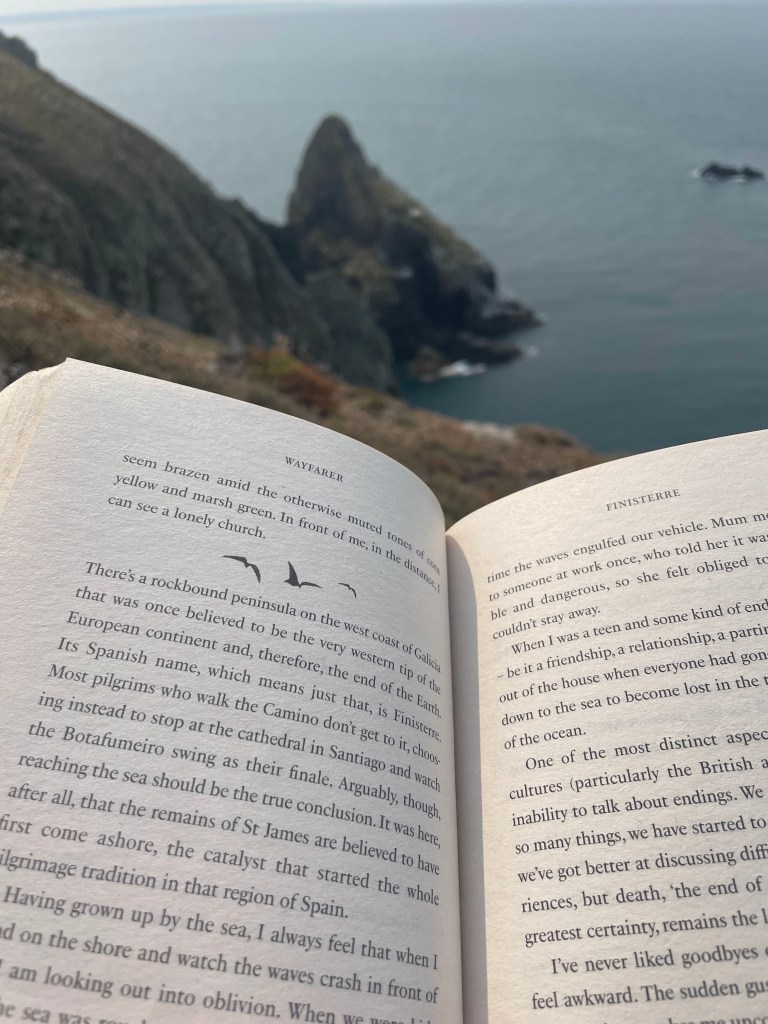
“There’s a rockbound peninsuala on the west coast of Galicia that was once believed to be the very western tip of the European continent and, therefore, the end of the earth. Its spanish name which means just that, is Finesterre”. Smith, P. ‘Wayfarer’ Harper North (2025).
At Finisterre, the end of the land is marked with a cross. A stone plinth signals the end of the Camino de Santiago. Unlike Finisterre, however, (since the removal of the temporary Anthony Gormley statue) there are no man-made markers here. Only the raw forms of Shutter Rock and Goat Island stand like sentinels at the island’s edge.
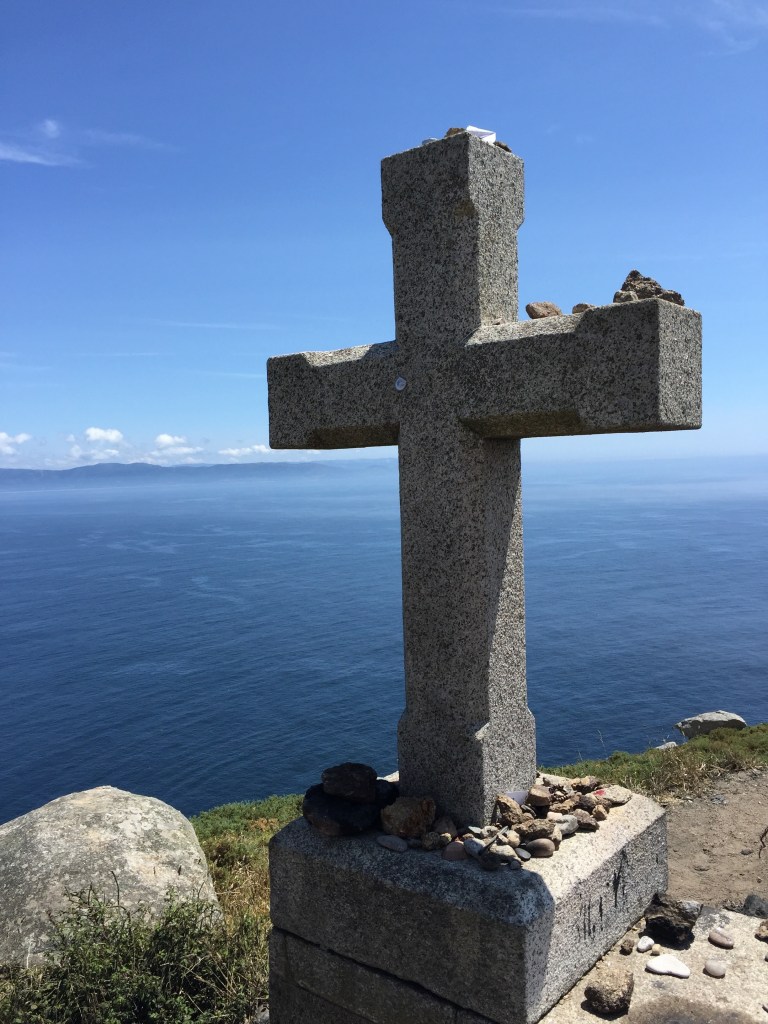
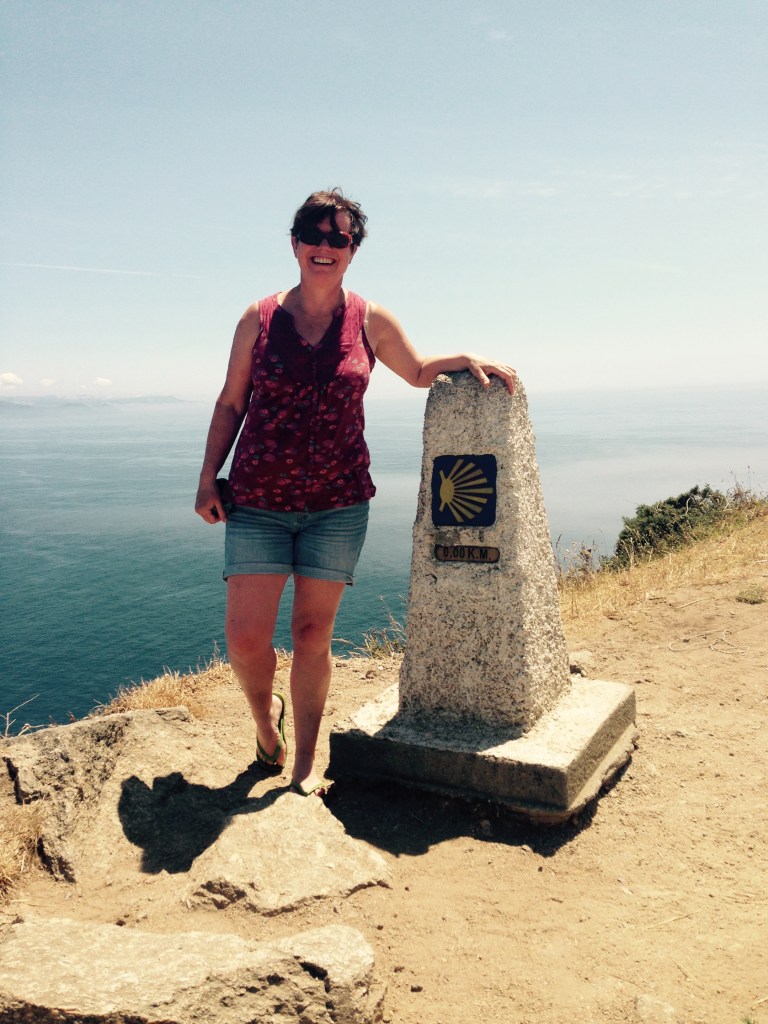


In July 2015, I travelled to Finisterre in western Spain. For centuries this place was believed to be the farthest reach of the known world. Long before maps revealed the Americas, Cape Finisterre was where the land stopped and the great ocean began. I admit I drove there whilst on holiday in Spain, but for some the journey to Finisterre is part of a pilgrimage — the Camino de Santiago. This long-distance walking route begins in France and winds across Spain to Santiago de Compostela, then continues westward for those who choose to walk beyond the cathedral to the sea at Finisterre.
At Finisterre, pilgrims often leave something behind to mark the end of their pilgrimage — a votive, a handwritten note, sometimes even their worn-out boots. These small acts carry symbolic weight: gestures of closure or renewal. The ritual is both deeply personal and shared, a way of marking the end of a long journey.
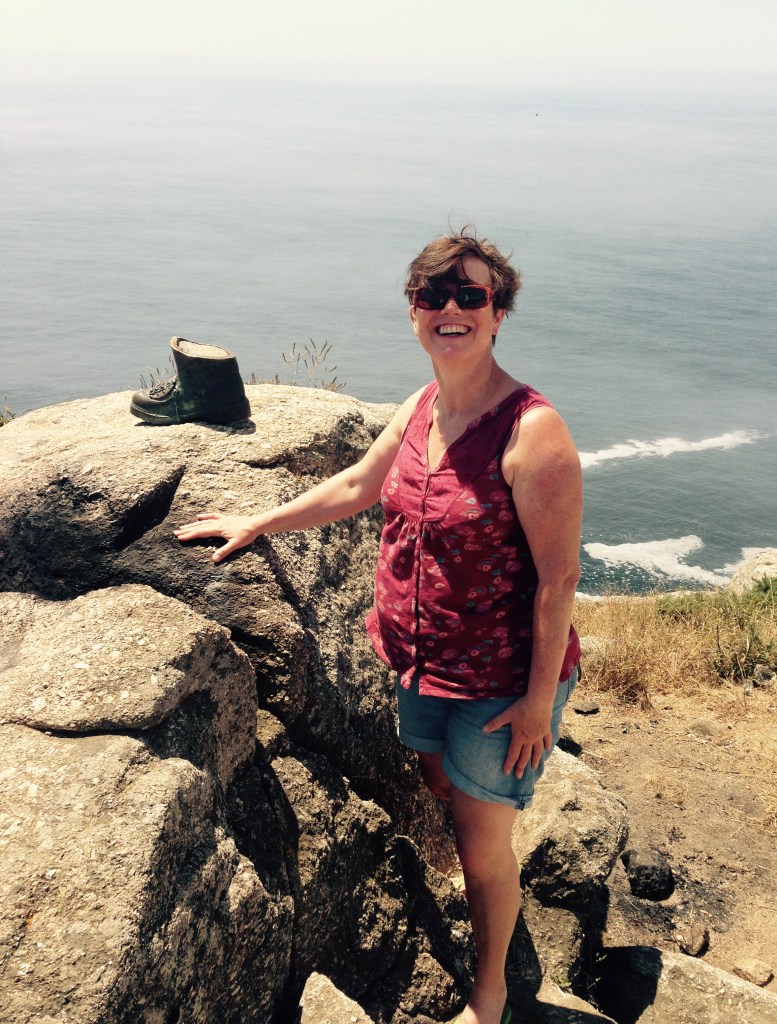
Lundy is different, yet the feeling echoes here. The idea of placing a votive jar at the end of my designed Lundy Pilgrimage came from being present in Finisterre and from reading Imagining Pilgrimage: Art and an Embodied Experience by Kathryn Barush (Bloomsbury Visual Arts, 2021).
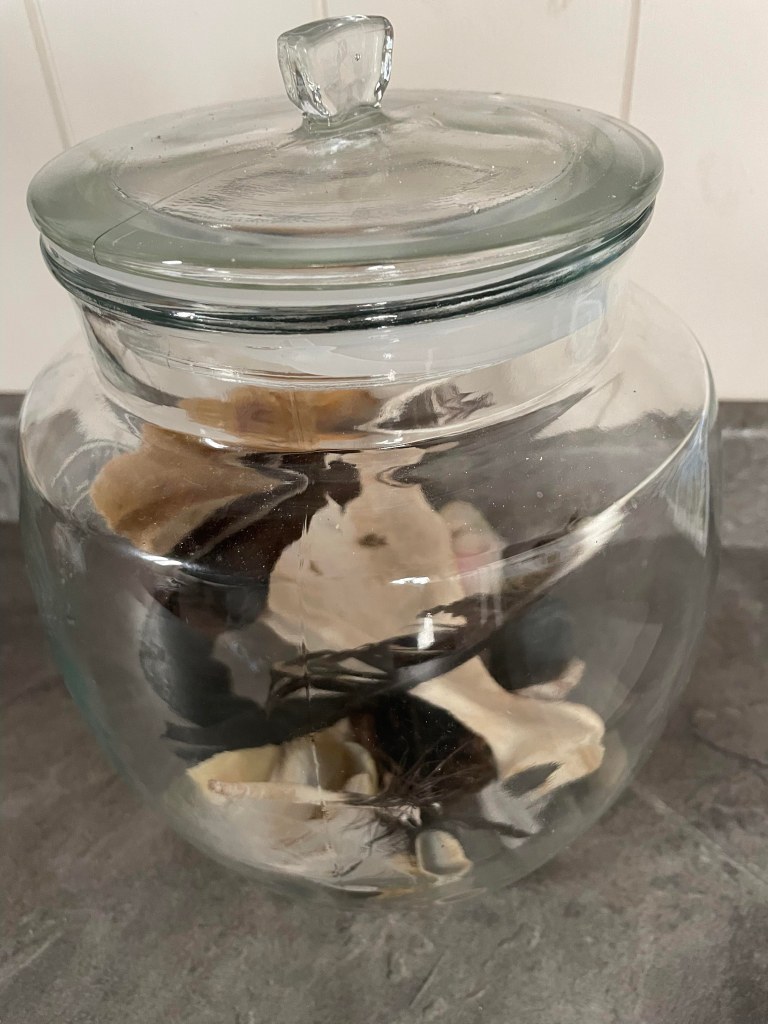
It is at this moment, sat on this jagged cliff edge, that I feel my creativite journey has completed a full circle. My Pilgrimages, my journeying to Spain and Portugal and, my creative practice, all seem to link together. At Finisterre, the ocean’s edge became a destination, a site of pilgrimage and ritual. At Lundy, the west coast offers something quieter, unmediated, but equally powerful: an invitation to pause, to confront the horizon, to acknowledge both endings and continuities.
As a walking artist, I often think about how journeys imprint themselves on the body. The Camino is walked over many weeks, each step accumulating meaning. On Lundy, walks may be shorter, but the terrain and weather impose their own demands. When one reaches the western cliffs, the sense is no less significant. It is not ritualised, but it is embodied — a recognition that we are at a point where land gives way entirely to sea. There is the sensation of looking out into endlessness, the awareness of being small against the vast scale of ocean and sky. It reminds us that every journey, whether across countries or across an island, has its moments of completion — of standing still at the edge and simply absorbing where you are.
In both Finisterre and Lundy, I find that the edge of the world is where we pause, where we allow ourselves to feel the immensity of both land and sea.
References:
Barush, K., (2021). Imaging Pilgrimage: Art as Embodied Experience. Bloomsbury Publishing USA.
Smith, P. (2025).‘Wayfarer’ Harper North

You must be logged in to post a comment.