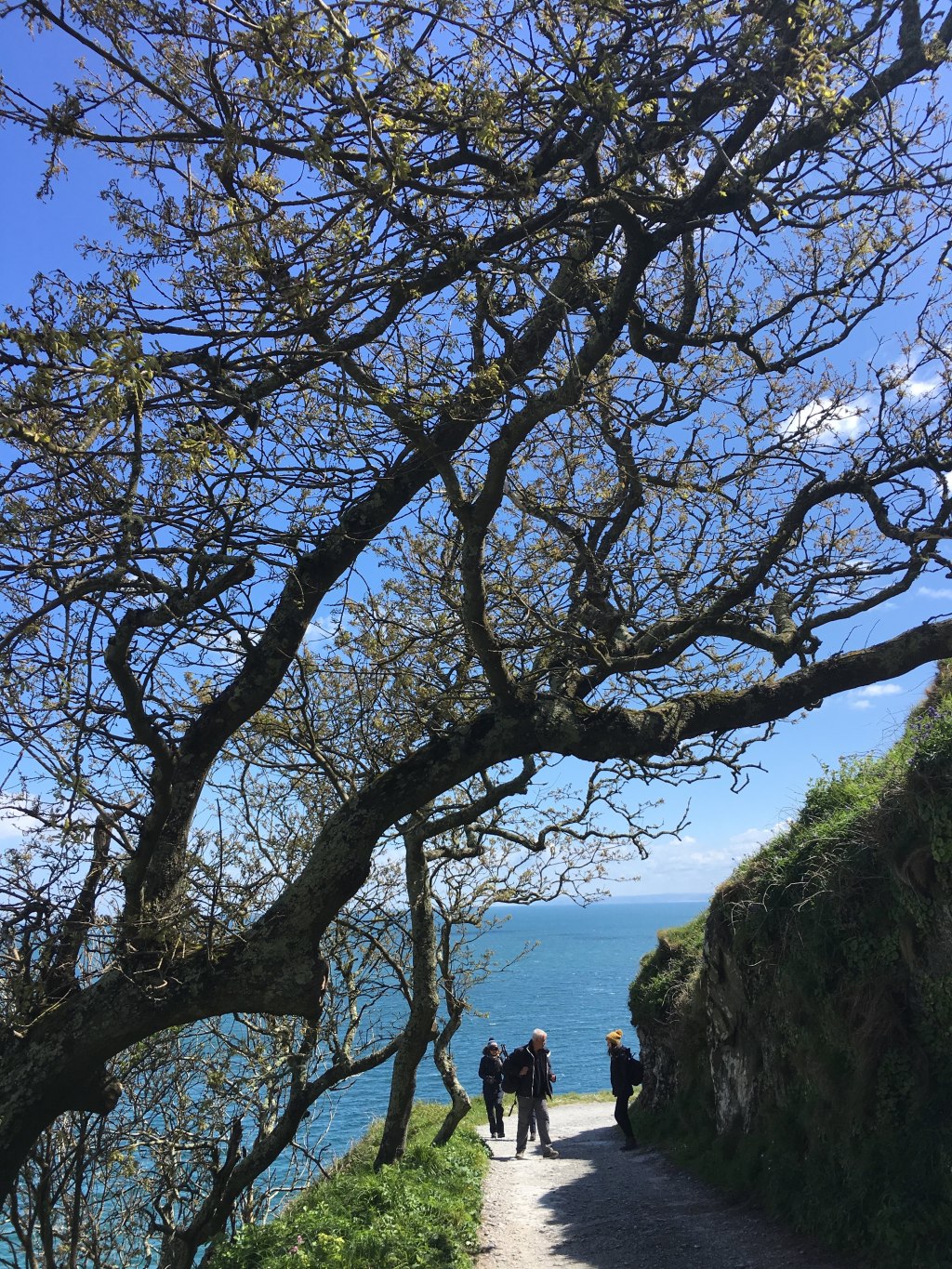
A North Easterly wind has been blowing over the island this week. It feels that winter has most definitely arrived. The wind here isn’t like wind on the mainland, it feels more dramatic, feeling like a force you negotiate with. In my last blog post, I wrote of fog and how it can bring the island transport to a standstill. Now with this November wind, I wonder whether Lundy’s wind has the most impact on life on Lundy.
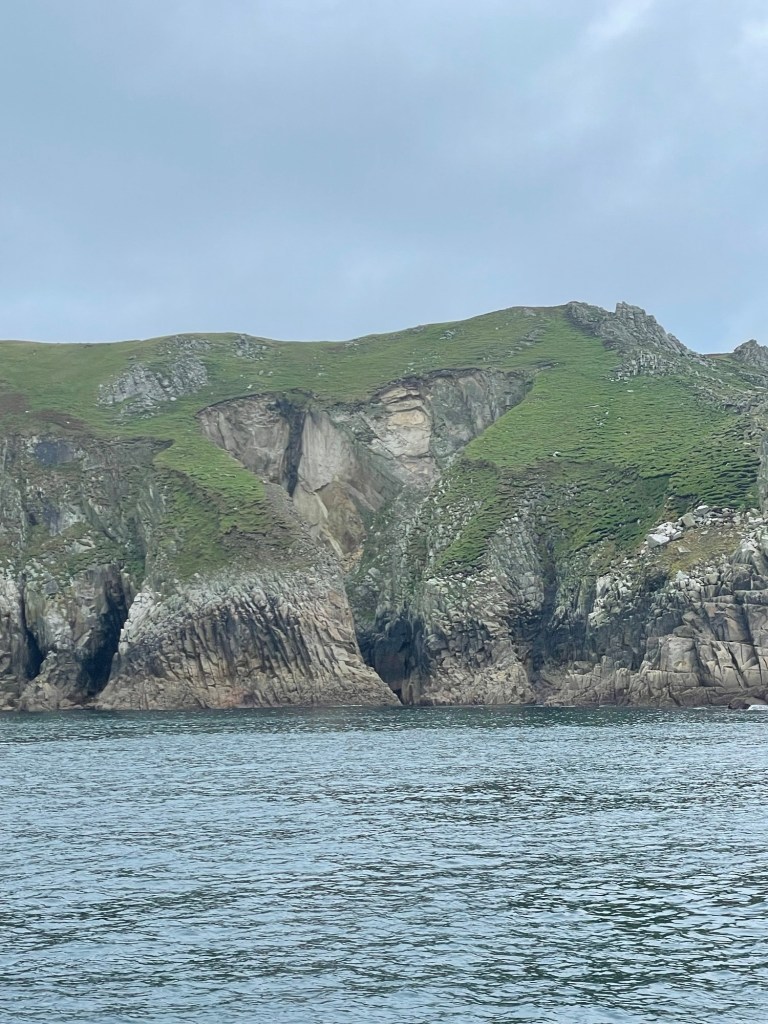
The wind has shaped the island landscape over the years. The waves, mixed with strong winds, have chiseled the cliffs into jagged outcrops. This effect is especially noticeable on the South and West coast. This ruggedness is a reason why i love Lundy.
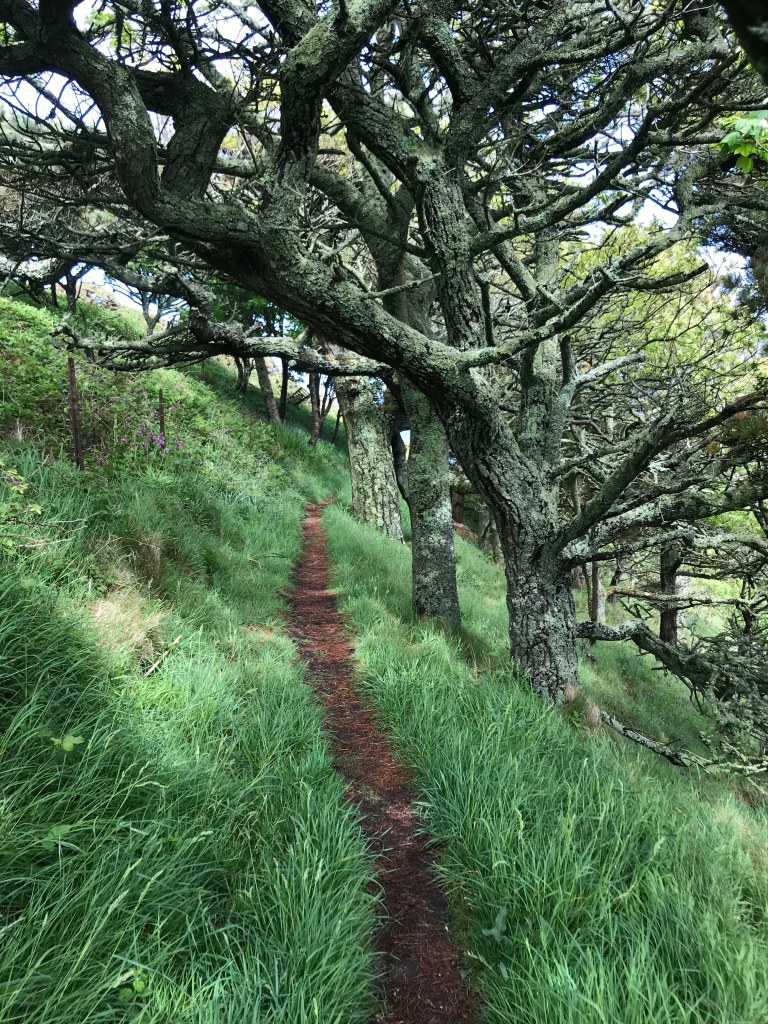
The wind has shaped the trees’ trunks and branches, which bend over after years of being windswept. Tristan Gooley refers to this as ‘The Ramp.’ The trees are blown into position by the wind.’ I have often stood with a sketchbook and pencil trying to draw these trees.

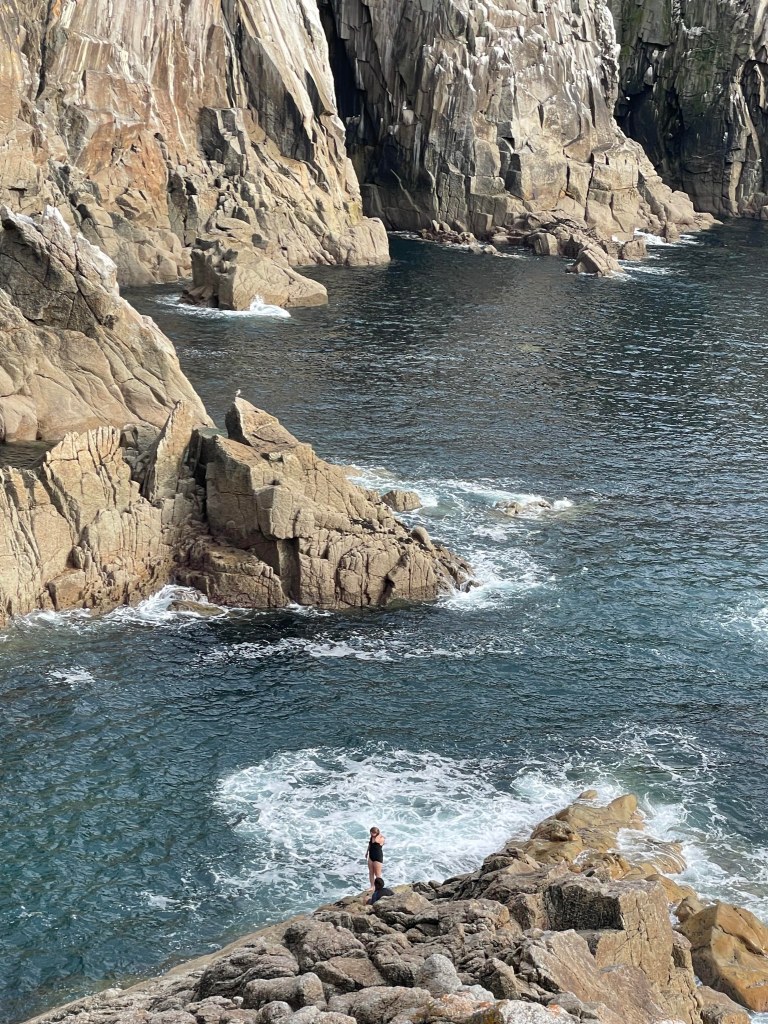
I often walk down to the Jetty when the wind is South and Westerly. It is most spectacular on a large high tide. The waves crashing against rat island make the names ‘Devils Kitchen’ and ‘Hell’s Gate’ seem so appropriate.

Sometime the wind can be raging against Rat. It can be so calm in Christie’s Quay, I can swim as as the island protects from the prevailing wind. As a swimmer or dipper (as I prefer to call myself), the wind direction is important. A strong force 4 or 5 westerly can still be calm in the bay. Making a trip to the North End on a southerly a good choice. Swimming off Jenny’s cove in Easterly winds is also an off-piste choice out of birding season.
Walking decisions follow similar logic to swimming. Understanding the wind direction can help you decide which way to head. I often take my wind cue from the flag on the church or at the Ugly. If there is no flag flying, I use a digital device. Then, I check the XC Weather App. I can’t work in MPH wind speed, so, I translate to the Beaufort scale. I can work with numbers under 10! Plus, it uses colours, and red is obviously not good news.
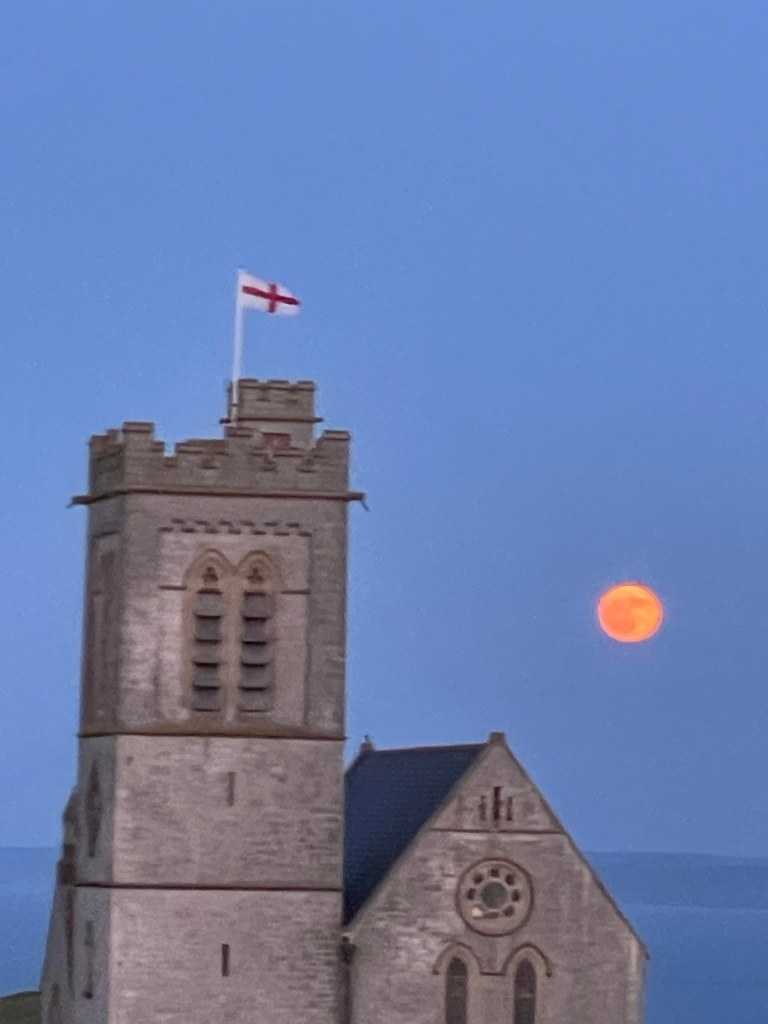
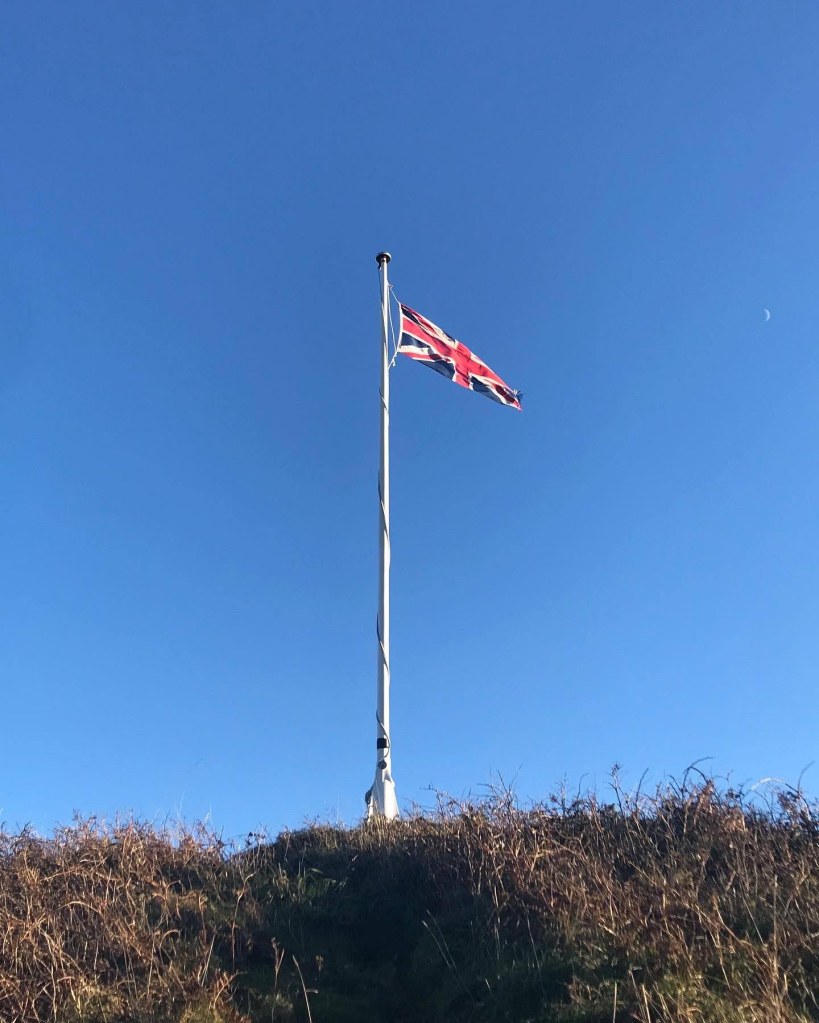
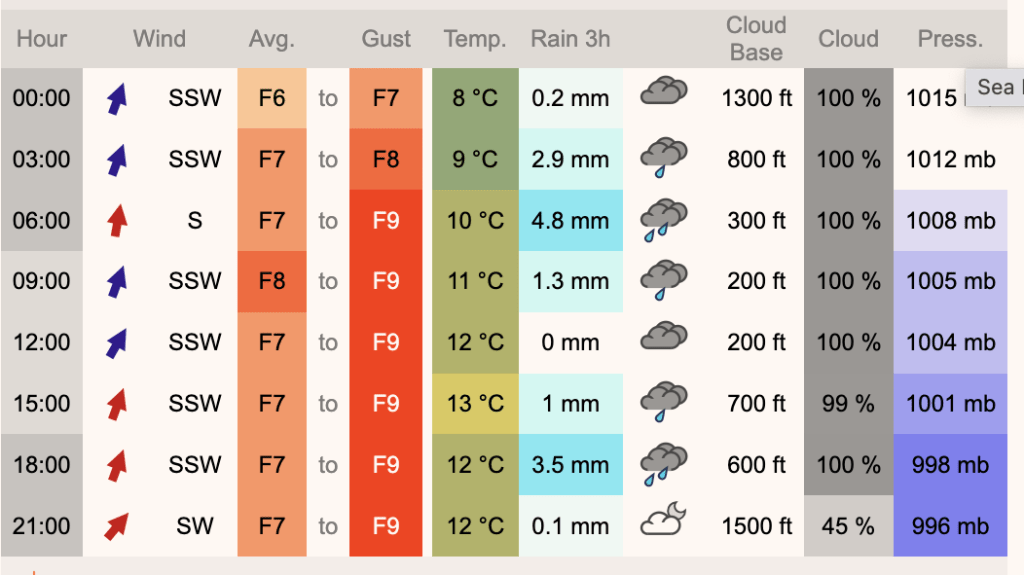
In a westerly wind I enjoy a walk on the East side. It can be protected, especially the lower east path. Sometimes, if the wind is strong on the Upper East, your head will just be above the field banks. So you will still feel the wind.
If there are no flags flying you can use the animals to assess the wind. Often at Quarter Wall and Pondsbury, you see the Lundy ponies and the Highland cattle. On windy days, they completely disappear, hidden from view. I think they tuck themselves inside Belle Vue cottages or by the Old Hospital, just beyond Quarter wall. I’ve even seen Highland cows heading across the Upper East Path. They appeared as if they were making their way to the Marisco Tavern for a hot drink! If you walk diagonally off the main path, it can be particularly exposed. Walking across the airfield can be challenging in all winds. Notice as you pass ‘Pointless Wall’ as you will see a huddle of sheep sheltering out of the wind. The side of the wall dictating the protection from the wind.
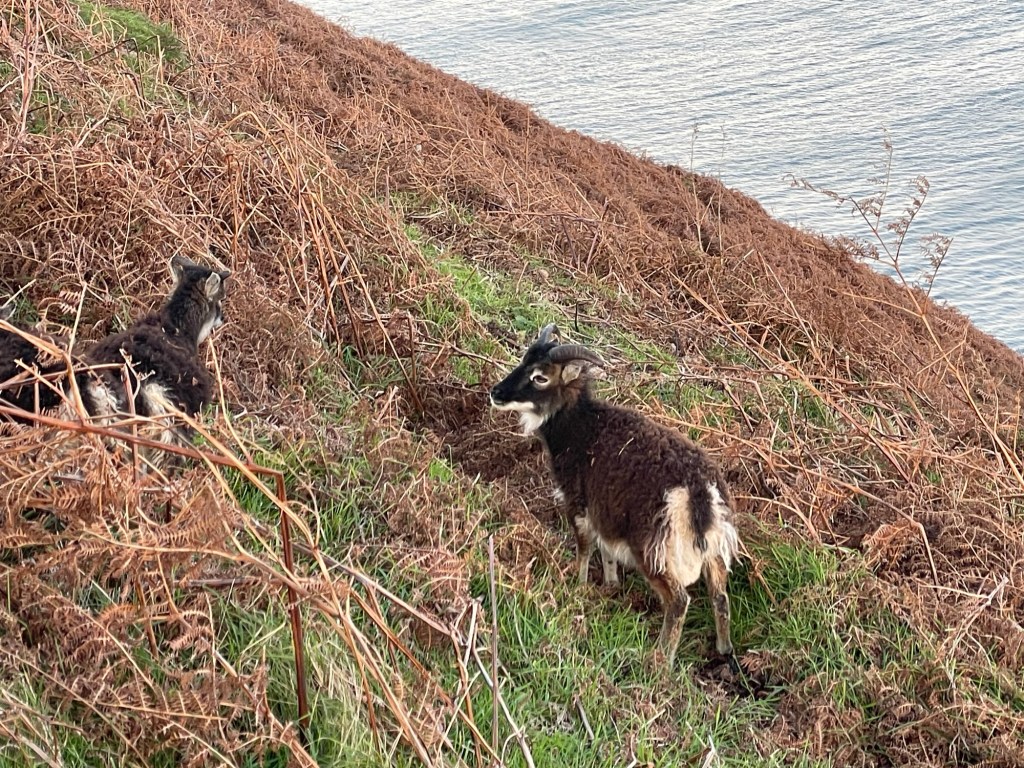
The wind can be good news for birders during migratory months. Strong winds can blow migrant birds off course, and they often find shelter on Lundy. The birding WhatsApp group can be full of notifications when a rare bird has arrived thanks to the weather.
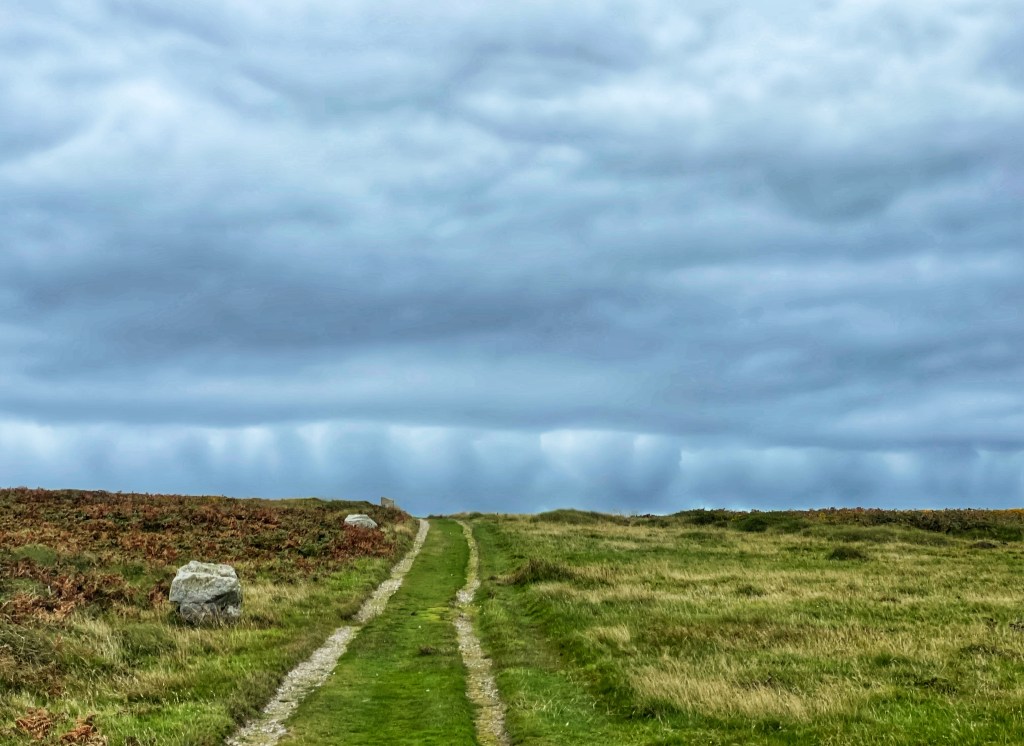
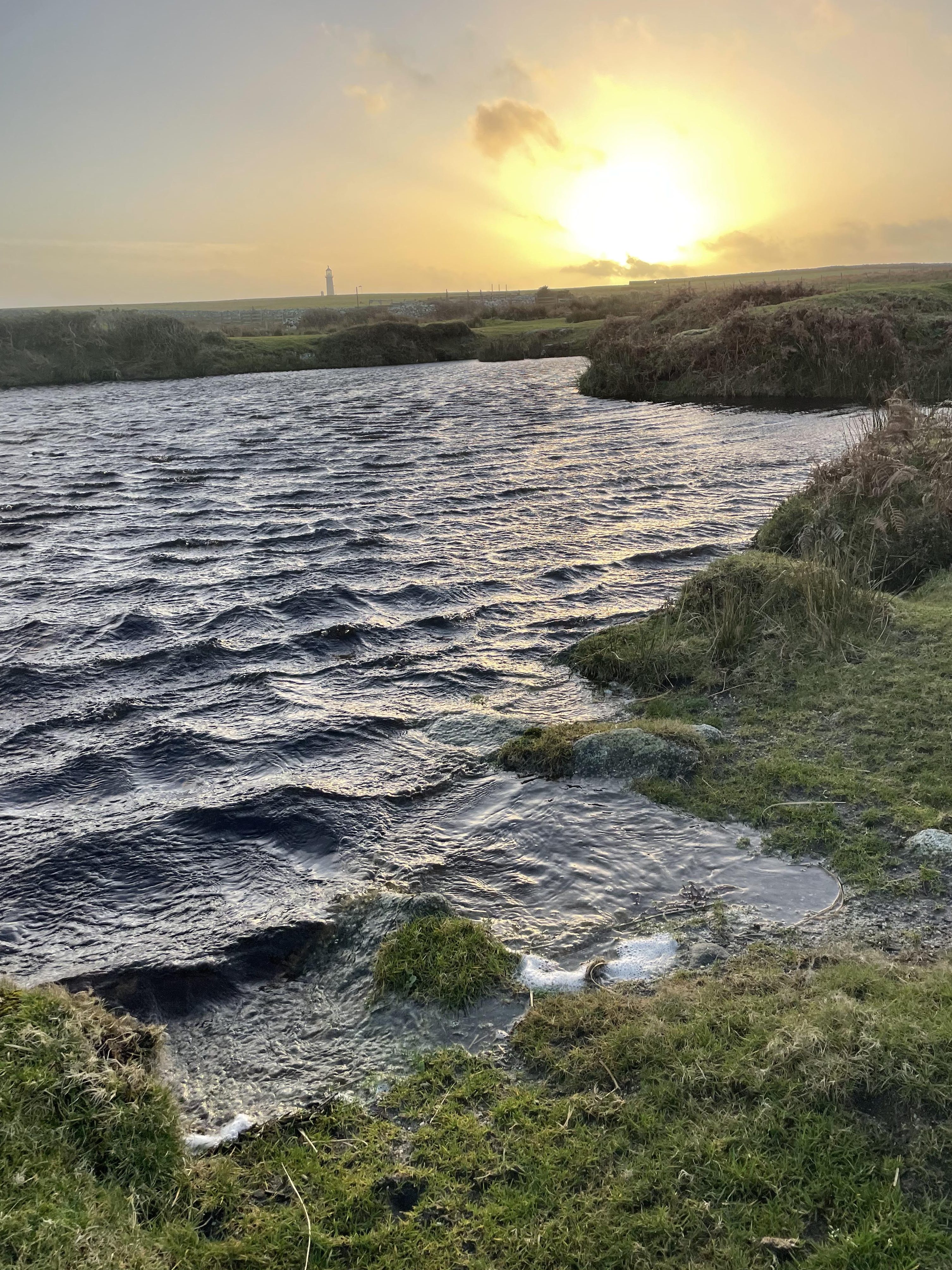
A walk along the main path will take you by the ponds of Quarter Wall and Pondsbury. The sky is at its biggest here. You get a 365° view of the sky and clouds. Knowing which way the wind is blowing will show you which weather system is approaching. It’s here you can make a choice whether to carry on or retreat back to the village. I often stop here to look at the wind on the ponds. When it’s windy, there are waves on the ponds and the ponds become an extension of the sea.
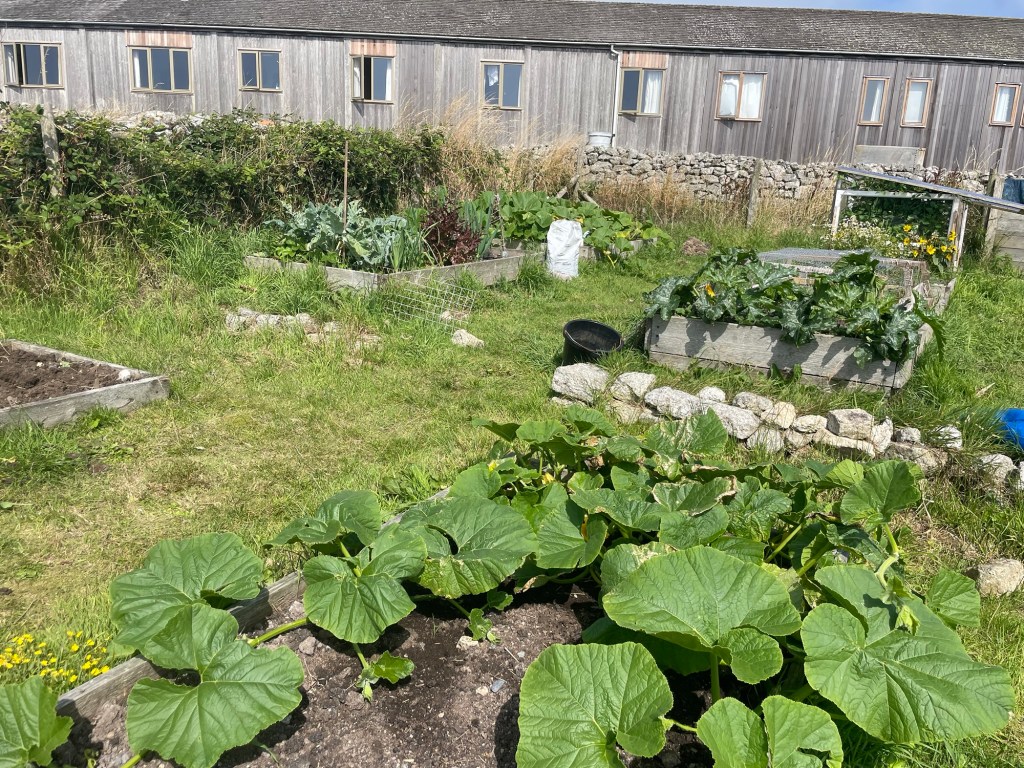
Like some of the other residents I live on Paradise Row in the village, known locally as ‘Pigs’. These are wooden houses which were built as temporary housing for builders working on the island. These are still standing. Living in a wooden house on a windy night can feel quite dramatic. The walls creak. The floor shifts. You become aware of every gust of wind. Sometimes, it sounds as though there is a freight train going past the window. It can even feel like the house is going to blow away. Nonetheless, Paradise Row has been standing strong since the 1970’s. Interesting to note that only one front doors points west.
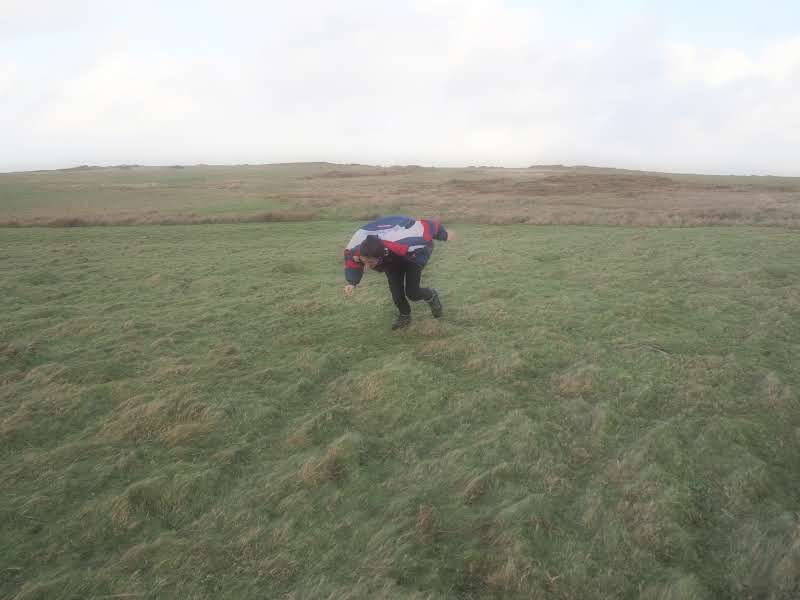
A great place to go in the wind is into The Old Light, where the wind can be deafening. Inside the stone tower, the wind echoes through the Light. The wind rages around the tower, yet the interior feels steady, like the calm eye of a storm. The Lighthouse compound can even create a vortex in the westerly wind. Many times I have been nearly blown off my feet as the wind surges around the compound. If you park the Land Rover out at the Castle or at the Old Light, know the wind direction. This can prevent accidents. Opening a door on the wrong side can mean the door is blown off its hinges.

At first, visitors find the wind fun. They enjoy the playful feeling of being tossed around. Yet, when you live here, the wind can become very wearing day after day. on your body.
Sometimes, after a long windy spell, going outside on a windless day feels absolutely perfect. One of the residents commented that she felt she had gone deaf. She hear nothing. Matt Gaw, in his book ‘In All Weathers, comments that wind on its own is silent. ‘What we hear is wind encountering an obstacle — creating what’s known as an Aeolian sound. Fixed objects like rocks, buildings and wires cause a constant tone, while moving objects create irregular sounds.’ I can relate to this Aeolian sound, as outside my bedroom window is a hammock frame. When the wind blows, it creates a sound like pan pipes. The wind blows through the holes in the metal. This reminds me of my past Lancashire Life. I remember visiting the Singing Ringing Tree. It is located on the Moors above Burnley in Lancashire.
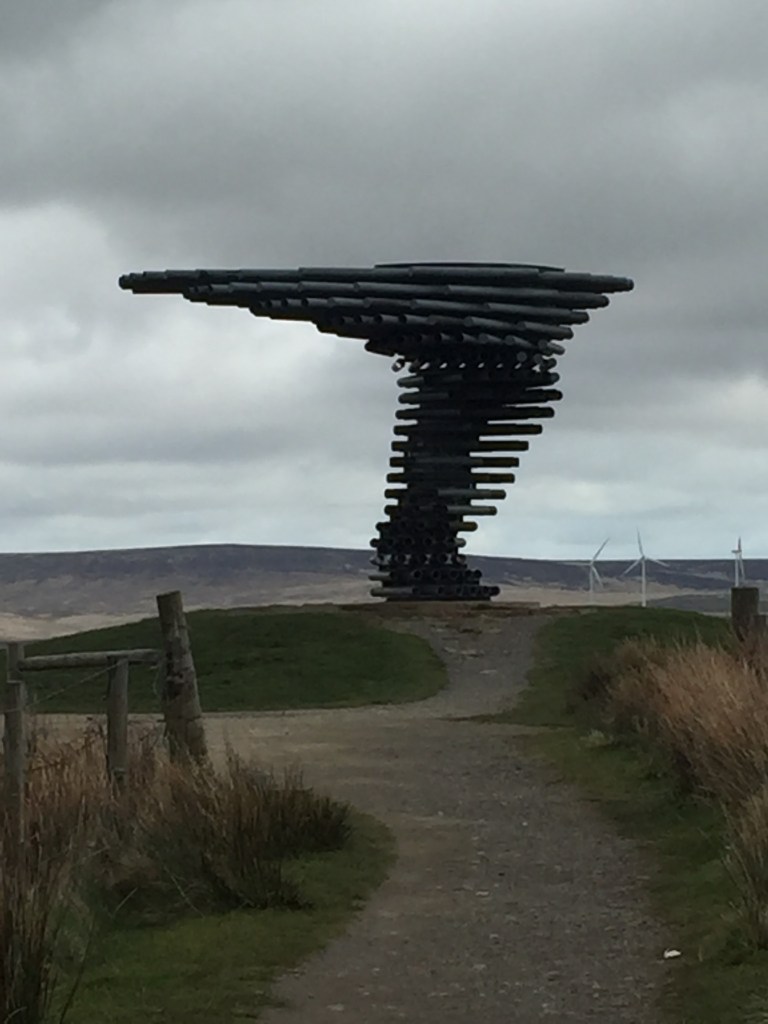
We are used to waves and high tides, and storms often feel like normal life on Lundy. During one storm, residents living on the High Street were even told not to come into work in the village. It was deemed too dangerous! If you have walked past The Barn on a windy day, know how strong the wind can be. The westerly wind flies through the camping field. The UK Met Office has been naming storms since 2015. They alternate gender from A to Z. Matt Gaw (2024) notes they’ve never got past K. Storm Katie blew out in 2016. To us, storm names feel like something from the mainland. Here, many storms simply feel like visitors popping onto the island. They stay for as long as they like and then leave without notice.
The weather definitely shapes both the landscape and the people who live here. It will continue to shape it for many years to come. Matt Gaw mentions Tim Ingold who suggests we “live in a weather world.” On Lundy, that feels especially true. On the mainland, buildings and trees break up the wind. Here, it comes straight across the island. There are very few barriers to lessen its power. The wind gets into your muscles, into the way you walk, even into your mood. Over time you start to lean into it the way the trees do. We become more hardened to the wind, we just use it as the hairdryer we don’t own!
Images
Fig. 1 Holman, Sketch on Lundy Art Trail, September 2023 (2023)
References
Gaw, M. (2024) In All Weathers: A Journey Through Rain, Fog, Wind, Ice and Everything In Between. London: Elliott & Thompson.
Gooley, T. (2018) Wild signs and star paths, London: Sceptre.
 Jane Sharkey