
On Summer days, when the sun sits high and clean above Lundy, the island glows. The granite shines, Mica and Feldspar glinting black and white. It is the quality of this granite that led to the creation of the Lundy Granite Company in 1863. Although there is little sun today at the end of November. I still enjoy this walk.
The wind is blowing westerly, which means the East side of the quarry is sheltered. As I walk here it is hard not to consider the time when the Lundy granite company was operating. Although it was a short-lived commercial adventure, it has left an impact on the Island.
Starting from Quarter Wall
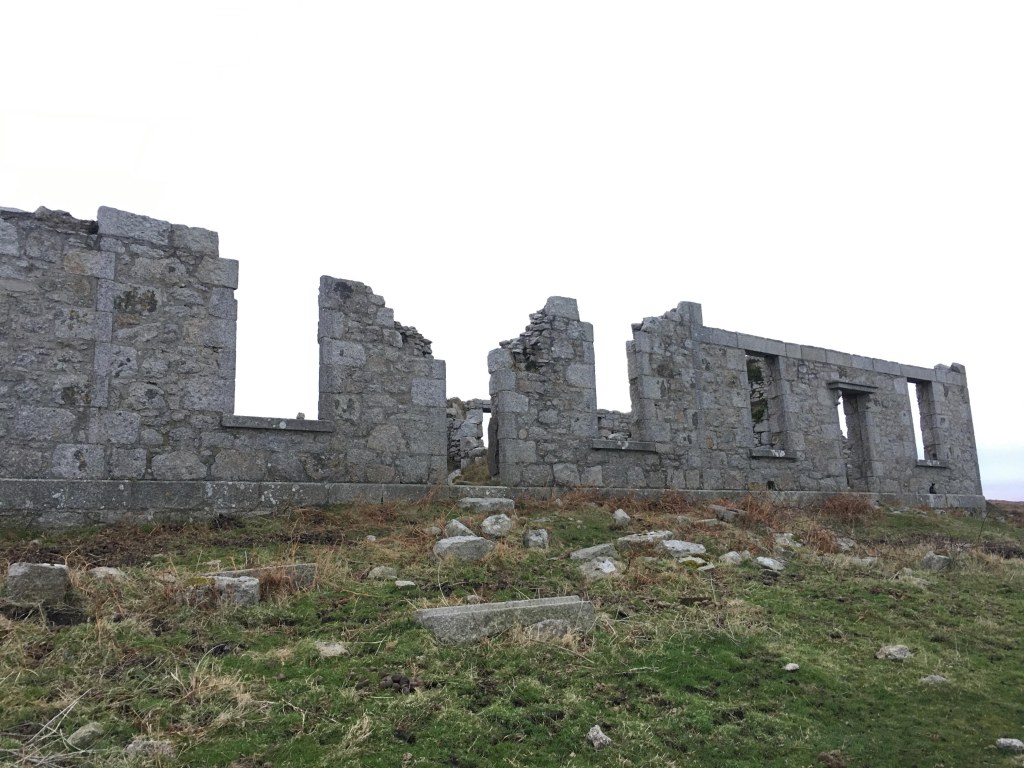
My walk today starts at Quarter Wall, where you can see the footings of Quarter Wall cottages. There is also a found granite date stone here by the gate – 1864. It is presently totally hidden by bracken and brambles at Quarter wall.
You can watch a quick video of the route
The quarry workers had to construct several buildings to house both themselves and the management. It is documented that around 200 workers were employed by the Lundy Granite company.
I walk past Quarter Wall pond, down to what we now call Quarry cottages. These were built to house the surgeon, the engineer, and the foreman of works. They were at that time referred to as South End villa, Middle villa, and North End Villa. This Villa naming demonstrated the importance of the people who lived there. Later, the quarry company closed down. The Heaven family renamed them Belle Vue cottages. When you stand here and look out, you can see why.
The walk now takes me down a narrow path into the first of the quarries. It was known as William Heard’s Quarry. It is now known as Quarry Pond. I often get asked if I have swum in here? I have not! The water is dark and carp skulk in its depth. I often wondered how deep the water is, research tells me its about as deep as I am tall!
To the Timekeepers Platform
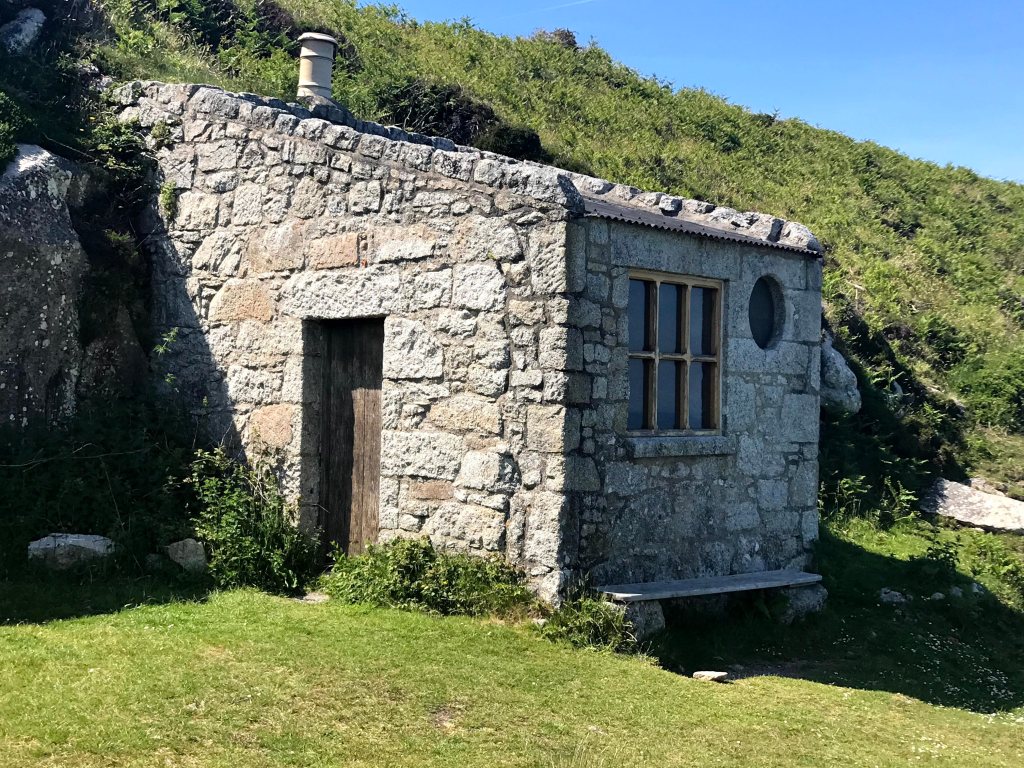
It is from here that I follow in the footsteps of the many quarry workers on their way to work. Today it is quiet but the route still exists. I walk down by Quarry Pond to the Timekeepers platform with its TimeKeepers Hut. It too has undergone a change of name. Now it is referred to as Felix Gade’s Hut. Here workers would have clocked on for their shift. Today, it provides refuge for walkers caught in a rain shower. It also offers a shelter out of the wind. The fire grate would welcome a fire today. I love to sit and sketch this building. Yet, I still have not drawn one that would grace a published page. I have also been known to leave a typewriter here.
Along the Tramlines
I continue my walk down the path to the and meet the old tramway. Most of this quarry area is now registered with Historic England. Even the spoil tip down the cliffside.
I continue my walk trailing the old tramway. I start to pass the hollows on the cliff side. These hollows formed the quarries. The first of these is Howard’s Quarry. Visitors spend the most time at this quarry as it houses one of the Lundy Letterboxes. Then as I walk on I reach Middle Quarry now known as VC Quarry. There is something about stepping inside this space that quietens everything. This is the second deepest of the quarries, it holds a memorial stone. In memory of John Pennington Harman. (A member of the Harman family who owned the island from 1925-1969). JP Harman was awarded the Victoria Cross for bravery at Kohima in 1944. The plaque is located here because when he and his brother used to play here. It’s interesting to consider how the boys would have played on these sidelands of Lundy. Maybe they traced the same chisel marks I run my fingers over now. It is touching to know that this place is not just a memorial for a war hero. It stands as a tribute for all the men whose lives were entwined with the granite industry. My most poignant memory of this place is a Remembrance Day service I attended here. The Last Post was played. Everyone was silent for two minutes, except for a little wren singing,
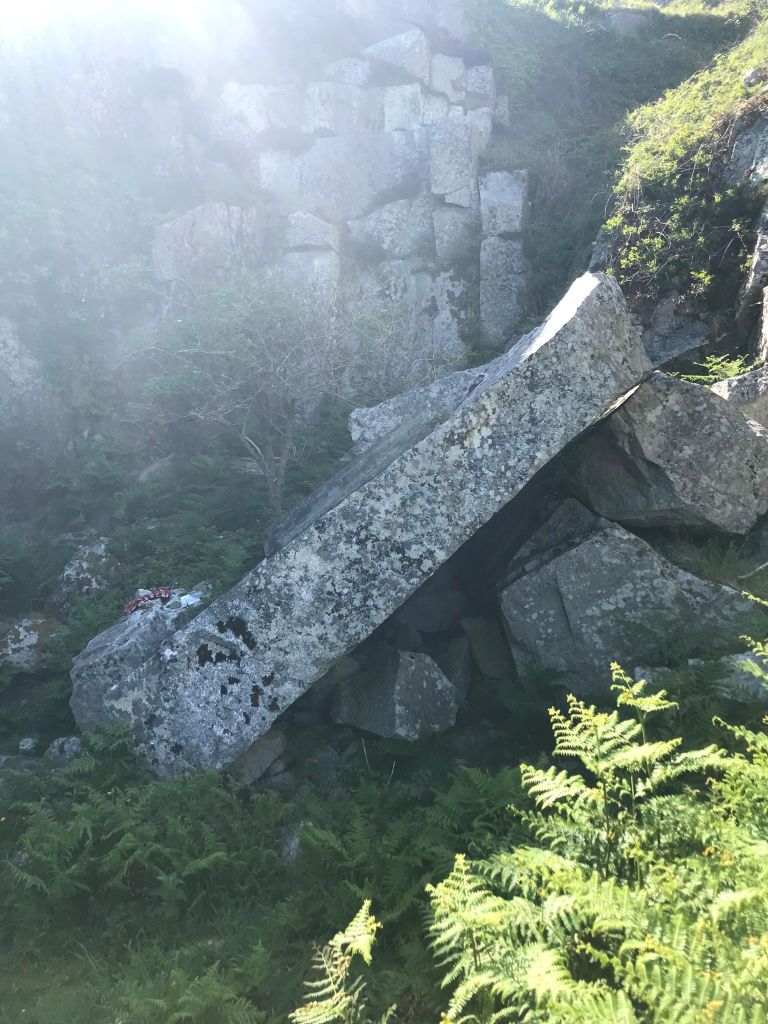
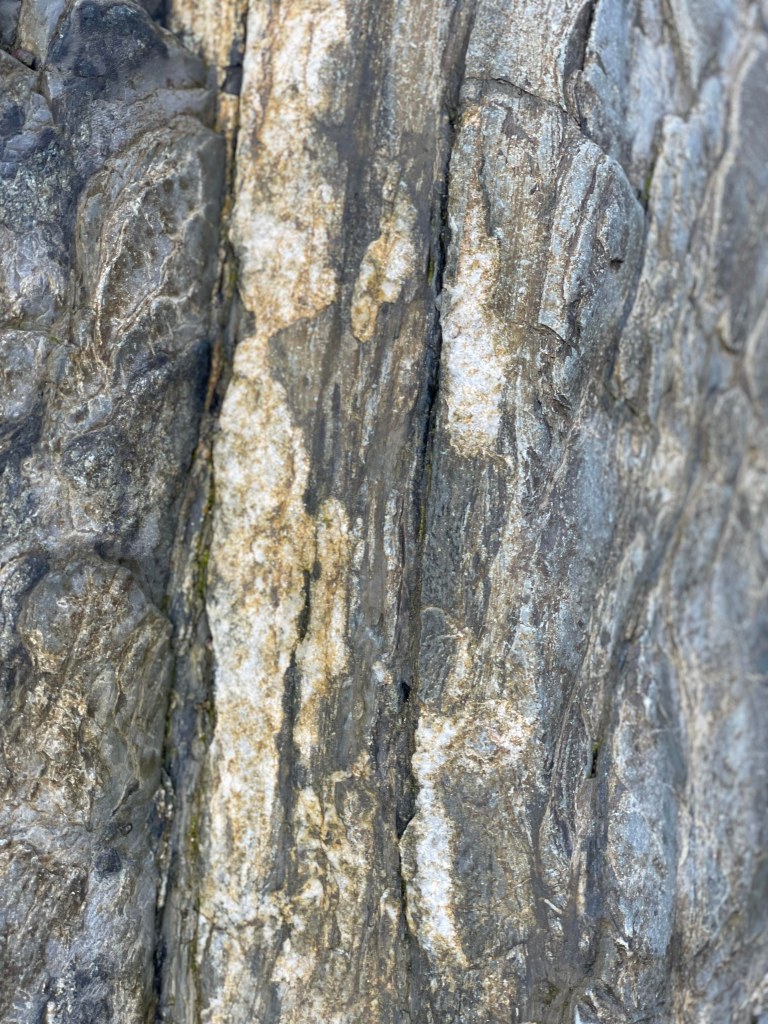
As I walk along I come to the deepest quarry; Smith’s Point Quarry. This is one of my favourite places to come. The land curves as though someone scooped out a piece of the island with their hands. The surfaces are carved with the marks of men who worked here more than 150 years ago. You can see where their tools bit into the granite, each groove a small but insistent record of effort. I imagine the sound. It is the hammer on stone and the voices of men not from these parts! I imagine, too, the ambition. Lundy granite was meant to become part of great cities. To build embankments. To fortify London.
My ‘favourite quarry’ video
Markings of history

A creative space
I often come here to sketch and draw. I have even made paintings and etchings of these quarries. There is something about this sense of place that draws you in.
I follow the tramlines out of the quarries, round and up and back to the main track. From here I head south past the old hospital ruin. A visit here is worthwhile, just to contemplate the injuries that the surgeon must have seen here. I wonder how many of these injuries have also been caused by fights in the Marisco Tavern!
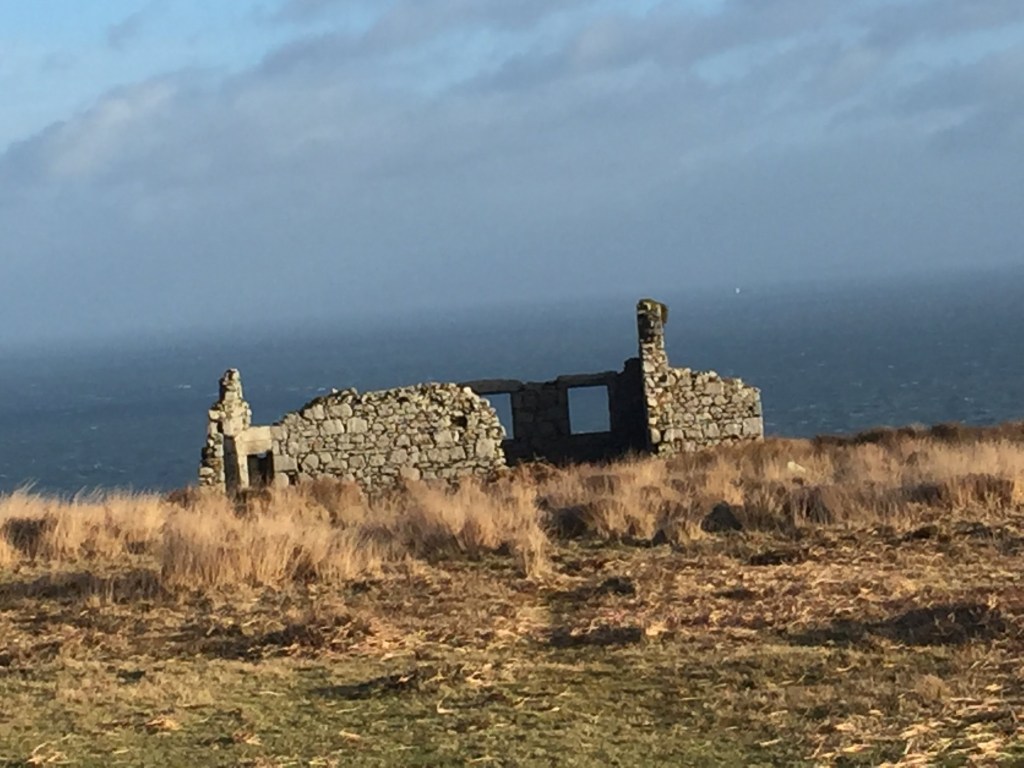
All this effort and yet only five years later the Lundy Granite Company was wound up. The company’s failure was due to a combination of factors. These included poor management and the high cost of operations on the remote island. So by 1868, it collapsed. The workers left. The tools quietened. The quarry walls became a stillness rather than a workplace.
Reading Rothwell & Ternstrom gives an idea to the mismanagement and adventures that went on with the Lundy Granite Company. This is where, in my mind, Lundy’s story folds gently into another—Portland. Portland stone, unlike Lundy granite, was demanded endlessly. It was quarried for centuries by convicts and quarry men. It built dreams in London—grand ones. One million square feet for St Paul’s Cathedral alone. But Portland paid a heavy price. Whole chambers were emptied. Tunnels carved deep. The island became a landscape of absences. Artist Katrina Palmer explores those absences in End Matter. She writes about a fictional group called the Loss Adjusters. They try to account for what’s been taken. They move through the tunnels, measuring the hollows where stone once was. They record the island by describing what’s missing. Having read The Lundy Granite company – an industrial adventure. I try to weave a narrative of the men who worked in and those who managed the Lundy quarry. The documents and letters record the stories. The non recorded adventures; the poker games, the fights and then maybe illegal happenings.
Lundy was spared. I wonder what the east side lands would look like. This thought occurs when I stand here. What if the Lundy Granite company had prospered? How much granite would have vanished? How much of the island’s silhouette would be different? Would this place still feel the same? An earlier blog showed how I reinterpreted this by weaving back the landscape.
Nature has taken over. Ponies, cattle, birds, rabbits, flora, and fauna have all moved in. The quarry workers have left.The quarries now invite quiet moments and slow discoveries of people like me. Nature is reclaiming the space. Surrounded by stones with history of an island that was once quarried.
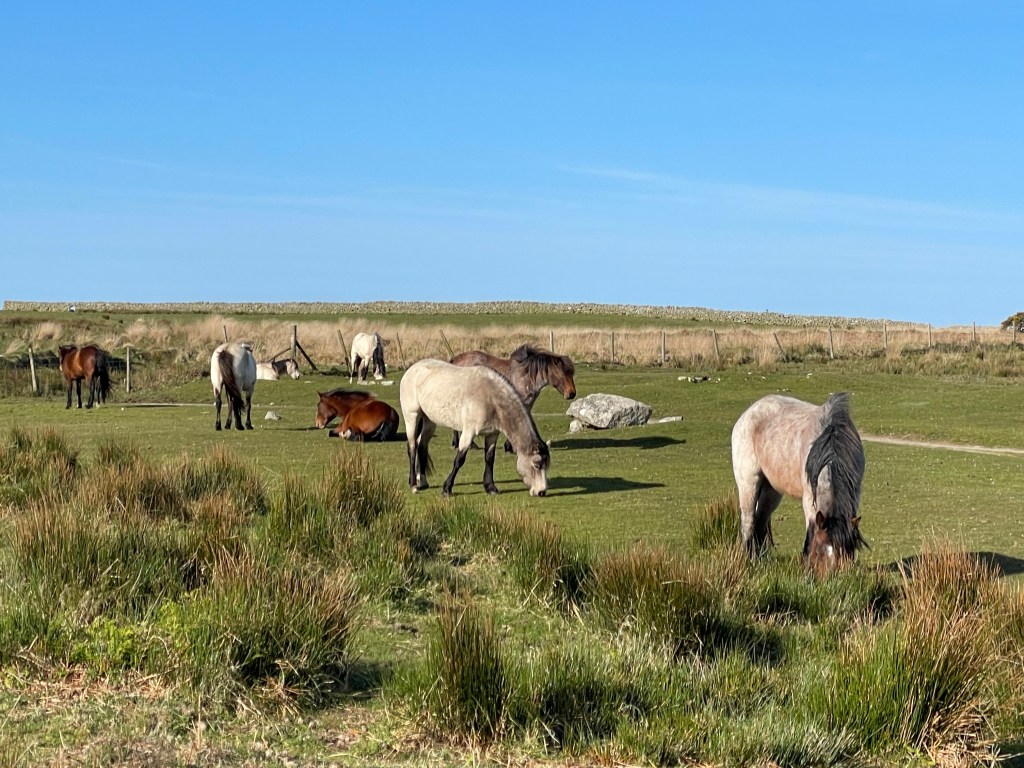
Quarter Wall Cottages
Reference
Palmer, K. (2015) End Matter. London: Book Works / Artangel.
Rothwell, P. and Ternstrom, M. (n.d.) The Lundy Granite Company: An Industrial Adventure. Exeter: Devon Heritage Press / Westwell Publishing.

You must be logged in to post a comment.