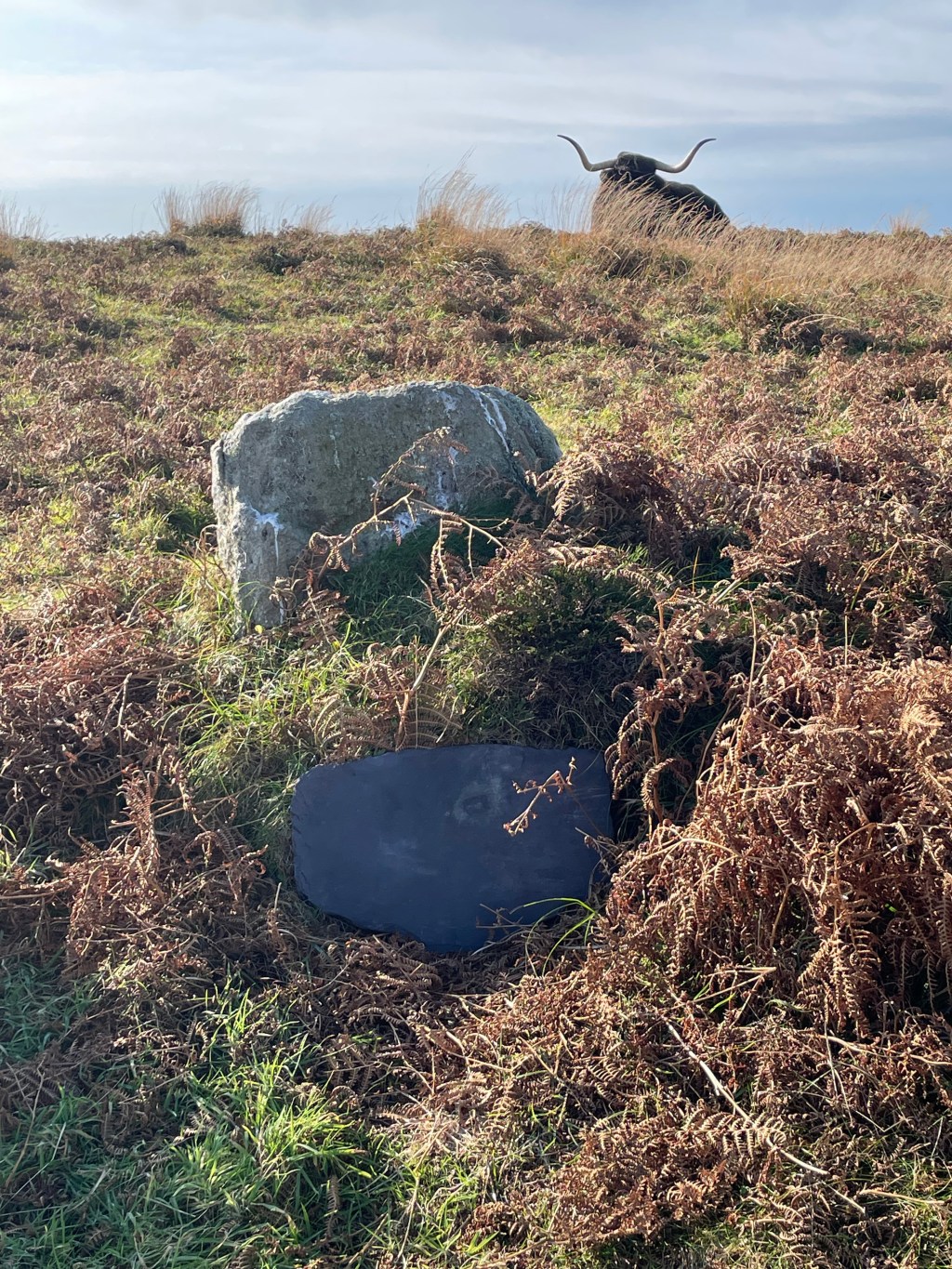
Small Islands across the globe have long held a mystique, sometimes becoming sites of religious, spiritual or supernatural exception. Johnson, H., (2024)
I read an article by Henry Johnson (2024) about religious or spiritual places. It made me think about how Lundy doesn’t show itself as a spiritual place. It doesn’t announce itself in the way that Lindisfarne in Northumberland, Bardsey in Wales, or Iona in Scotland does. Nor does it draw people for overt Spiritual or Arthurian associations, like Glastonbury or Tintagel. It is simply Lundy.
And yet, like many people, I notice that certain parts of Lundy invite a different type of attention. It’s less about religion, and more about a feeling. A way that some places make you pause, linger, or feel slightly removed from the busyness of everyday life.
Whilst Lundy does have Christian connections, this blog post isn’t about religion or belief. Nor is it making claims about hidden energies or ancient truths. But, I cant help feel that several places create a particular atmosphere for me. These are spaces where I naturally slow down and stay a while. The sense of connection they offer is hard to put into words. Maybe it’s the light and weather that gather in certain spots. Or maybe the connection is related to geology, history or alignment.
I’ve chosen four locations on Lundy where I feel this quiet connection most strongly. There are many others, and I’m sure you have your own. These are places that feel quietly spiritual — not because they demand reverence, but because they seem to hold it.
Standing Stones
Lundy’s standing stones are easy to overlook — only two are upright. Weathered and worn, they carry the confidence of having been in place for a long time. They invite stillness. Sitting beside them, touching their surfaces, or simply being near them encourages pause.
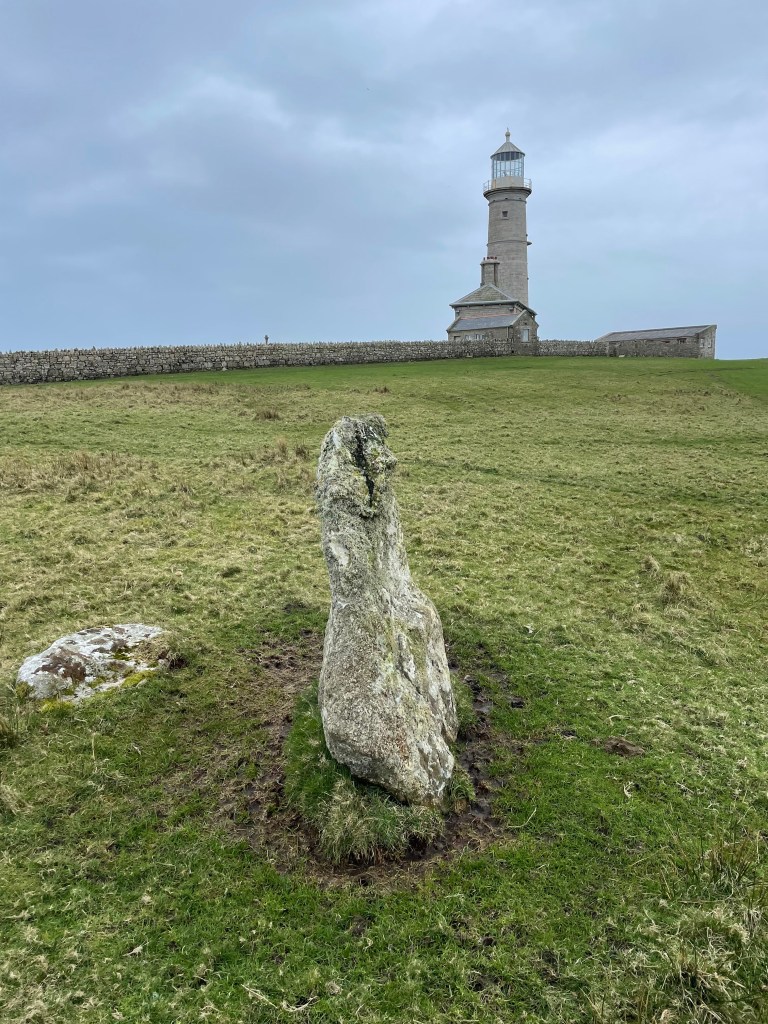

I sometimes sit on the stone near the Old Light. I use it as a seat to watch the sunset. For Jane Harris of Songways, these stones inspired a beautiful and haunting song – Take a Listen here. Others have responded through poetry and writing, drawn from time spent quietly with the stones.
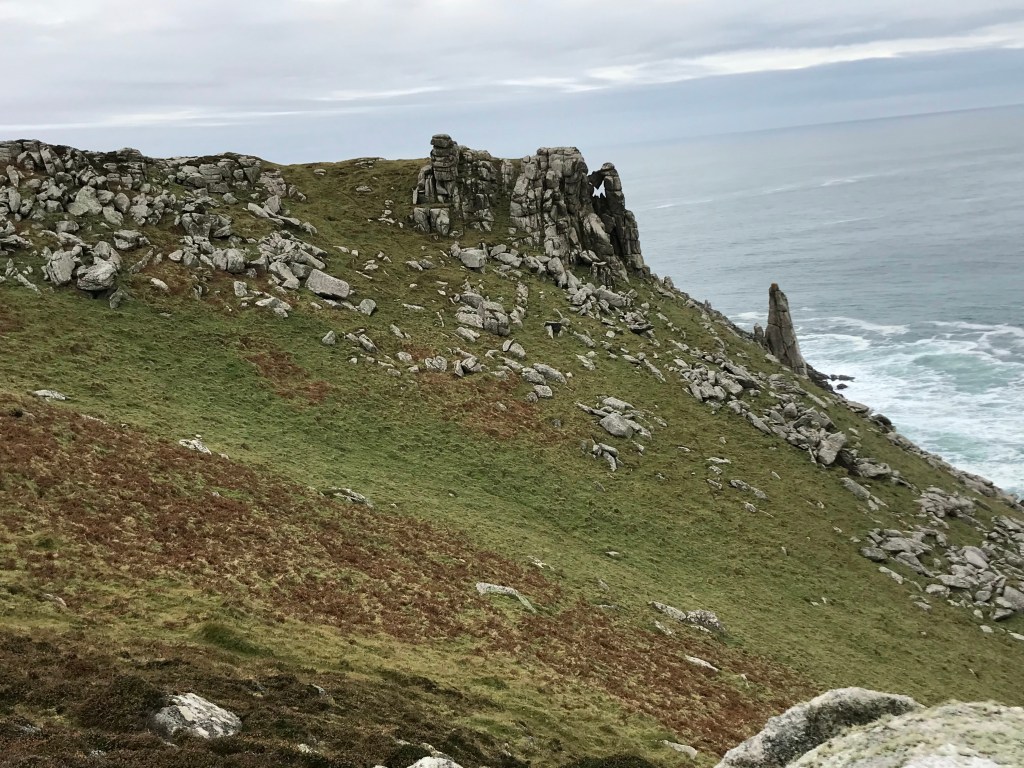
The Mousehole and the Trap
Debbie Cartwright is a Lundy visitor and philosopher. She once described the Mousehole and the Trap to me as a spiritual portal. It serves as an energetic gateway. Even without that language, there is a strong sense of transition here. When I sit in this place, it feels like a threshold. It feels like a movement from the south and into the north. Beyond this point, Lundy feels more exposed, more desolate. The space invites attention. It draws focus to the rock formations. It makes one ponder how they came to be. It emphasizes slow work of weather and time. Is this arrangement natural, or shaped over centuries by erosion and movement? It’s a place that encourages you to sit, to question, and simply to be. Moments like this often lead to a feeling of the ‘spiritual’. This happens not through belief, but through heightened sensory awareness.
The Burial Ground
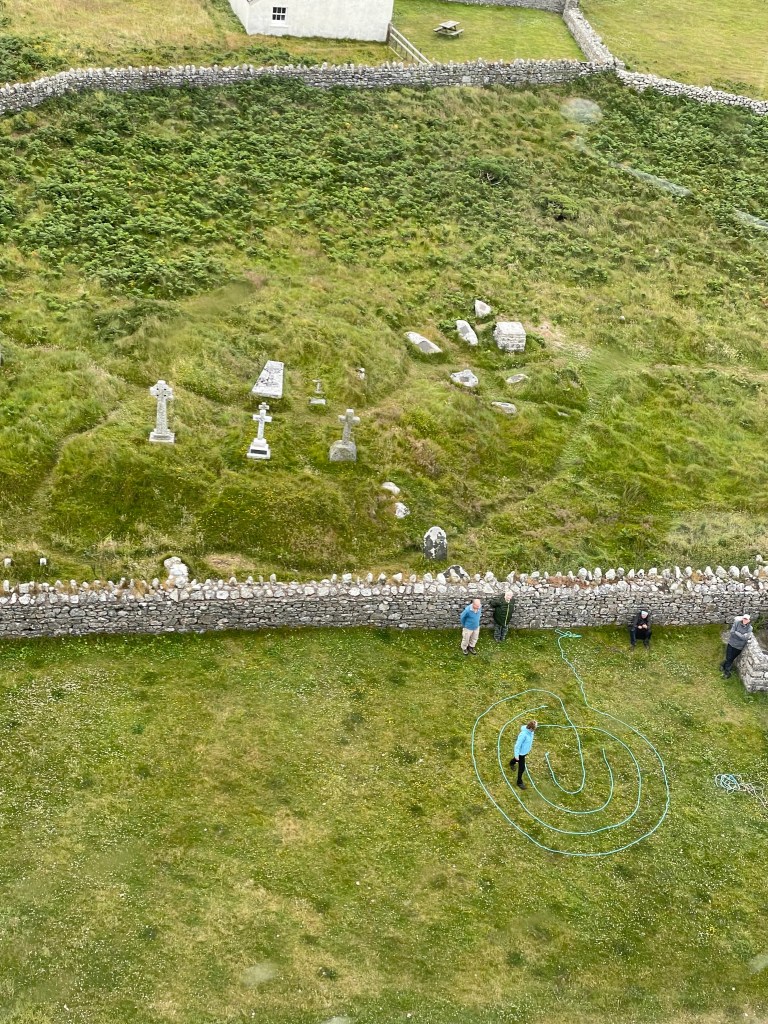
The burial ground is an important early Christian site. Yet, unlike places like St Michael’s Mount in Cornwall, it doesn’t show itself as a destination of spiritual history. Instead, it carries a quieter presence. Here, connection doesn’t come from monastic significance. Instead, it arises from lives lived on — and with — the island. Names, dates, and inscriptions mark stories that are both personal and collective. They speak of a network of people who worked, loved, and belonged to Lundy.

Standing among the graves, it’s hard not to feel the continuity of human presence. The same weather, terrain, and isolation experienced by visitors today shaped the lives commemorated here. The burial ground anchors those lives to the land itself. It offers space to think about time and belonging.
This is precisely why I have twice placed a temporary labyrinth here. Walking a labyrinth slowly changes how you relate to the ground beneath your feet. It invites attentiveness and connection that can otherwise be missed.
The Elbow
The Elbow is a place where landscape and imagination intersect. It is linked to Pythagorean theory. Its alignment is believed to be eastward toward Stonehenge and northward toward the Preseli Hills in Wales. It sits within a wider web of geographical and cultural connections.
After reading Heath and Michell (2004), I sought out the location myself and later took visitors to find it. Coincidentally, on the day we set off, I met Andrew Collins. He is an explorer of megalithic structures. He was also heading there and met us in the space, sharing his thoughts with us. I met Andrew again in September this year. I hosted the filming of an episode of Weird Britain on Lundy. It is due to air in Winter/Spring 2025–26.
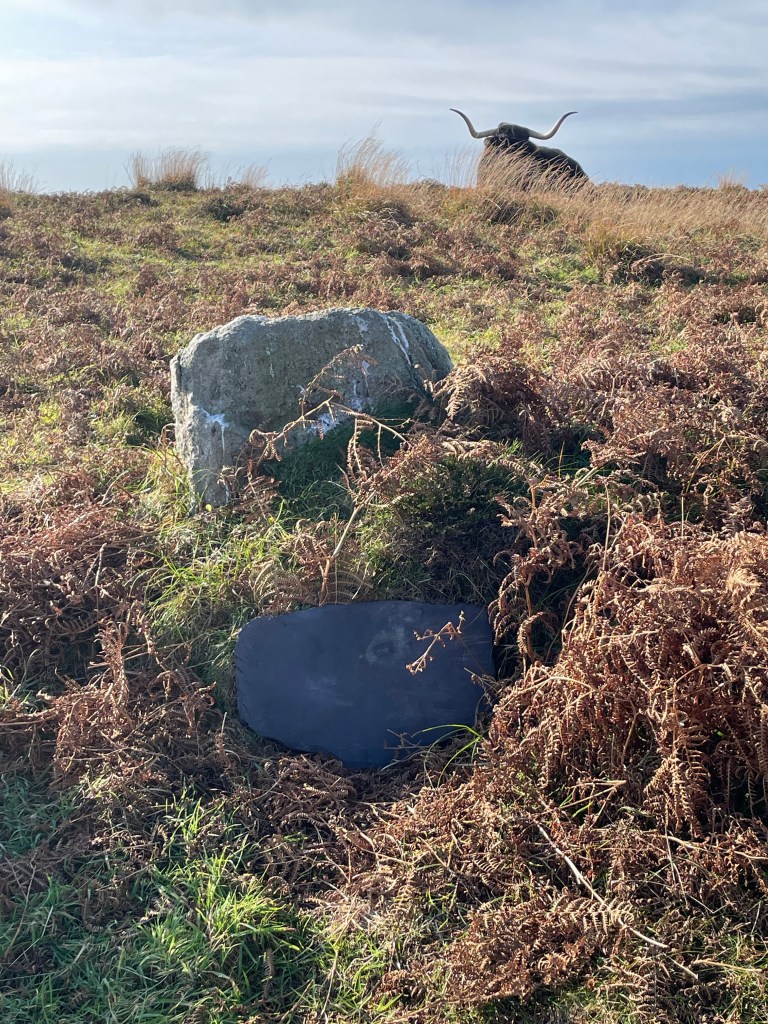
Whether these alignments are coincidental or intentional matters less than what they invite. Standing at the Elbow encourages you to think across distances. It prompts you to see Lundy not as an isolated island. Instead, see it as part of a much larger network.
There is something quietly powerful in this outward gaze. It serves as a reminder that even the most remote-feeling places are physically connected to elsewhere. These places are also imaginatively connected to other locations.
A Way of Walking
What unites these places is not a shared belief system, but a shared effect. They slow you down. They heighten awareness. They invite pause.
The spiritual quality of Lundy doesn’t dwell in any single site. It involves moving attentively through the island. You notice how weather shapes your route. Ground conditions alter your body. Some places ask for stillness, while others encourage motion. Walking becomes a form of listening.
Lundy doesn’t insist on meaning. It offers space for it. And in a world that rarely allows for quiet attention, that is its most spiritual quality of all.
References
Heath, R., and Michell, J., (2004). Measure of Albion. Cardigan, Wales: Bluestone Press.
Johnson, H., (2024). Sacred Isles: Islands as Sites of Religious, Spiritual or Supernatural Exception. Folk, Knowledge, Place. Beewolf Press Limited. 1 (1) [Online]. Available at https://folkknowledgeplace.org/article/120043. [Accessed on 20/12/2025]

You must be logged in to post a comment.