PART TWO
This is the continuation of a walk with a book, that began at the Landing Bay. The walk took inspiration from Michael Portillo’s BBC programme on Great Railway journeys. Where Portillo traveled with George Bradshaw’s guide. The guide detailed destinations, attractions, and accommodations for Victorian travellers. My guide was A and M Langham’s ‘Lundy’, produced as part of an Islands series.
I discovered that walking with a book in hand is quite different from simply walking. As Dee Heddon suggests in Mock (2009)
The page and the path start a conversation, taking a book mobilises it, releases it from its cover‘.
In Blog part one, the book guided me, as I walked up the Beach Road. In this second and final blog, I reach the Plateau. It is here that I discover that buildings and purpose have become interchangeable.
Millcombe:
We join Langham on his journey as the book takes us up Millcombe Drive.
Millcombe House standing at the head of the green valley, late Georgian, built in 1836 by Mr Heaven, a family house overlooking gardens and bay.
The villa was a typical property of the time. It was slightly more unusual in that it was built on a remote island 11 miles off the Devon coast. Built in 1836, as you walk up through the valley, you can easily imagine being in the early Victorian era. Sometimes it feels as if you are transported back in time. A time when Millcombe was the Heaven family’s home. In some ways, Millcombe remains unchanged today. It provides a large rental accommodation for families and friends.
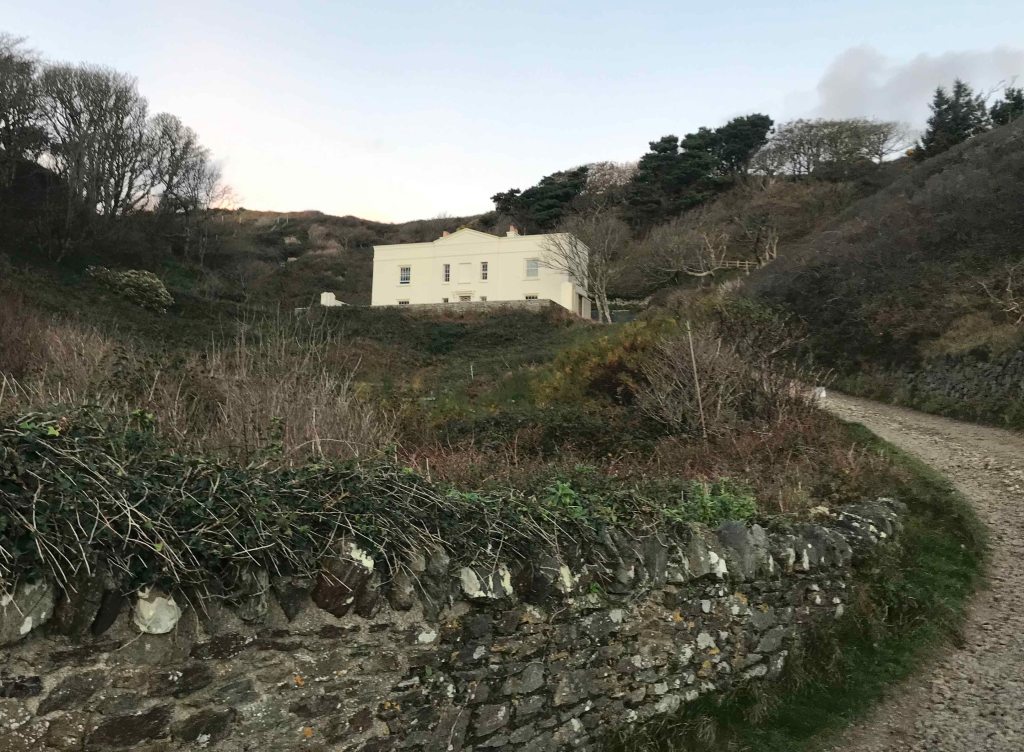
I often see families using the house exactly as it seems to have once been intended. For a social get together and convivial eating. I’ve been invited more than once for a post-swim breakfast on the lawn. I’ve also enjoyed impromptu afternoon tea in the Kitchen. During these moments, you feel like you are in an episode of Downton Abbey! I’ve observed croquet being played on the lawn. Yoga mats laid out for some stretching and relaxation. Easels standing ready for budding painters. My favourite was a long table on the terrace. It was laid with a white cloth, and an outdoor feast was slowly assembling, all in a pink glow of the setting sun,
Once, coming back from the beach via the Ugly. I heard children playing, voices across the gardens. The brass bell by the dining room rang. Children came running in from different directions. They emerged from paths that thread through the valley. It felt momentarily like stepping into another century. This is what Lundy does.
Anyway, I digress, back to the book. Langham mentions that there used to be washbasins in every bedroom. This idea makes me smile. I imagine the extra housekeeping that would involve now.
The Village:
(1) layers of history
“From Millcombe the road curves inland, crossing the common between church and farm”
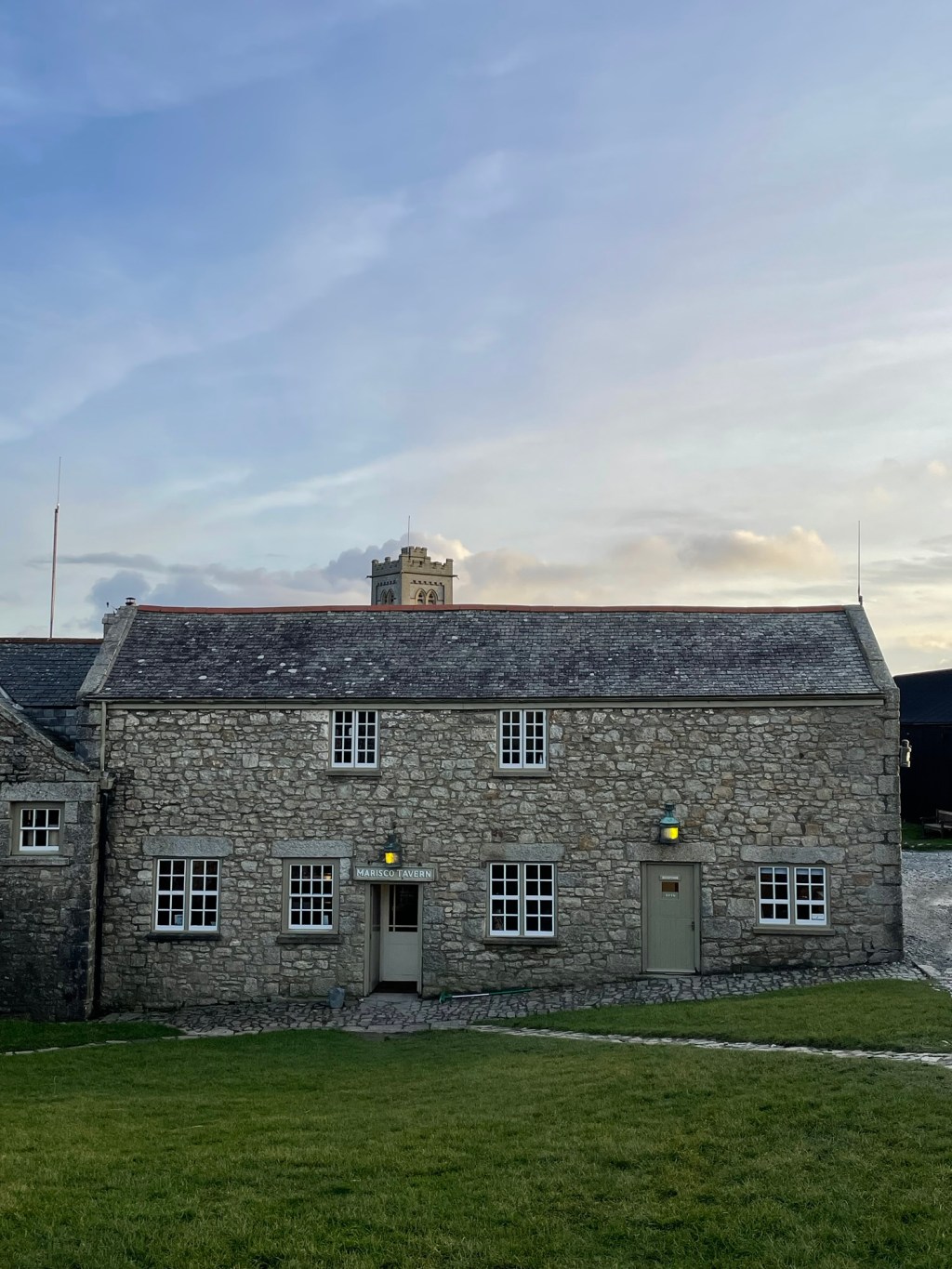
When you spend time with books about Lundy history, you notice how fluid this landscape has been. It shows how roads have shifted. Buildings have changed purpose. The buildings have had different yet similar uses over time. The Farm and Marisco Tavern have both lived several lives. In the past and today, the Marisco Tavern still acts as the island’s heart. Residents and visitors spend time in it alike. In winter especially, when weather presses people indoors and stays are longer, it becomes a place of recognition and chat. This is where community happens. A place where people meet and connect. Something that I feel is important as we continue in this digital age. (There is a pdf of the Lundy History Album at the bottom of this post)
History is still living in the Marisco Tavern. The walls are hung with Life belts and lanterns salvaged from wrecks still hang there.
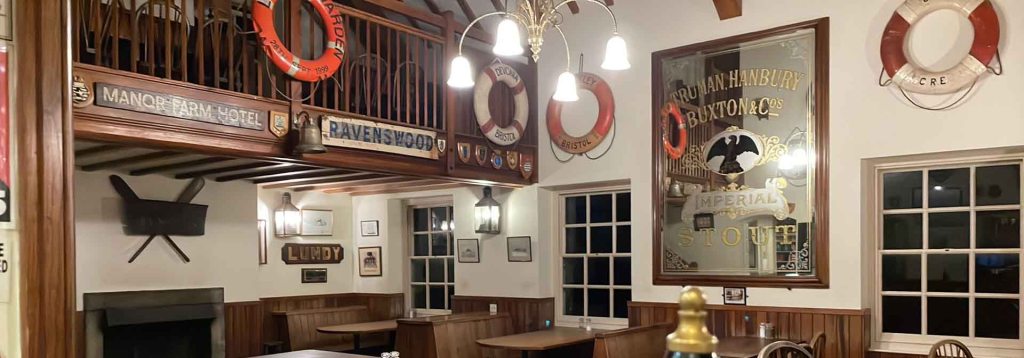
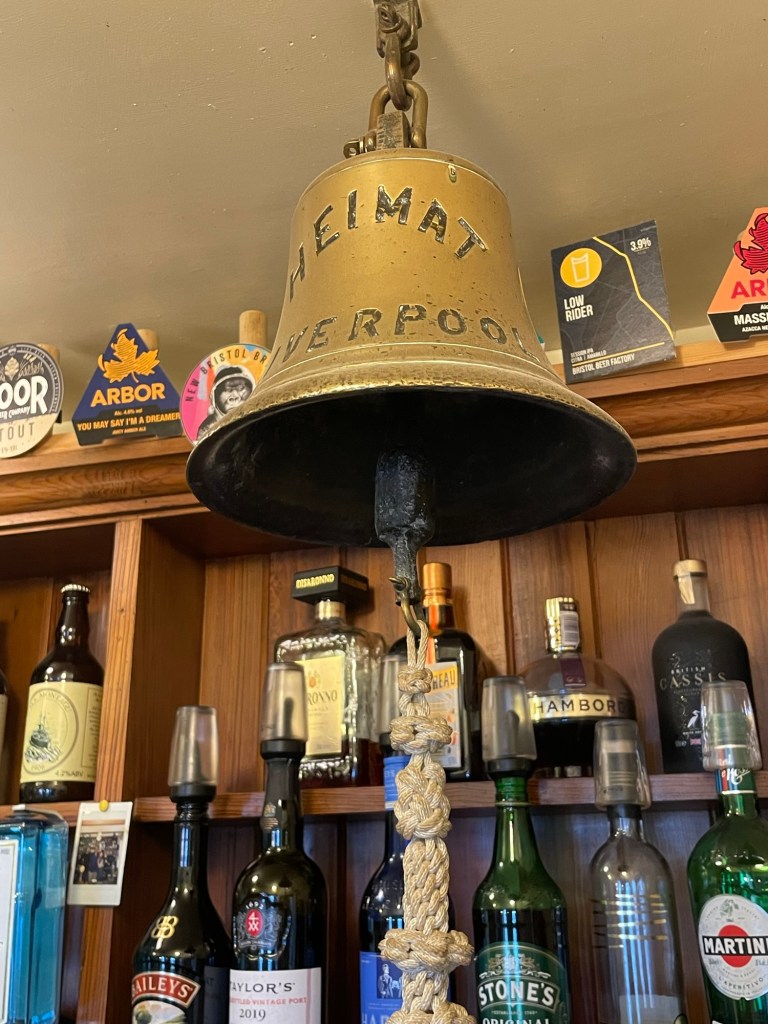
We don’t have permanent lighthouse keepers now. When the Trinity House employees visit the Tavern, there’s a sense of nostalgia. It echoes earlier times when the resident Keepers of Lights enjoyed a drink in the Tavern. Langham notes that the Tavern was once outside licensing laws. It isn’t now, I certainly feel a sense of history ringing the bell to call ‘Time at the bar’. A bell salvaged from a wreck.
The tennis court doesn’t make it into Langham’s account. It still exists, although I have never seen anyone play tennis on it! It is now another place used for different purposes. I’ve taught yoga on this patch of grass, beautiful at sunrise, the light sliding across the lawn. It has been used for Archery. It’s also the venue for the Lundy Olympics, each August Bank Holiday. Another reminder that walking, gathering, and play are all deeply connected here.
The Village:
(ii) Changes of Use
Langham talks about the the generator in the rocket shed. Now this building is the Museum. The generator moved to the vehicle shed. Soon, solar and wind should take over. The constant hum may finally quieten. I wonder if we’ll miss it? Even intrusions become part of the island’s soundscape over time.
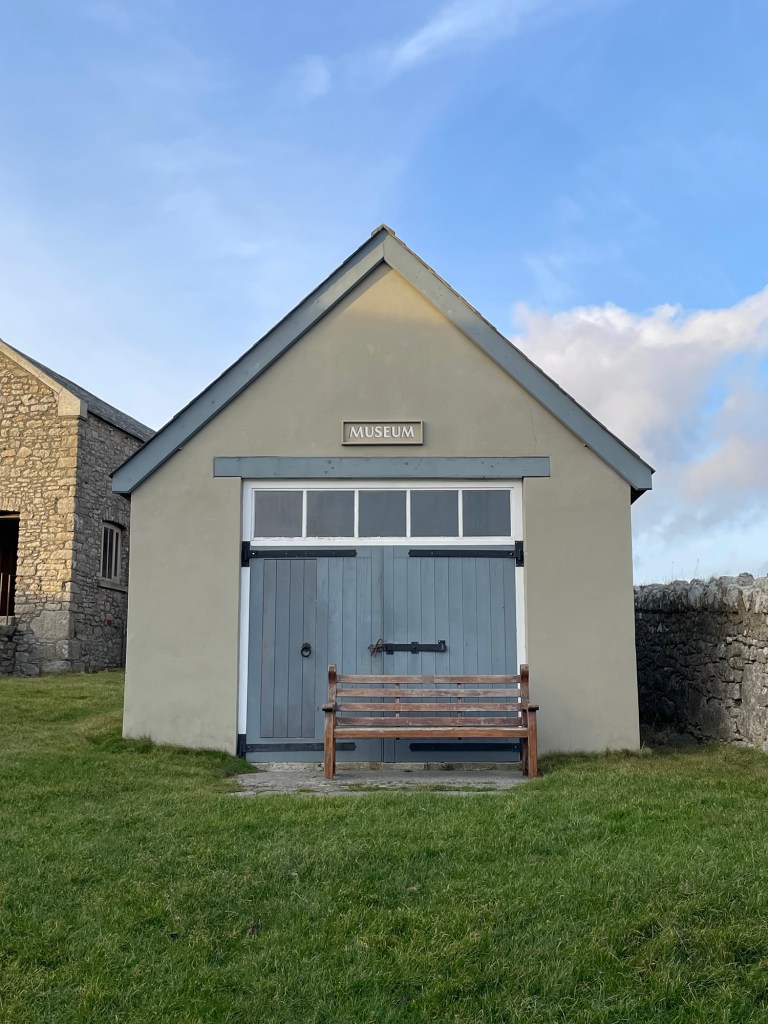
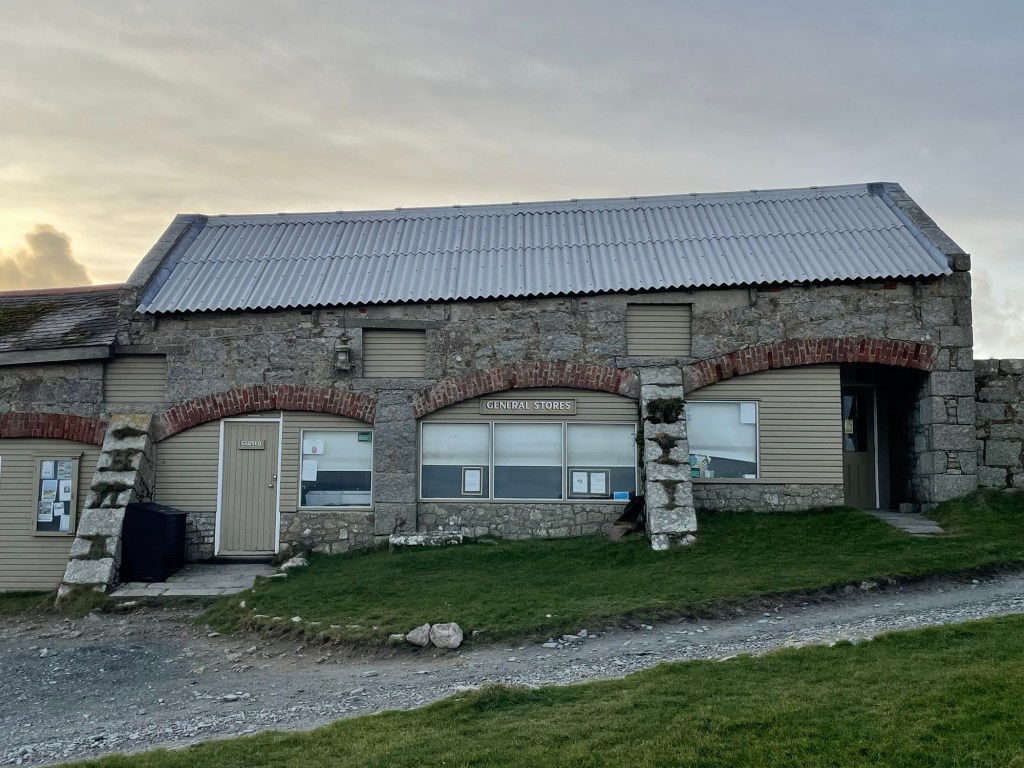
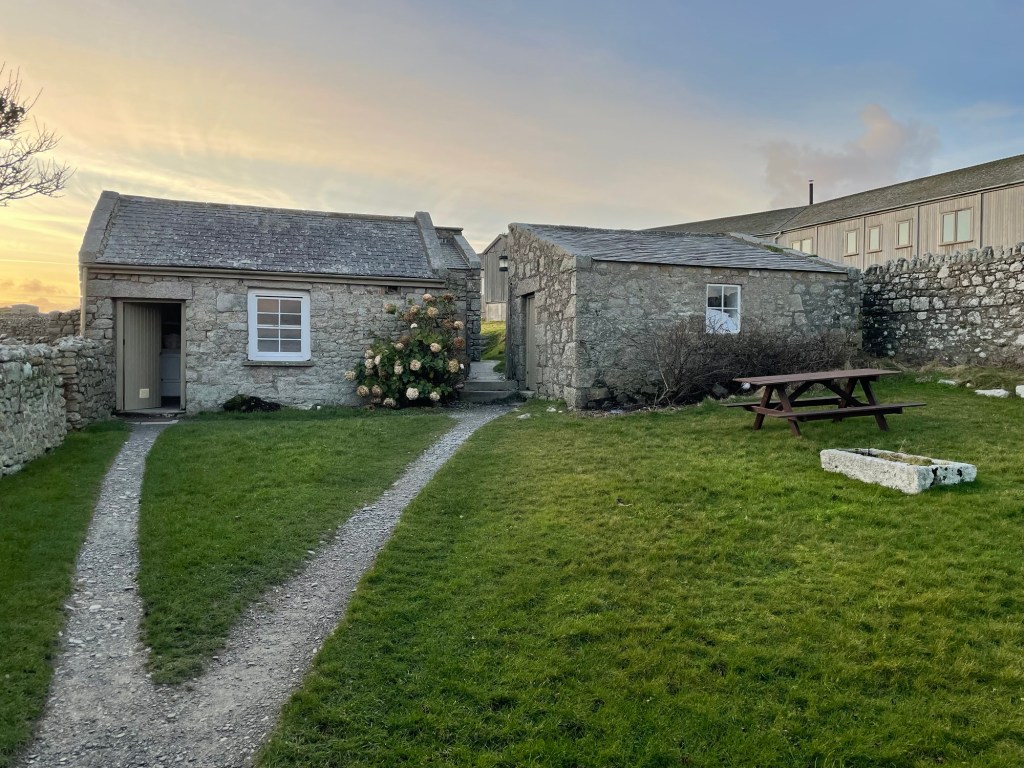
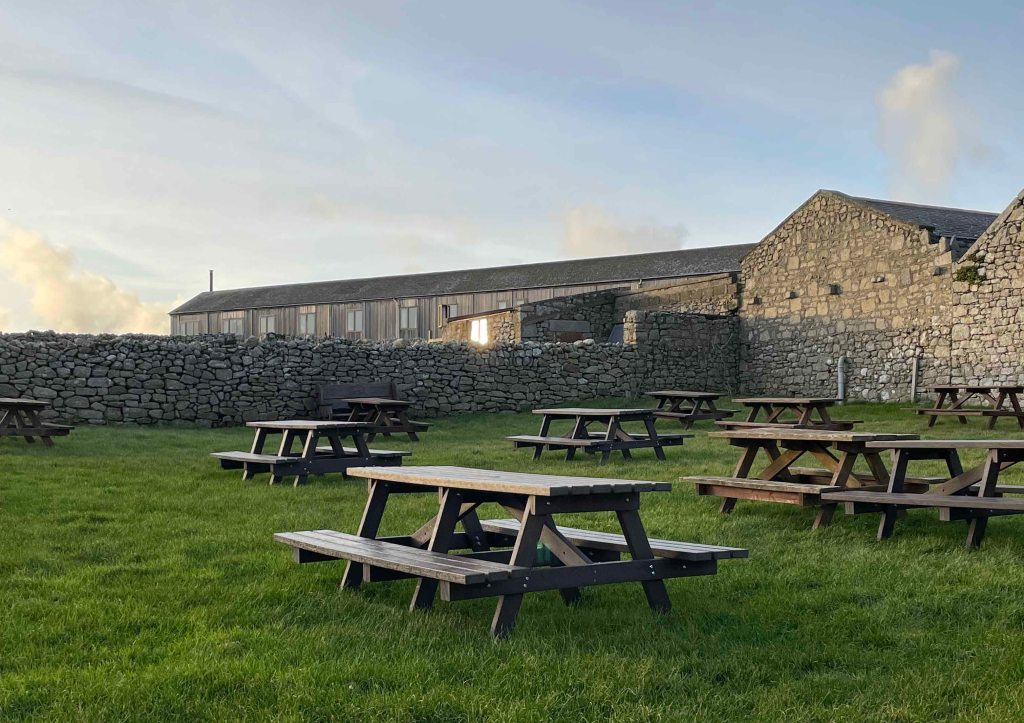
Around the Greensward—the laundry garden, staff garden, allotments—the ground tells a story of constant adaptation. Old maps show buildings repurposed again and again. The brewhouse is gone now a warm room for laundry. The laundry itself was once a tea room. Pigsties shift position; greenhouses disappear.
In summer, the beer garden fills with day trippers. I enjoy watching people eat there in the evening light. It’s ‘especially ‘proper lush’ when the rib arrives from Tenby. Barry Island comes to Lundy – Welsh voices spill across the tables. The shop has moved from the Tavern to The Linhay. But the post office still operates from the Marisco Tavern, sending Lundy stamps all over the world. One day a man arrived by private helicopter just to buy stamps. Another time, a helicopter landed and all they wanted was a fridge magnet. Lundy keeps you humble!
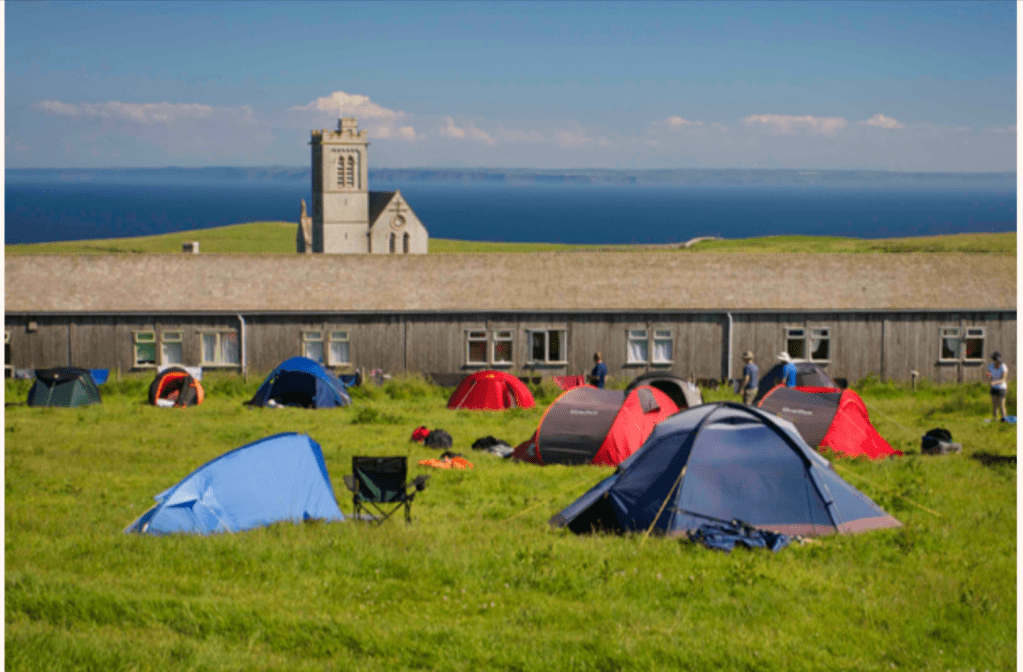
Langham leads us toward Pig’s Paradise. Today it’s a campsite. Often we see visitors choosing their space to pitch tents. This is especially interesting when they’re set straight into the prevailing wind. Not all tents survive the night! In these instances campers decamp to the church or the old rocket shed by morning. Residents here are sometimes woken by half-dressed men outside their windows, surveying the wreckage of a night’s sleep.
The High Street—also known as Millionaires’ Row—has changed again and again. Even since Langham’s account. The houses still accommodate staff. There is a Lodge for volunteers. But the fowl run is empty since avian flu curtailed chicken-keeping. Beyond Bulls’ Paradise, where the Giant’s Grave is said to have been, the road loosens its grip on the village.
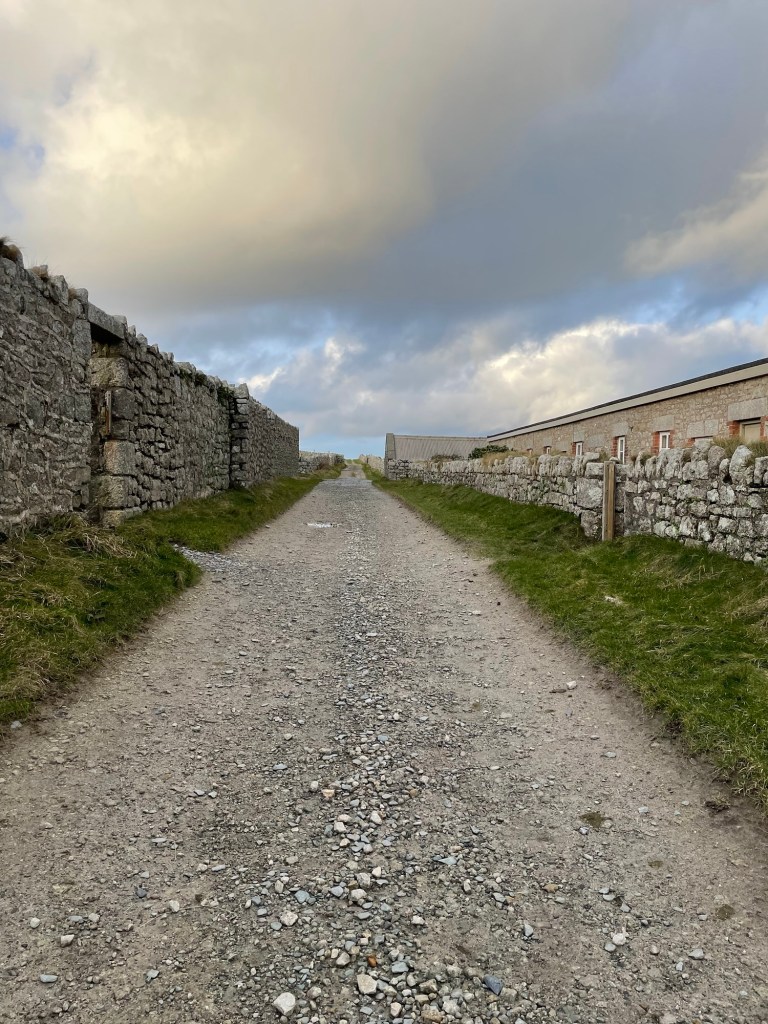
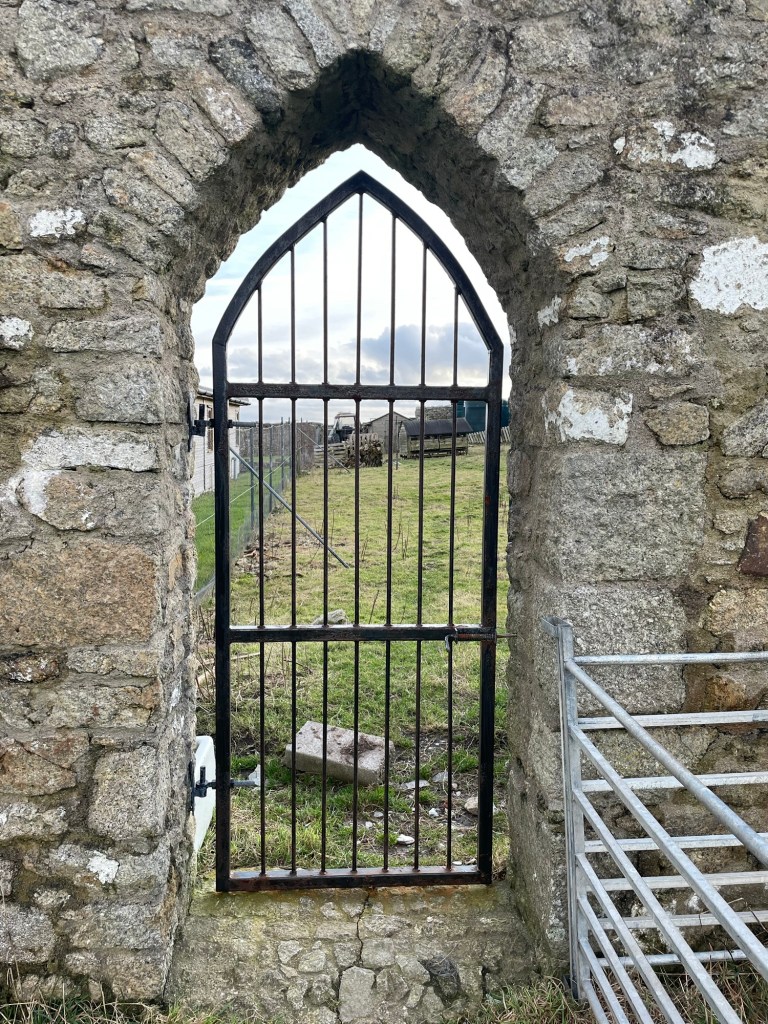
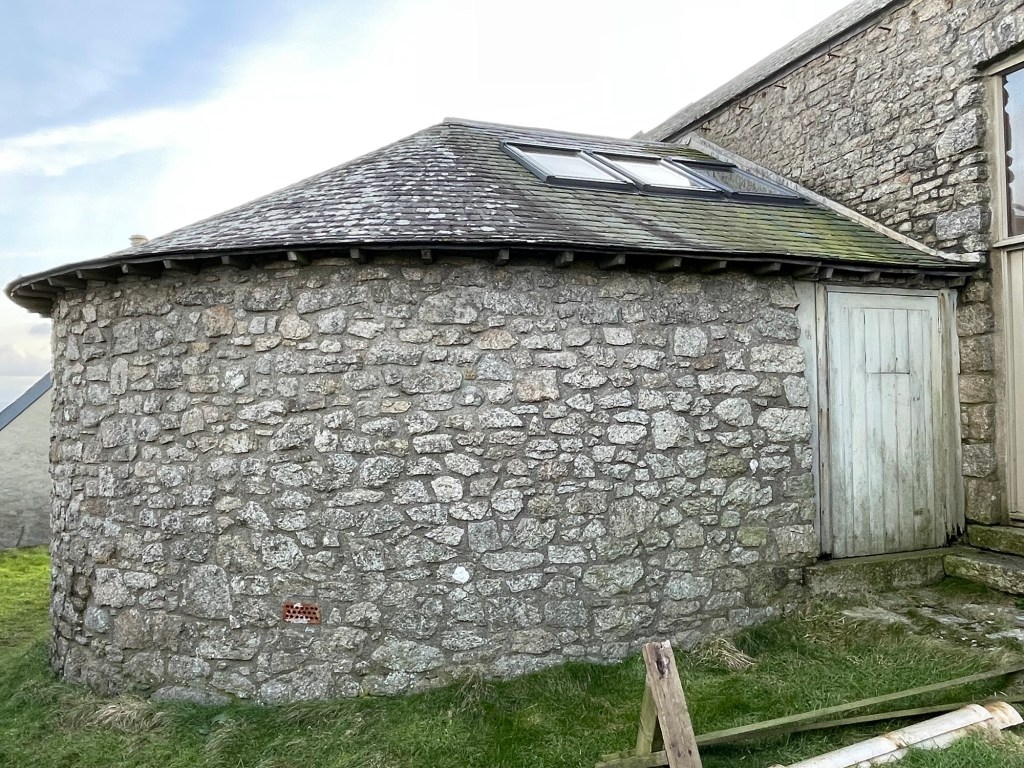
Passing Tillage and Brick Field, Langham moves toward Quarter Wall. This is where I step away from him. I’ve written about Quarter Wall before, and it feels like a natural place to part company. The book has brought me this far. The rest of the island needs to be walked on its own terms.
This piece began with artists and writers who walk with landscapes, and it ends there too. Walking with a book on Lundy isn’t about tracking a route precisely. It’s about allowing the written word to brush up against lived experience. About noticing where history aligns with daily life—and where it doesn’t.
The walk continues, as it always does, just not always with the same companion.
There are books that are available in the Lundy shop that illustrate how Lundy has changed over time. There are also some in the Tavern for. browsing. You can also access the Tavern LFS library, if you are an LFS member. Some books are available in the properties so that you can also take them with you into the landscape.
Resource: The Landmark Trust: Lundy History Album is available in the Properties. Here is a pdf if you want to browse it at home.
References
Lundy Album, Ternstrom M,. 1995.
The Island of Lundy. Langham, A. F., (1994). Alan Sutton.
Walking, Writing and Performance (Book) Mock, R., (2009). Intellect Books.

You must be logged in to post a comment.