This morning 1st February, I invited people to come out for a walk. The invite was to notice how Lundy is preparing for spring. The plan was to look for the small indications that the island is getting ready for Spring.
The walk was inspired by Imbolc, the pagan festival that sits between winter and spring. Before setting out, I attended a Celtic service at St Helen’s Church with some visitors. During the service, attention was drawn to the feast of Candlemas. In the Celtic Eucharist, there is an appreciation of the natural world. The blessing of candles on this day symbolizes Christ as divine light, dispelling spiritual darkness. Imbolc, by contrast, is a pagan festival. It is seasonal rather than theological. Yet, the two felt closely aligned this morning. Holding space for returning light and to pay attention to what is quietly beginning.
A February walk in light rain
A soft rain was falling as we set off . It was a light drizzle that soon dissipated. Earlier that morning, the supply ship The Mair had arrived from Bideford. In the Bay, dolphins were seen breaching and seabirds diving at Tuna. This was a reminder that the seasons are shifting.
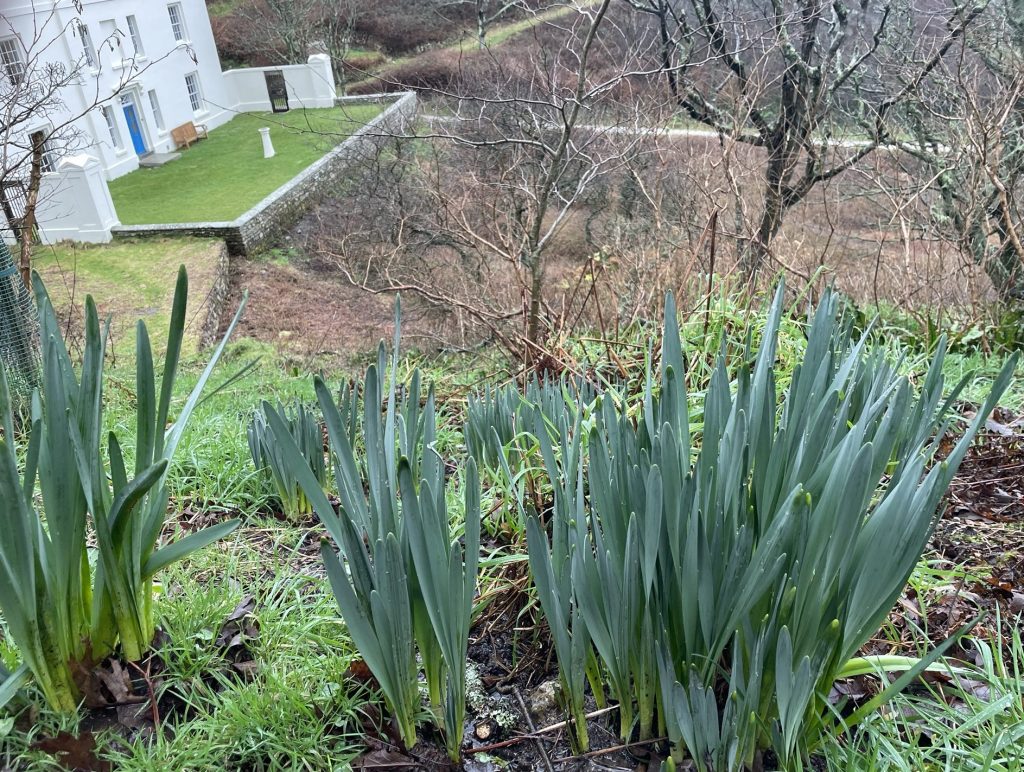
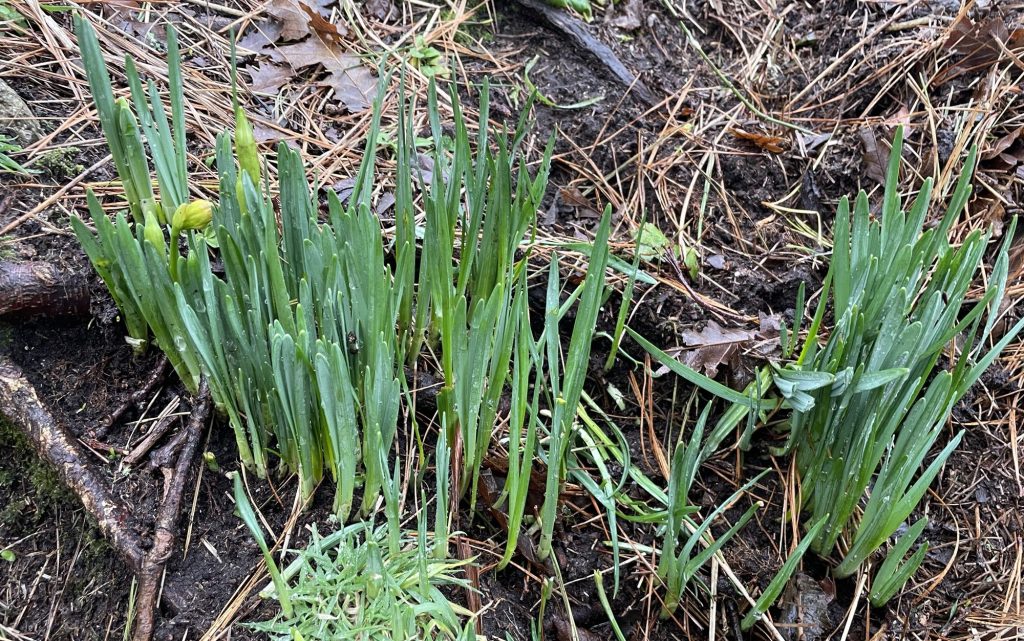
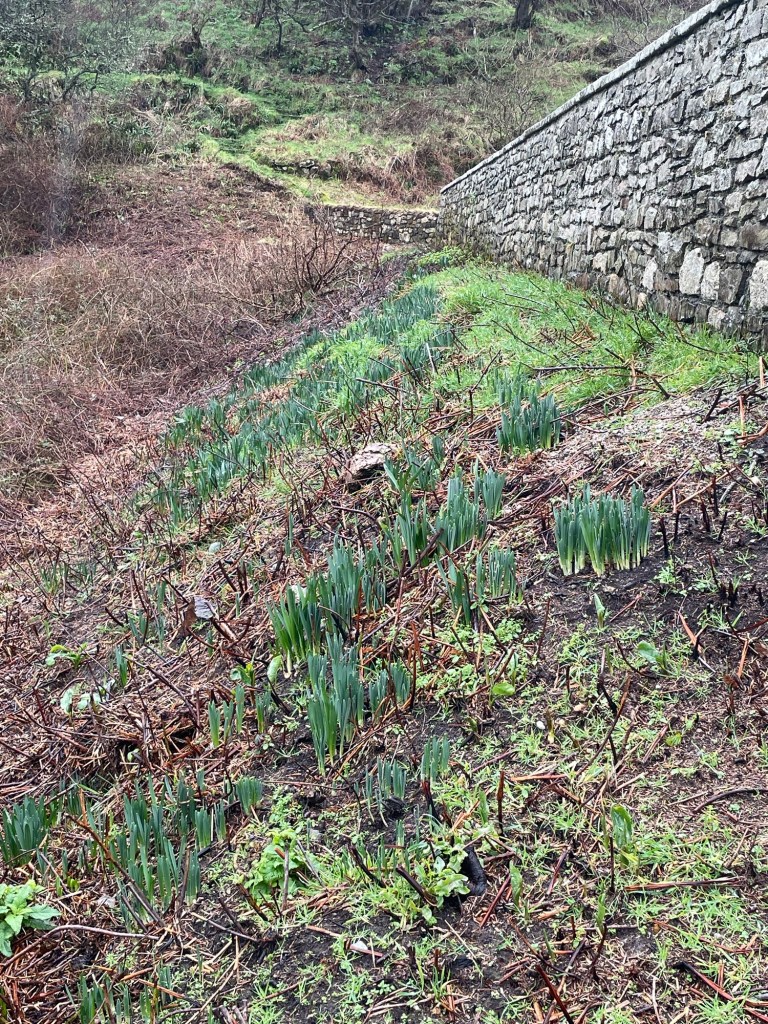
On the Imbolc walk we started by going down the Millcombe steps. Then we continued over to the Cazbar. Just before that, we passed over a bridge. I call it the ‘three billy goat gruff’s bridge’. (Talking of goats, we have lots of kid goats on the island at the moment!). Water was rushing down the hillside from Government House and passing under the bridge. There is a bench nestled near here in a nook. It reminded me what a good place this is to sit and read on warmer days. From here, we followed the track towards Bramble Villas. On either side of the path, lots of daffodils are already in bud — not flowering yet, but clearly preparing.

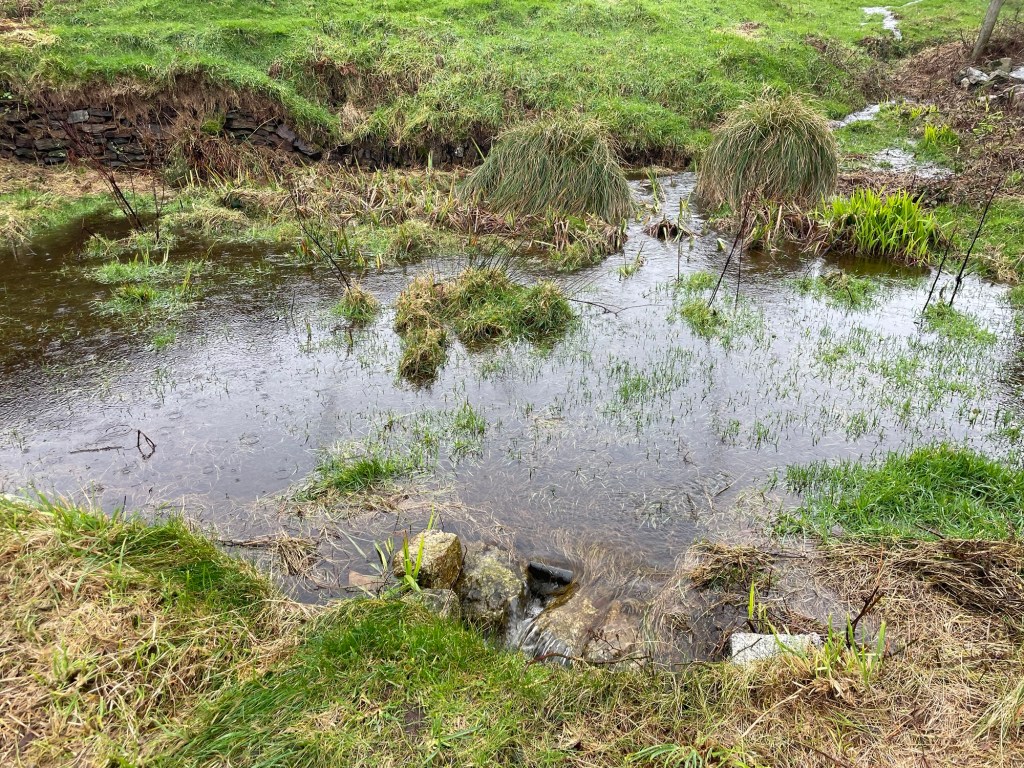
We walked through to Bramble villas. We noticed the pond was extremely full. The water pouring down from St John’s valley. It spouted out under the newly finished Gabion baskets and down through to Millcombe. So much water in contrast to last summer when the streams and ponds were empty. We continued our walk down to the Battlements. I am told that Lesser black backed gulls have started to arrive on the Island. But, we did not see any today without the keen eye of a birder. We walked through to the bottom of Millcombe. Another very full pond, one that was completely dry last summer. I pointed out the apple trees, the site of our wassail last month. The toast we left for the Robins all gone.
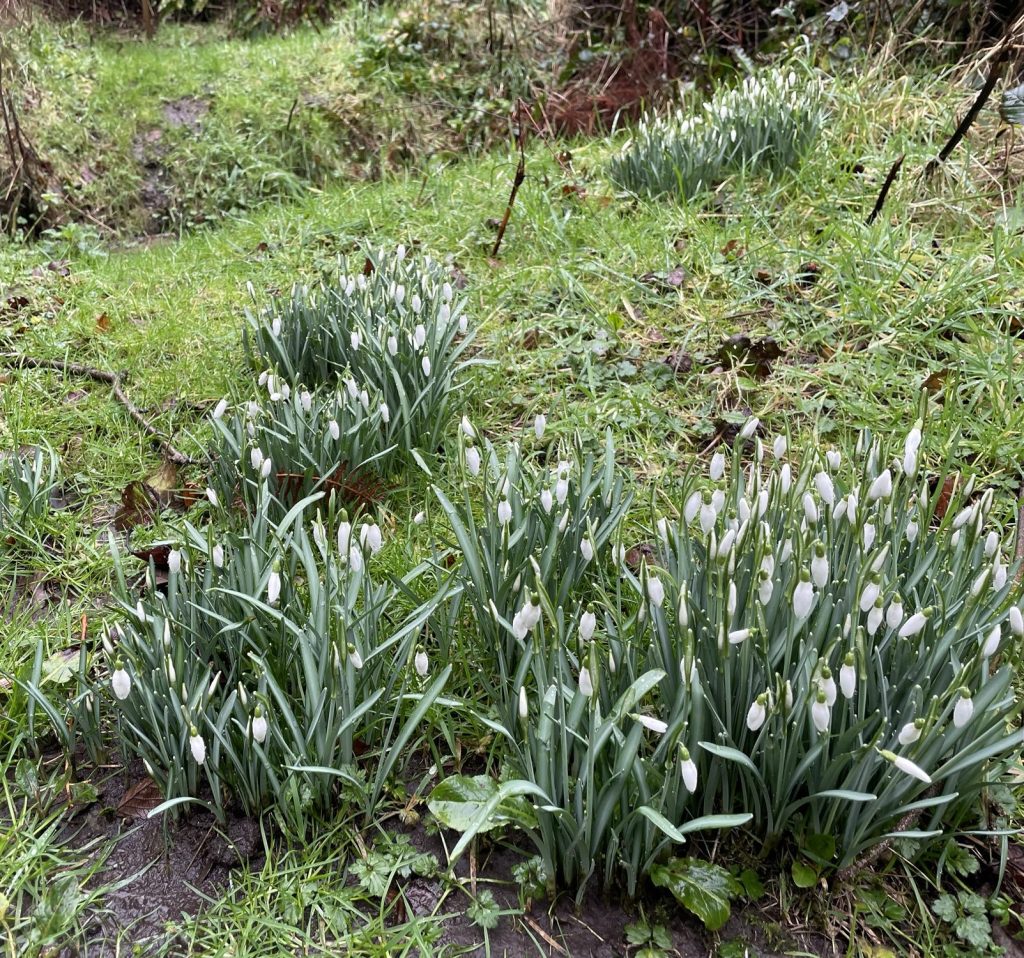
We made our way into the Secret Garden, drawn by a rumor that snowdrops had appeared. They had and there were lots of small clusters. Snowdrops always carry personal meaning for me. My dad used to bring a bunch of the first snowdrops home to my mum. This was when I was growing up in the Northern Mill town of my birth. Seeing them here felt like a quiet connection across time as well as season.
Heading back up Millcombe Drive, there are daffodils coming up everywhere in front of the house. Nothing in bloom yet, but plenty of promise.
Quiet as preparation
What struck me most during the walk was the sound — or rather, the lack of it. The valley was silent. Occasionally there is a robin singing here, but not today. I found myself listening for the blackbirds. I look ahead to the time when this valley will be bursting with song. Even the ravens, who should be building their nests around now, were quiet.
That silence felt fitting. Imbolc asks for patience, for attention, for trust in processes we can not yet see. This Imbolc walk felt quite different to the Beltane walk I led before — where Beltane was about arrival, Imbolc is about readiness
An invitation
This walk was shaped by Lundy, but it doesn’t belong only here. Imbolc is a moment that can be marked anywhere. If you feel inclined, take some short walks this month. Try to choose the same route each time and see if you can notice how nature and light is changing,
