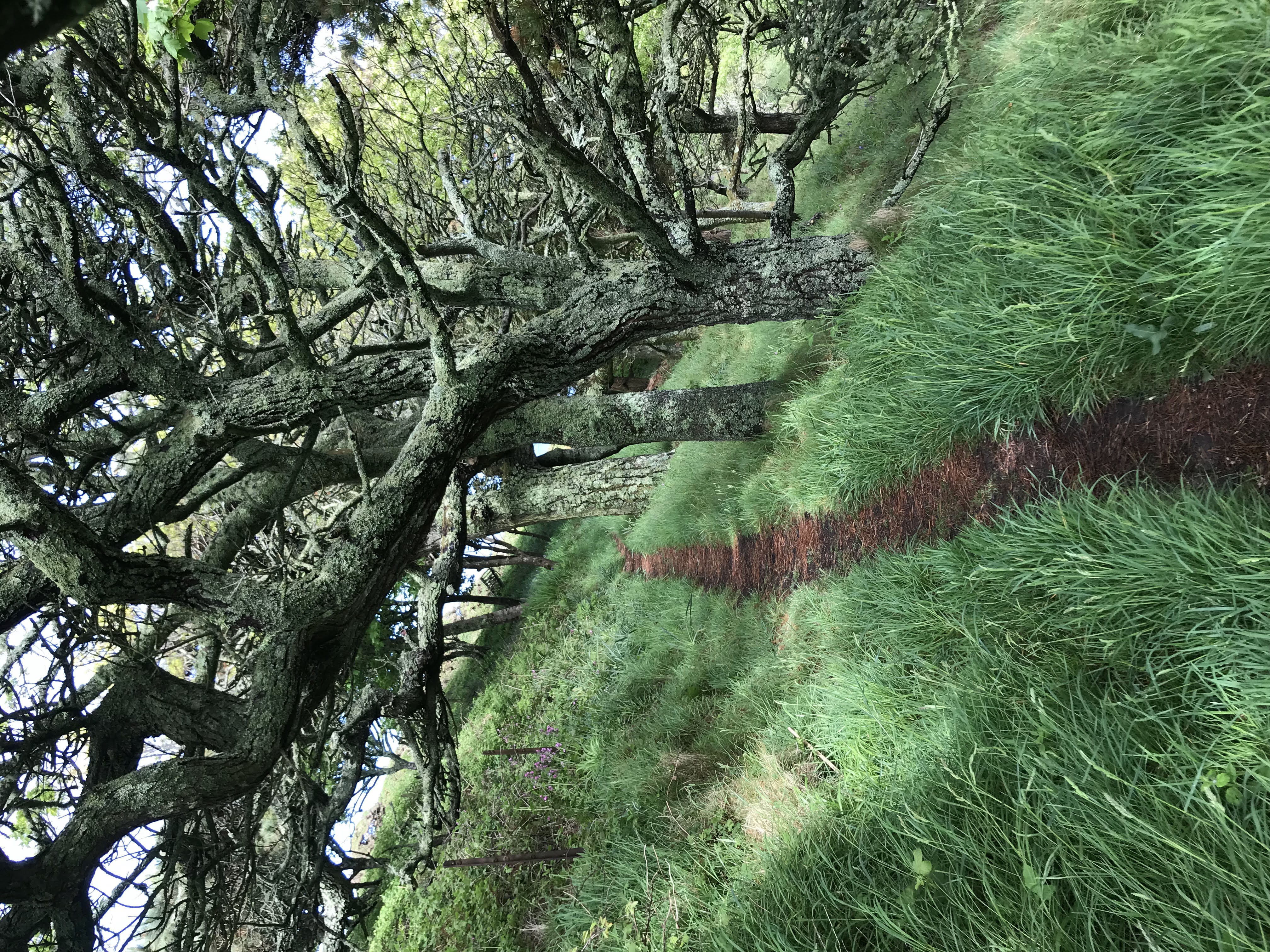
Walking on Lundy is a regular part of my days. It’s easy, and it’s on my doorstep. Sometimes I head out with a path in mind. Other times, I step outside and walk, letting the ground decide where I go.
Over time, I have come to know many of the island’s paths. Some are clearly defined — the most traveled routes, worn into the land by years of repeated footsteps. These paths do what they promise. They carry you steadily from one place to another.
The main path from the village to the North End is one of these. It is marked by large granite boundary stones, set at measured intervals along the way. This is the route I choose when I don’t want to think. When I simply want to walk.
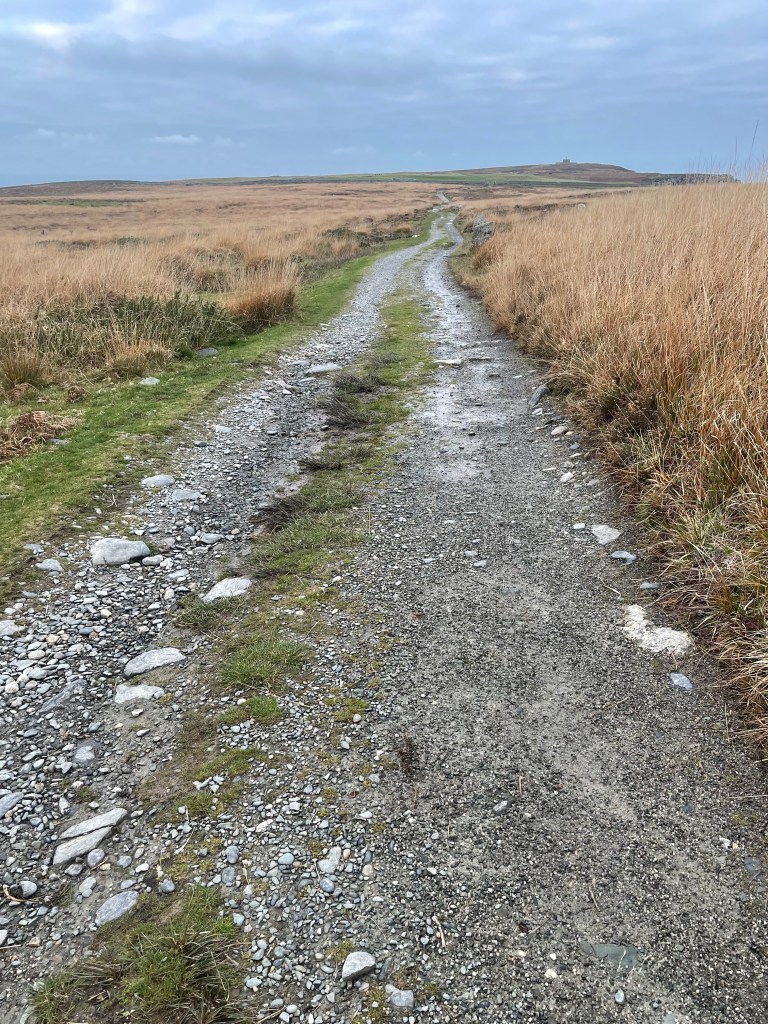
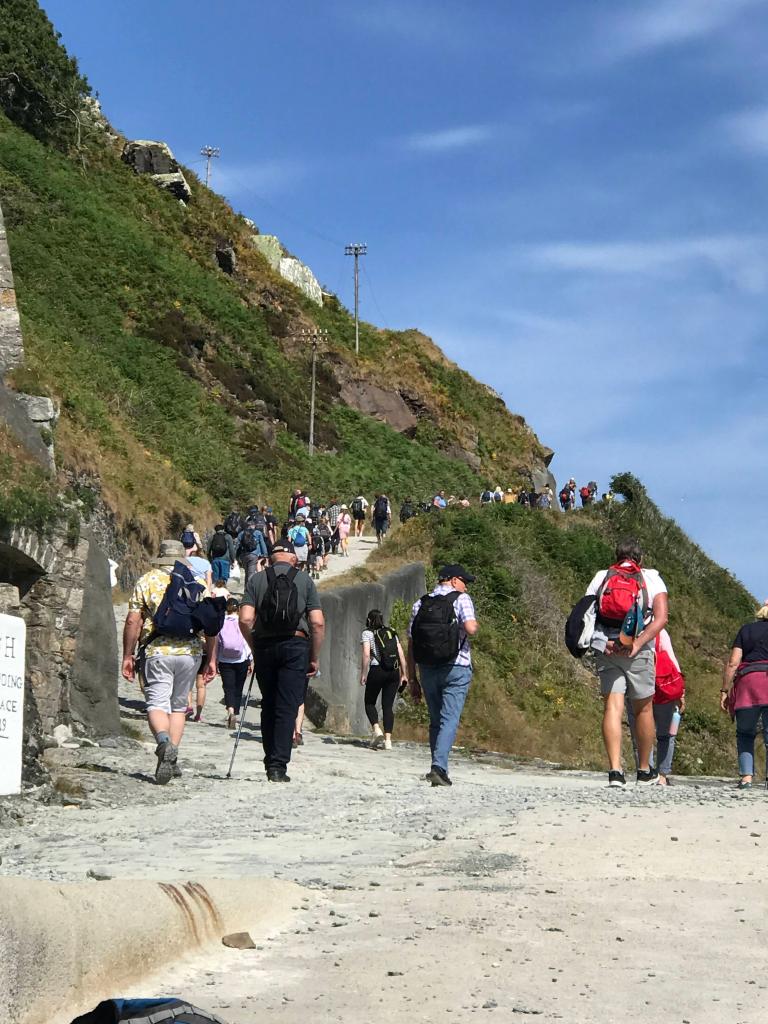
Some paths are steeped in history like the Beach road, marked by time. When I follow this path when the ship has docked. I am midst the visitors, it feels different. I live here – I know this landscape. I know where the hill plateaus and where to stop and take a breath. I know how much of the climb there is left, I can pace myself. I know there is a easier route to the top. Knowing all this makes me feel more connected to the island.
Other paths are less certain. These are often the ones I follow when I need space — for thinking, for noticing, for ideas to surface. They are tracks made by animals, or faint traces left by others who once walked there. Some of these routes would, at one time, have gone somewhere. Now they drift and fade.

Occasionally I find and follow a new path, sometimes this lead to a dead end. But these routes are rarely disappointing. They are often the loveliest places of all. These are sheltered corners and edges of land. I stop and sit there. Sometimes I have a picnic. Other times, I draw.
Some paths ask more of the body. paths like the Lower East path, I know this path takes time. The path meanders around rocky outcrops, refusing efficiency, asking for stability.

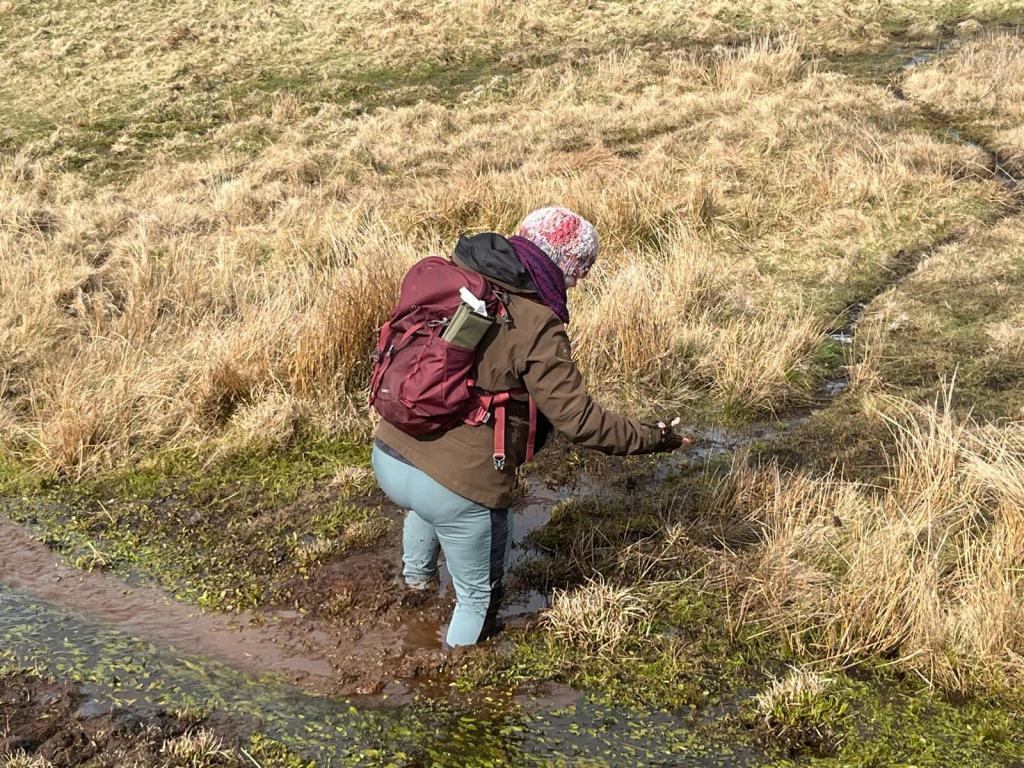
Some paths cross boggy ground, each step sinks and pulls. The seasons reshape everything. In winter, some paths don’t invite walking at all. I pass them by, knowing they will change. In summer, when the island dries, those same routes open themselves again. Nothing here is fixed. Paths disappear, soften, and firm, responding to weather and time.
Paths North of Quarter wall can be difficult to follow. Navigating bogs and tussocks means lifting the legs high, paying attention to balance and rhythm. Progress here is uneven, slow and often messy!
What feels distinctive about walking on Lundy is the freedom to roam. There are no signs telling you to keep out, no fences marking ownership. Boundaries are drawn instead by geology and risk — by cliffs and the sea. You don’t need to plan a walk. You step outside and start. Knowing you can roam, just makes everything easier. Nick Hayes writes in The Book of Trespass that “the idea that land can be owned at all is strange.” On Lundy, that strangeness becomes visible. The National Trust owns the island. Yet, the land feels less possessed. It feels more shared. It is shaped by weather, animals, and those who move across it on foot.
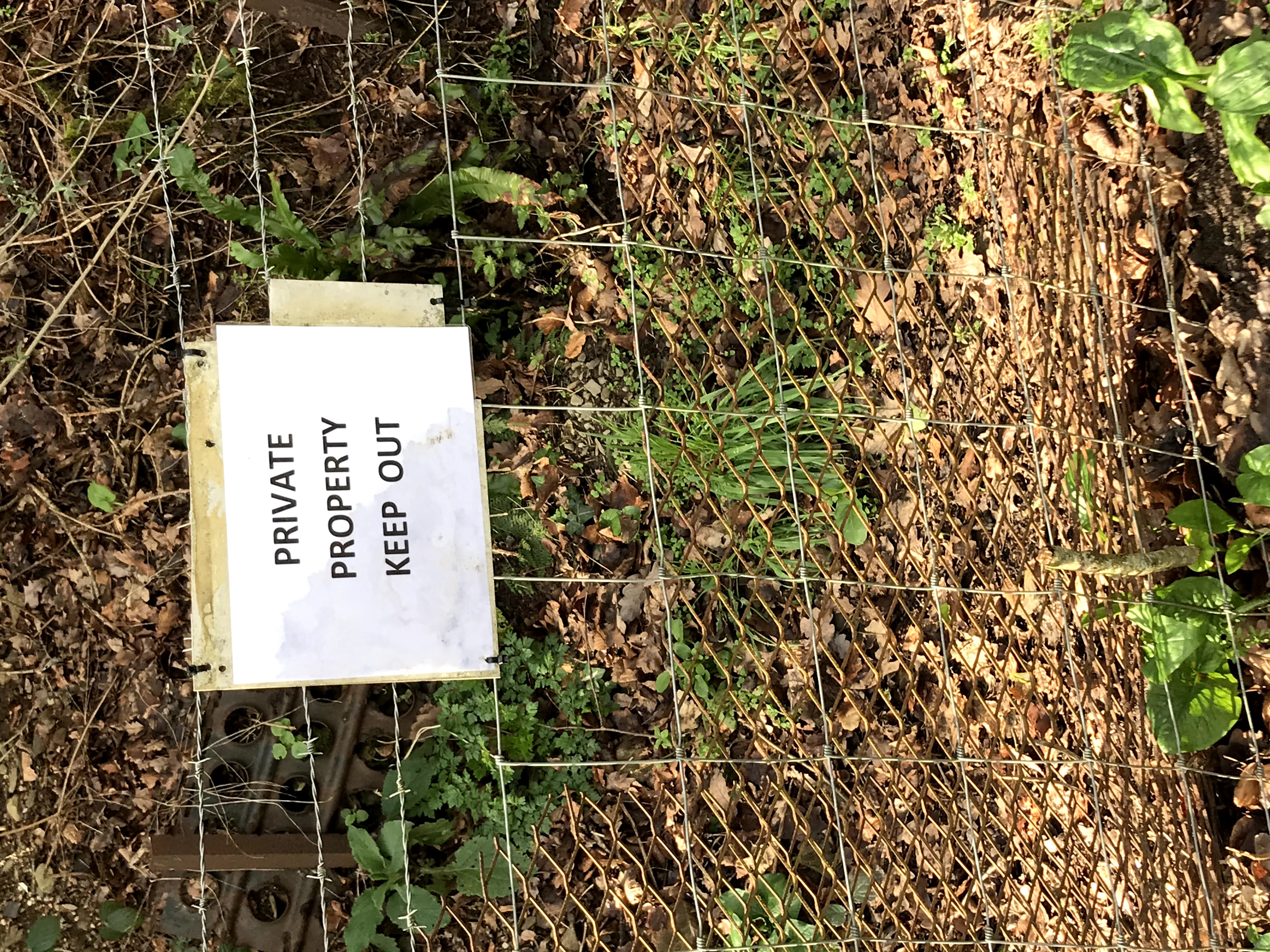
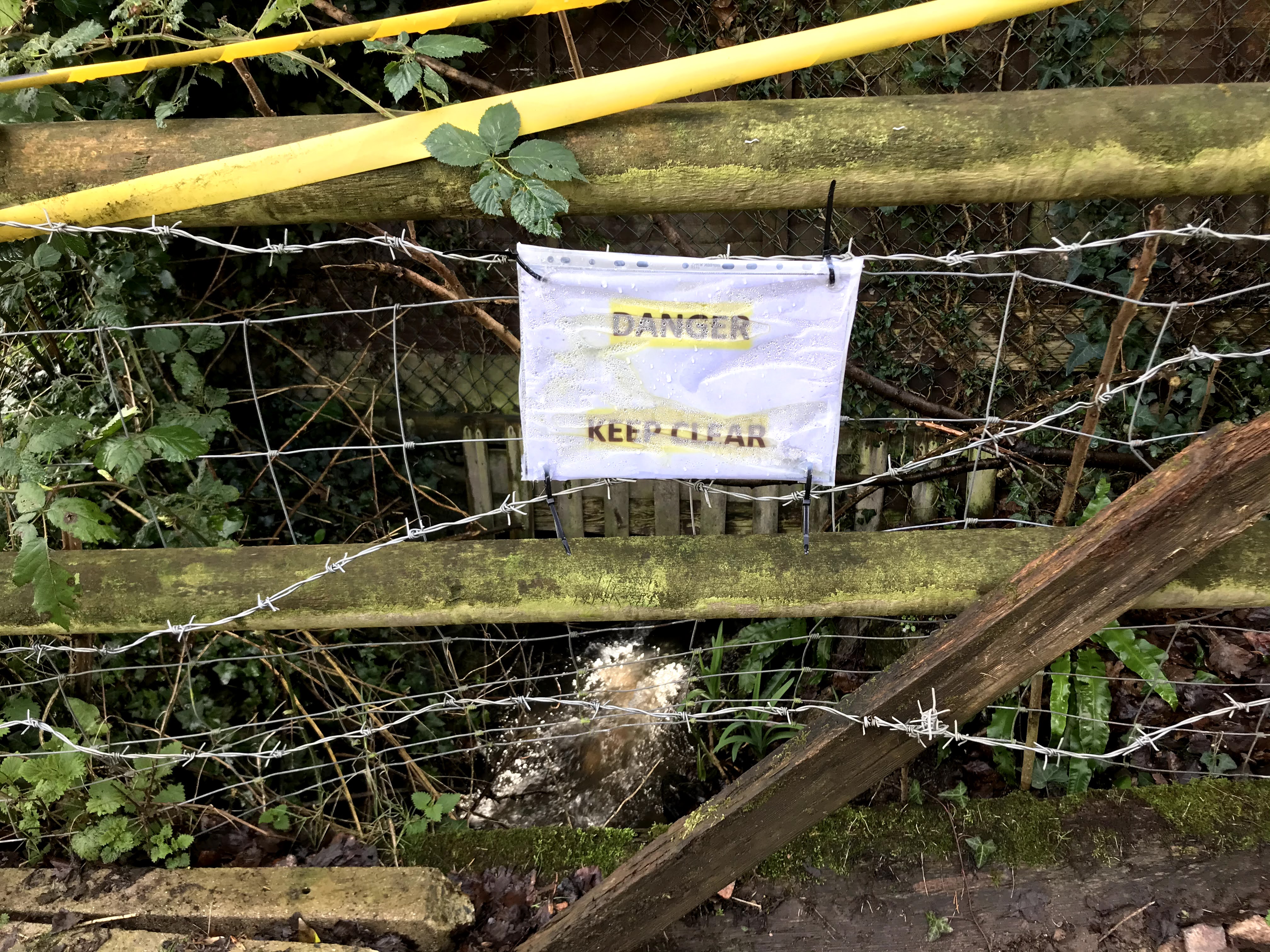
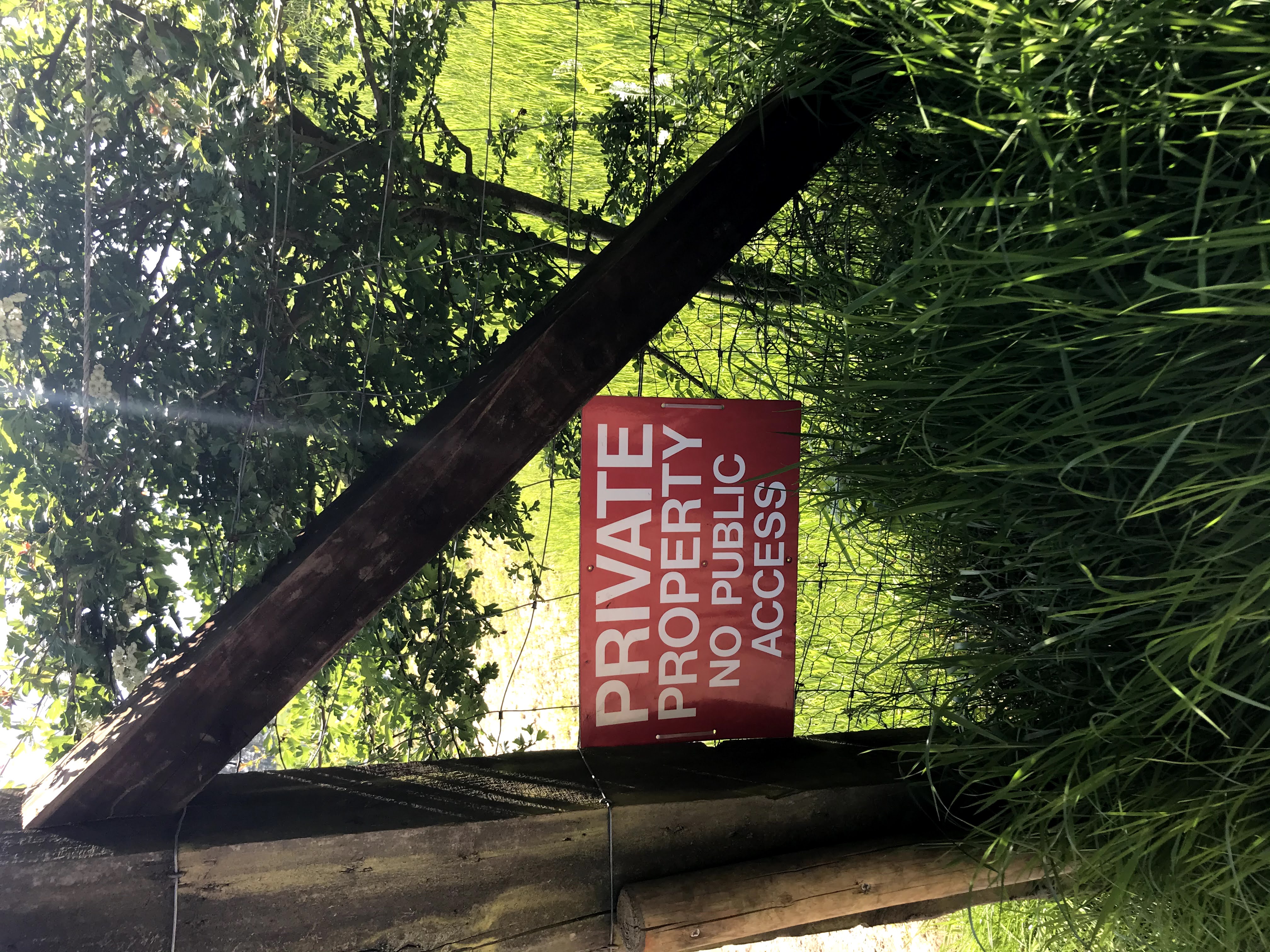
This experience contrasts sharply with walking in near my mainland home. There, paths are often punctuated by signs: No Entry, Bulls in Field. Notices that interrupt the walk, reminding you where not to go, where you are not welcome. They introduce a quiet tension — the need to be alert not just to the ground, but to imposed boundaries. On Lundy, I walk alongside cattle and ponies. This requires attentiveness and respect. You read the animals as carefully as you read the land. But there is no sense of exclusion. We move among them, rather than around them.
Hayes also suggests that “we belong to the land far more than it belongs to us.” Walking on Lundy, this feels tangible. Routes are shaped by granite, bog, wind, and rain. The land leads, and the walker responds.


Some tracks i follow regularly. They are paths that I know, I know the terrain and the time it will take. These are the kind where I head down with my lunch and indeed come back to draw.
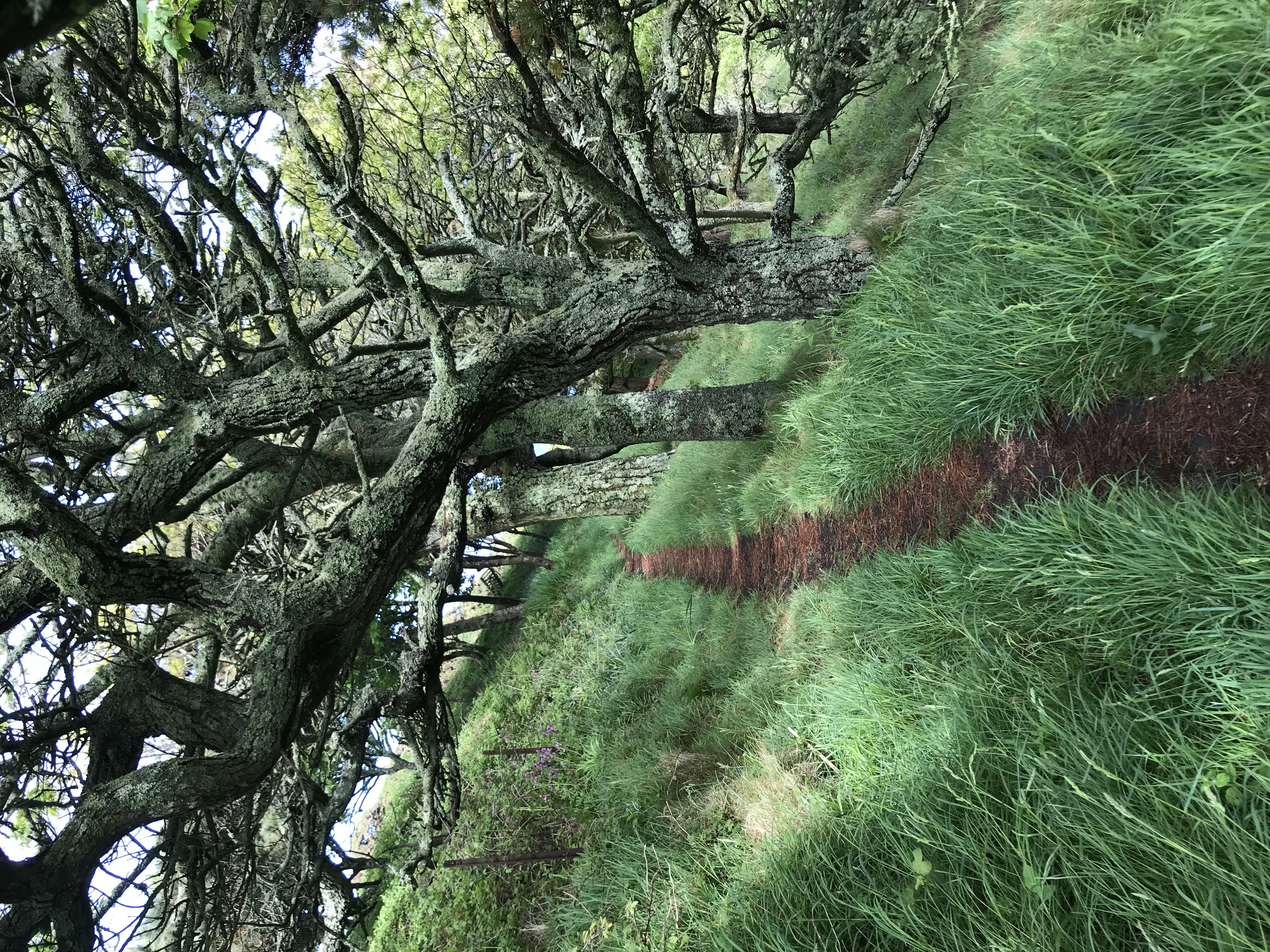
Walking these paths, it’s difficult not to notice how they echo other kinds of journeys. Some are steady and well marked. Others soften, disappear, or draw you into unexpected terrain. Sometimes a path seems to end, only to reveal itself as a place worth staying. Sometimes you arrive somewhere you hadn’t intended to be. Then you realise — slowly — that it is exactly where you need to be.
What Lundy continues to teach me is that paths are not simply lines between points. They are formed through repetition — through my own walking and the walking of others. Some return when the season is right. And some only exist because someone once chose to step away from the obvious route and walk there anyway.
Bibliography
Dryden, I. (2024) Joyful Walking. Crikey Books, Cambridge
Reference
Hayes, N. (2021) The Book of Trespass: Crossing the Lines that Divide Us. London: Bloomsbury Publishing.

You must be logged in to post a comment.