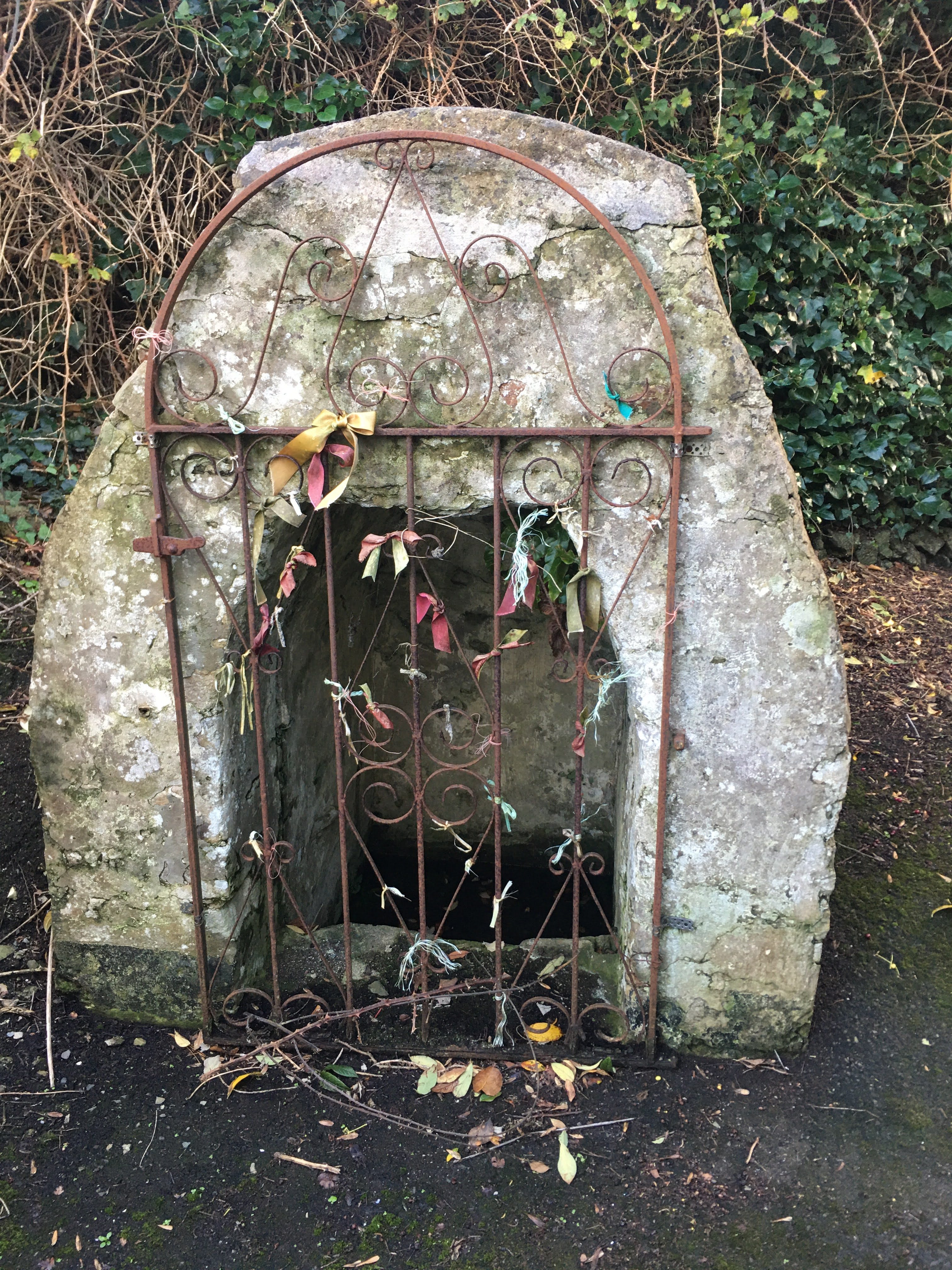
Although I had heard about Holy Wells, I had not really looked into this topic very much. It was not until I was researching Pilgrimages, that I discovered how many Holy Wells, there were even in Devon. I found that there was several within a 10 mile radius of my home in Saunton. There was even one in the next village, which although visiting the village hundreds of times, I never knew of its existence!
As the country was in lockdown and walking was encouraged. I used a few of the Holy Wells as start points or destinations for some of my walks.
What is a Holy Well?
“A holy well, or sacred spring, is a small body of water emerging from underground and revered either in a Pagan or Christian context, often both. Holy wells were frequently pagan sacred sites that later became Christianized. The term ‘holy well’ is commonly employed to refer to any water source of limited size (i.e. not a lake or river, but including pools and natural springs and seeps), which has some significance in the folklore of the area where it is located, whether in the form of a particular name, an associated legend, the attribution of healing qualities to the water through the numinous presence of its guardian spirit or Christian saint, or a ceremony or ritual centred on the well site. In Christian legend, the water is often said to have been made to flow by the action of a saint, a familiar theme especially in the hagiography of Celtic saints.”
Local Wells worth a visit
Among the wells I have visited, St Brannock’s Well in Braunton, stands out for its connection to the church and the saint’s legend, the kind of tranquility you find in a churchyard setting.

Lady Well at Croyde was a quieter discovery, tucked away from the village with its bustle of surfers and holiday makers.
Whilst Spreacombe Well in Chapel Woods felt like one of the forgotten ones — the type I find myself drawn to, half-hidden and easy to miss unless you go looking for it.

Each has its own character, though walking to them rather than driving seems to change how you experience the place once you arrive.
I am interested in how the Wells all differ, some are tranquil places in the ground of churches, some by the sides of roads and in one case on the drive of a house.
Some wells visitors leave ribbons or rags, which does offer some connection with the thought that people have been before you, it does not really fit with environmental matters.
The tranquility they offer varies, but the ones where I have found time to contemplate to connect with the landscape are those connected to the spirituality of churches. However the ones that I find the most interesting are the forgotten ones.

There are, I have since learned, two holy wells on Lundy Island itself, which I have not yet managed to find. Something to add to the list for my next visit — a reminder that even somewhere as small and familiar as Lundy can still hold things I haven’t yet uncovered.
What Holy Wells have you visited?
Reference