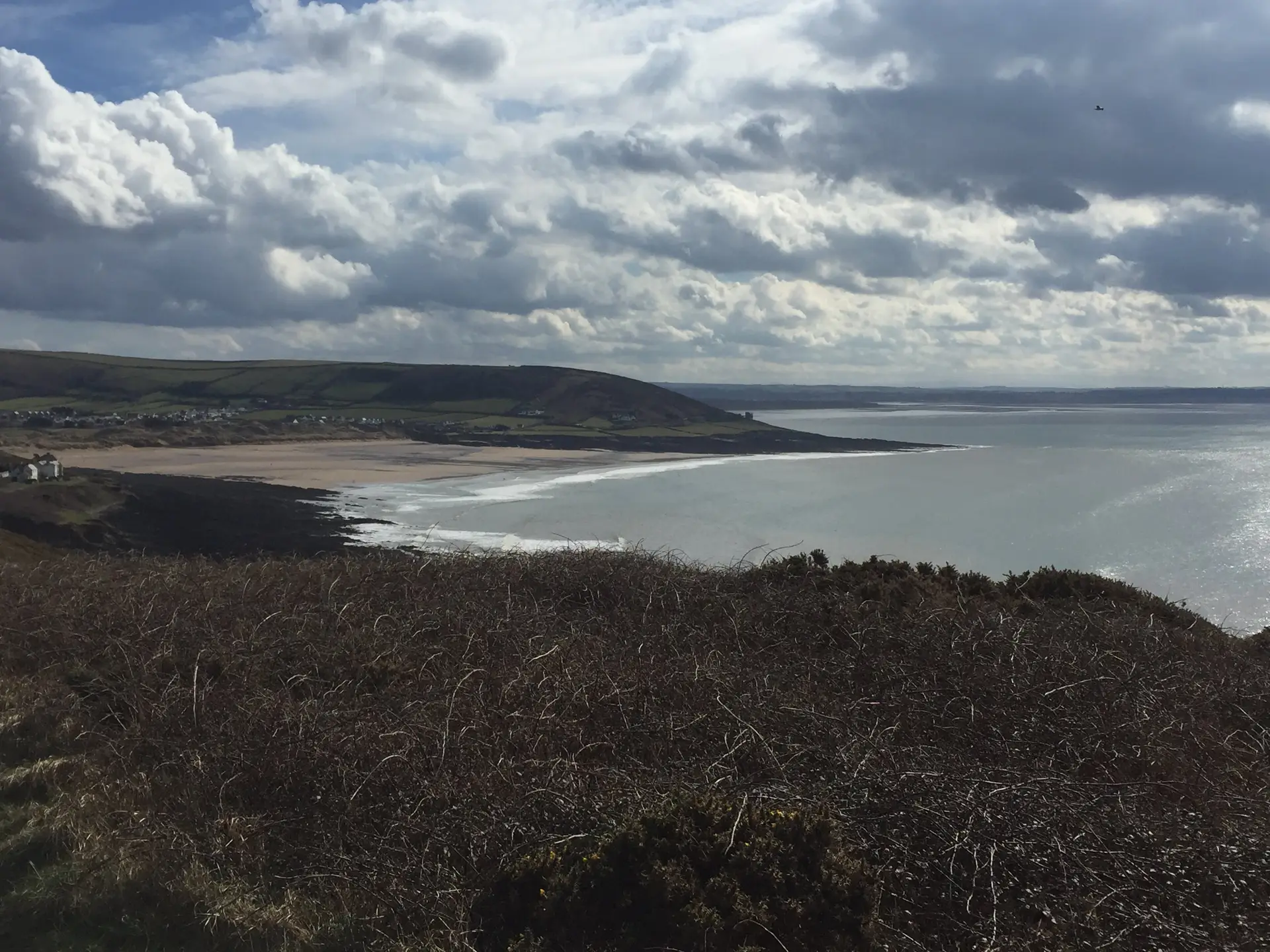
Although I live in a wild, remote place, there are still spots on the mainland that offer that same sense of exposure and wildness. One of those is Baggy Point, near Croyde.
I went for a ‘wild swim’ there this week. Swimming at Baggy isn’t something you stumble into — you need to understand the tides and read the weather. I’d arranged to meet the Baggy Bluetits, a sister community to the Lundy Bluetits, (swimming with a local group, is often the best way to learn how to experience a place safely and well).
This day was one of those golden combinations: calm sea, high tide, and a gentle easterly breeze. The kind of day where the sea feels almost welcoming — almost! Even as a regular, year-round dipper, there’s always that flicker of anticipation before plunging in.

The walk out to the point has that familiar, windswept feel I’ve come to love, living on Lundy. It reminded me of Lundy — not as remote, but with that same sense of being on the edge of something much bigger than yourself.
As I made my way down to the water, I paused at the old stone steps leading to the jetty. Solid, worn, quietly enduring. Believed to have been put in place by the Hyde family, they offer a simple but powerful link to the past. Walking down them feels like stepping into another time. There is a similar feeling if you swim at Lee Bay and go over the Smugglers Steps.

I found myself wondering about the Hyde siblings — Constance, Florence, and Edwin — and whether they stood here too, readying themselves for the water. Whether they felt the same pull to the sea that still draws people here now. These small human stories can transform a place from somewhere you visit into somewhere you feel part of.
Like Lundy, Baggy Point is cared for by the National Trust. There are interesting parallels here too: the Hyde family were early conservationists, actively managing the land for wildlife at much the same time as Martin Coles Harman was shaping conservation on Lundy. Sharing these connections helps bring conservation to life — showing it not as something abstract, but as an ongoing story people have contributed to over generations.
Accessing the water is rocky, and I was glad not to be alone. There’s something special about these shared traditions of cold water swimming. Different locations, same spirit: people coming together, supporting each other, and finding joy in the sea. These communities don’t just experience places — they advocate for them, return to them, and often help care for them.
Out in the water, I looked back toward the land — and then outward, to Lundy sitting on the horizon. A familiar silhouette. Moments like that create lasting emotional connections — the kind that stay with people far longer than facts alone.

Afterwards, there’s a choice. A longer walk with sweeping views across to Putsborough, a great way to get warm after a swim. Or a shorter route back past the old whale bones.

And that’s what stayed with me on the walk back.
Baggy Point isn’t just a beautiful location — it’s like Lundy layered with stories. Its about land shaped by families, wildlife conservation and shifting tides. It’s about preserving places for future enjoyment. Without the Harmans and the Hydes we would not have access to this wonderful nature.