Poetry, prints, songs and conversations at sunset
There is something rather magical about walking amongst Lundy’s Standing stones on a Midsummer’s evening. As the light softens and the island quietens, the landscape invites you to slow down.
This year’s Midsummer walk took us on a journey around seven of Lundy’s nine standing stones, all of which lie to the south of Quarter Wall. Rather than rushing from one stone to the next, we allowed the stones themselves to set the pace, each becoming a place to pause, reflect and share stories.
Standing Stones
Our walk began with the stones in Tent Field.
As we gathered, Sue Ferrie read several haikus written by visitors during a previous Midsummer standing stone walk. Hearing these short poems in the very landscape that inspired them felt like the perfect way to begin the walk.
(You can access a copy of the Haiku booklet HERE.)
Each stone prompted a different conversation.
The first stone, with its broad flat surface, resembles a picnic table. Naturally, this led us to imagine what a Bronze Age picnic on Lundy might have looked like. We talked about seafood gathered from the shore, seabirds’ eggs, goat meat, grains, wild herbs and sloe berries.
At the second stone we turned our attention outwards, picking out familiar landmarks on the mainland. Wondering which of North Devon’s highest points could be seen across the water from this stone. We pondered as to why the stone might have been put there. Was it to draw connections to the mainland?
The third stop was in Friars’ Garden in South West field, where our conversation drifted towards place names. It is fascinating how names can survive for centuries, long after the buildings, people or activities that inspired them have disappeared.
Near the fourth stone, above the old Light gull colony, we stopped simply to listen. Wind, seabirds and the sight of a sika deer running through the grass, reminded us how alive this landscape still is.

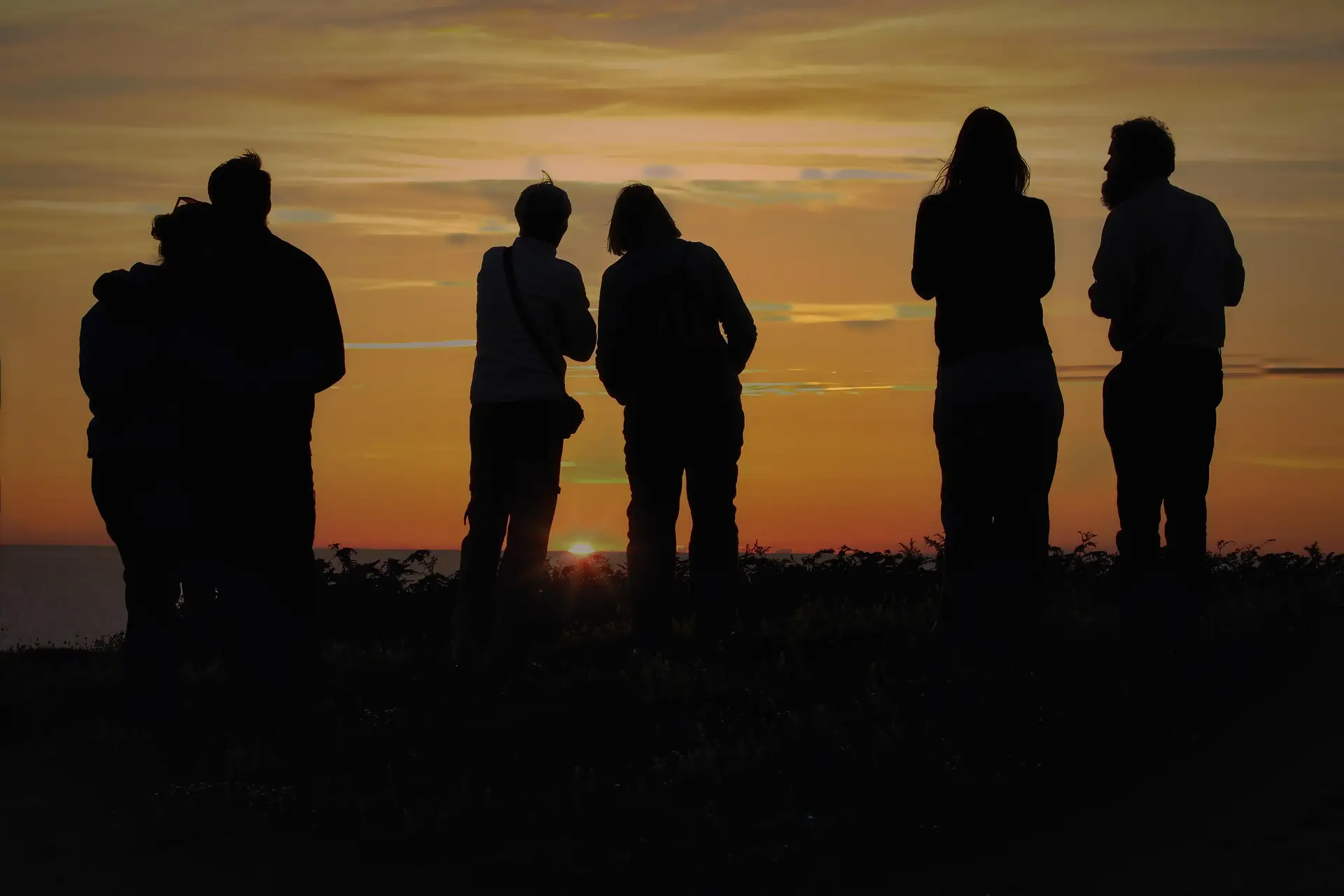
The fifth stone, just north of Old Light Cottage, offered a perfectly positioned natural seat. Here we rested as the evening sun began its slow descent.

As we walked towards the sixth stone we chatted about one of Lundy’s lesser-known stories: the short-lived golf course established here in 1927.

By the time we reached the seventh stone, the sun was starting to drop low. We knew we had found the perfect place to finish. I accompanied the setting sun by playing a song especially created by Jane Harris on a previous Midsummer walk.
Making Memories
At each standing stone we made small prints using an ink pad and Blu Tack, taking away simple impressions of the stones’ textures. It became a lovely way of interacting with these protected monuments without disturbing them.


I also took along a child’s thermal-print camera. It produces tiny black-and-white instant photographs on the same paper used in card payment machines. The images fade over time, making them feel more like fleeting memories than permanent photographs—perfect for capturing a moment that could never really be repeated.


A Sunset Performance
As the sun slipped neatly between two rocky outcrops, we listened to the beautiful song written especially for the Standing Stone Walk by Jane Harris and Elspeth Hannen two years ago – Ancient Stones
The combination of music, poetry, conversation and the setting sun created one of those rare moments that added to the beauty of Lundy.
Why I Keep Returning
These standing stones have become much more than archaeological monuments for me. Over the years they have brought together visitors to share stories, be creative and simply spend time noticing the landscape together.
You can listen to the whole of the song using this link – Ancient Stones.
Colour photography courtesy of Mike Shoulder